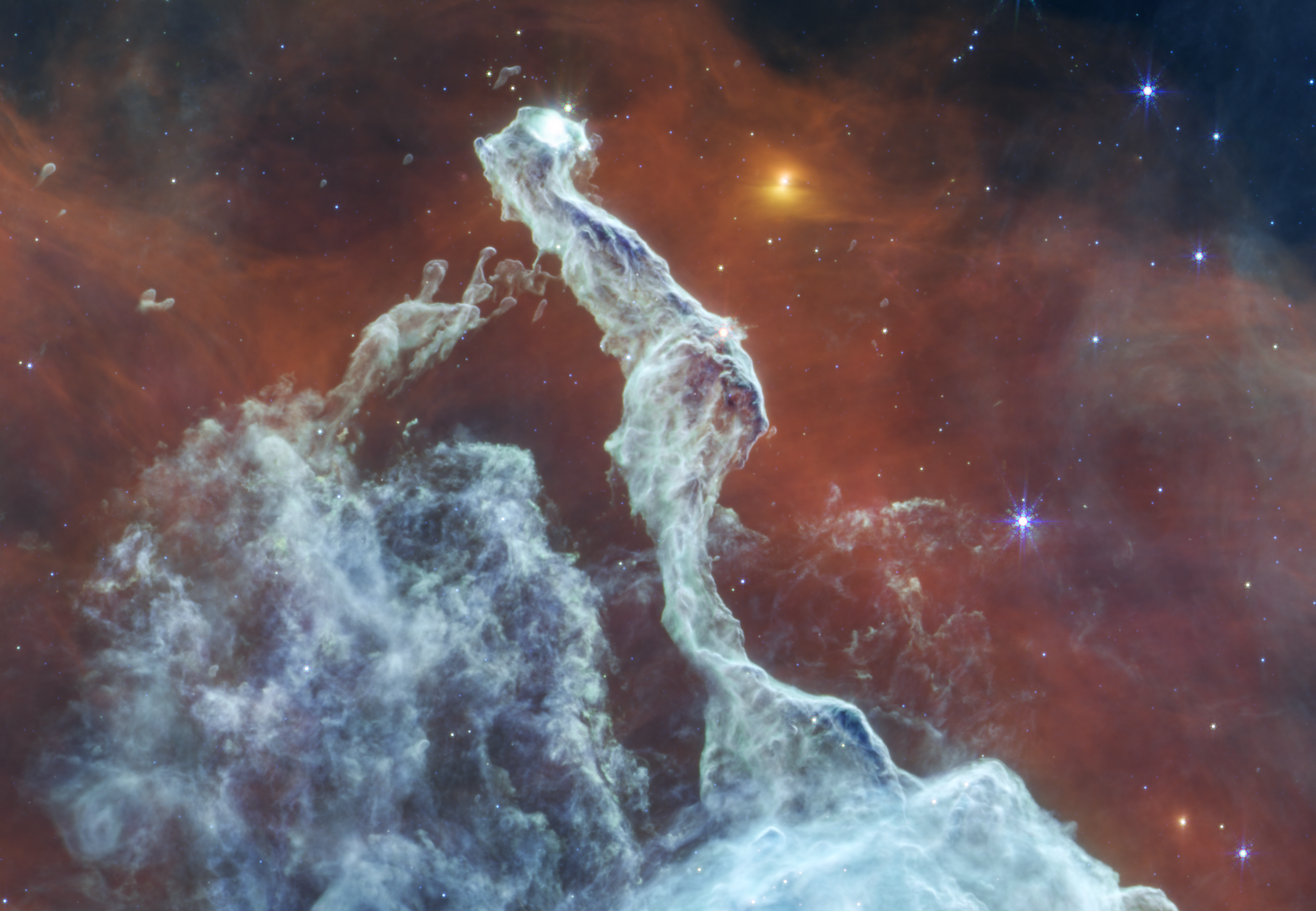
NASA’s James Webb Space Telescope’s mid-infrared view reveals intricate structures within the Cat's Head Nebula, traced by the emission from warm dust and carbon-based molecules excited by starlight.
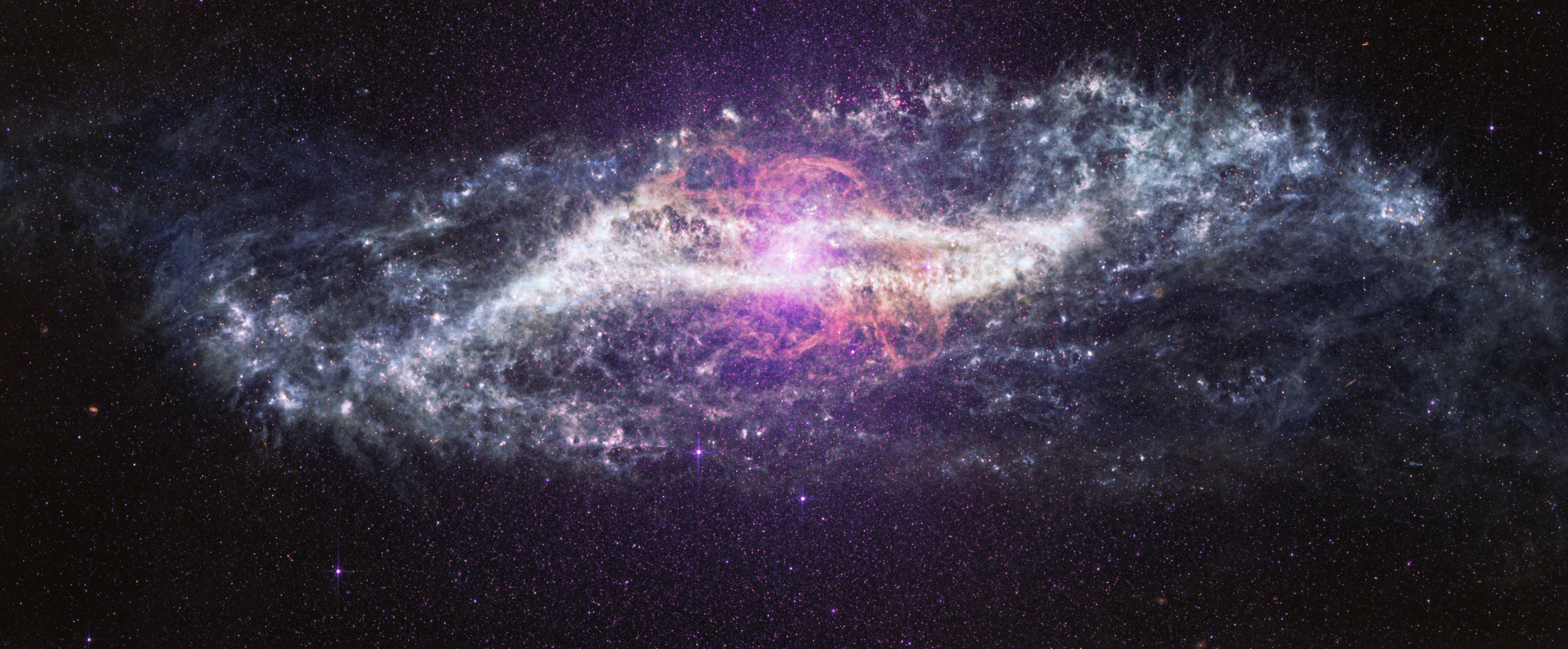
NASA’s James Webb Space Telescope’s Mid-Infrared Instrument (MIRI) reveals the nearby galaxy Centaurus A, exposing the dusty structures and hidden activity that shape this unusual system.
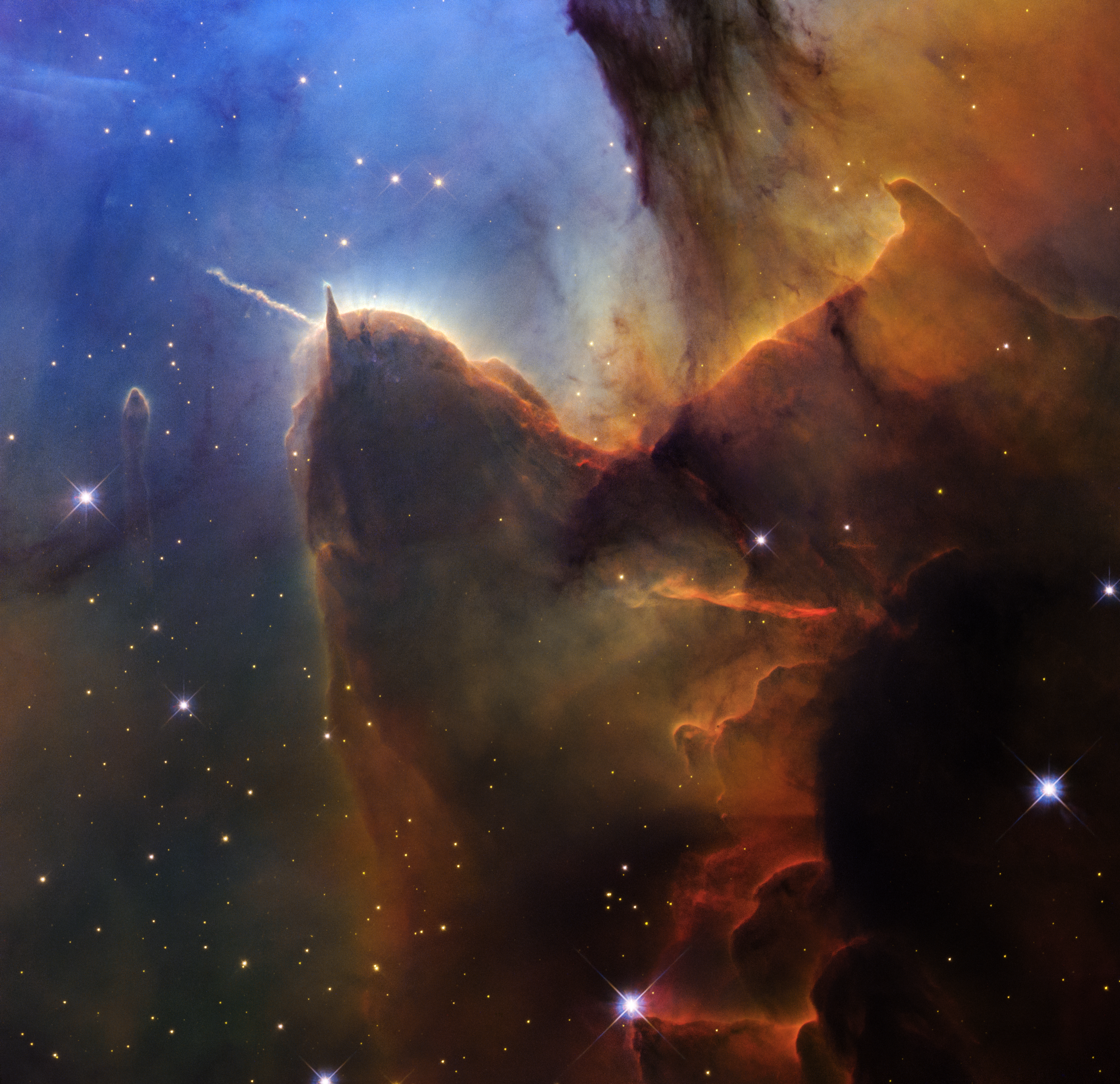
NASA celebrates Hubble’s 36th anniversary with a new image of the Trifid Nebula, a star-forming region it first captured in 1997. The telescope leveraged almost its full operational lifetime to show us changes in the nebula on human time scales with an…
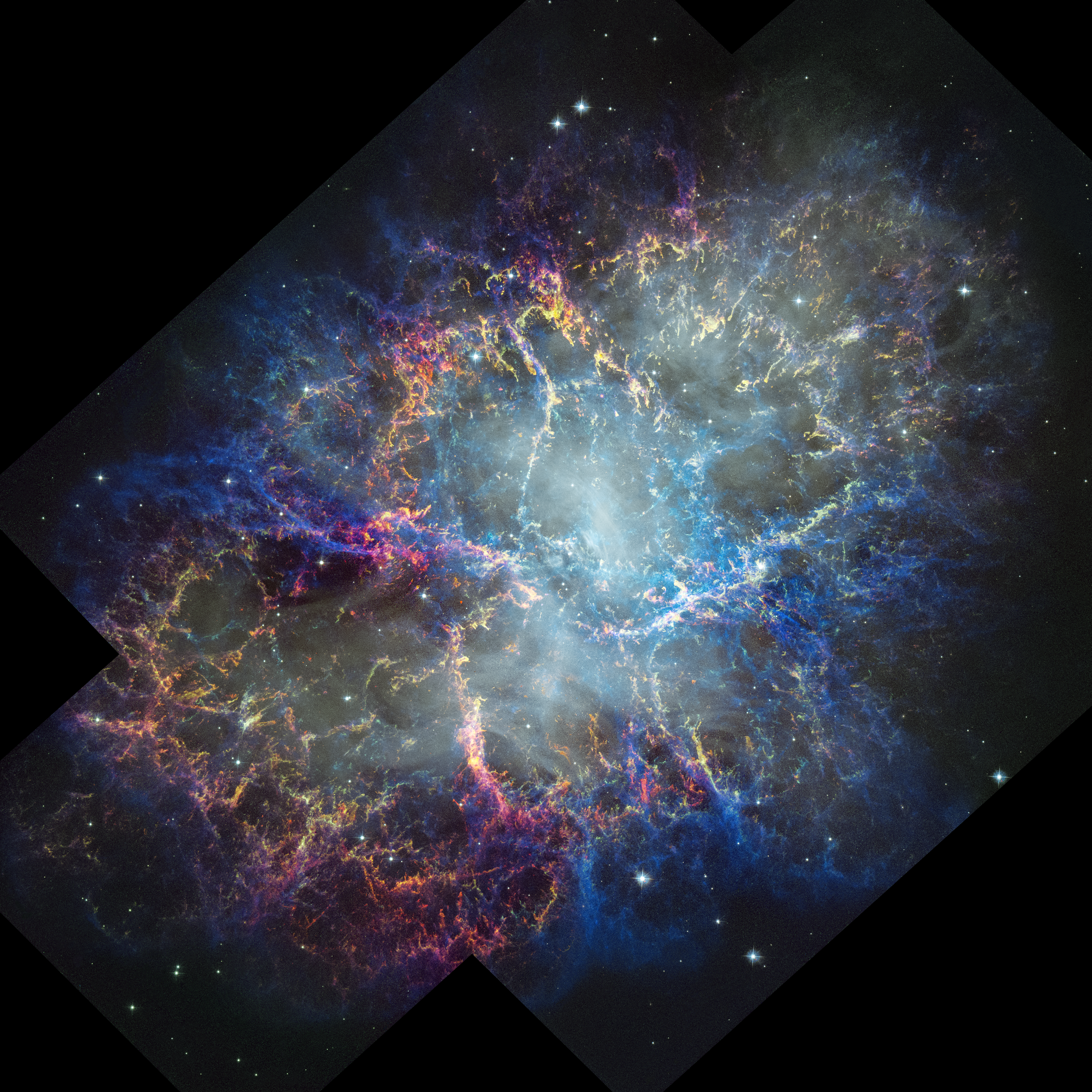
This image that NASA’s Hubble Space Telescope captured of the Crab Nebula, paired with its past observations and those of other telescopes, allows astronomers to study how the supernova remnant is expanding and evolving over time.
Japan’s space agency, JAXA, has been knocking it out of the park with small-body exploration missions for decades. They had historic successes with both Hayabusa and Hayabusa2, and they are going to visit the Martian Moons soon with the Martian Moons…
Captured Nov. 29, 2024 by NASA’s James Webb Space Telescope, this infrared view of Saturn shows its glowing icy rings and layered atmosphere. Several moons are visible, including Janus, Dione, and Enceladus.
For the first time, an international team of astronomers have mapped the vertical structure of Uranus’s upper atmosphere, uncovering how temperature and charged particles vary with height across the planet.
A new image from NASA’s James Webb Space Telescope of a portion of the Helix Nebula highlights comet-like knots, fierce stellar winds, and layers of gas shed off by a dying star interacting with its surrounding environment.…
NASA’s James Webb Space Telescope’s 2024 NIRCam image shows protostar EC 53 circled. Researchers using new data from Webb’s MIRI proved that crystalline silicates form in the hottest part of the disk of gas and dust surrounding the star — and may be shot…