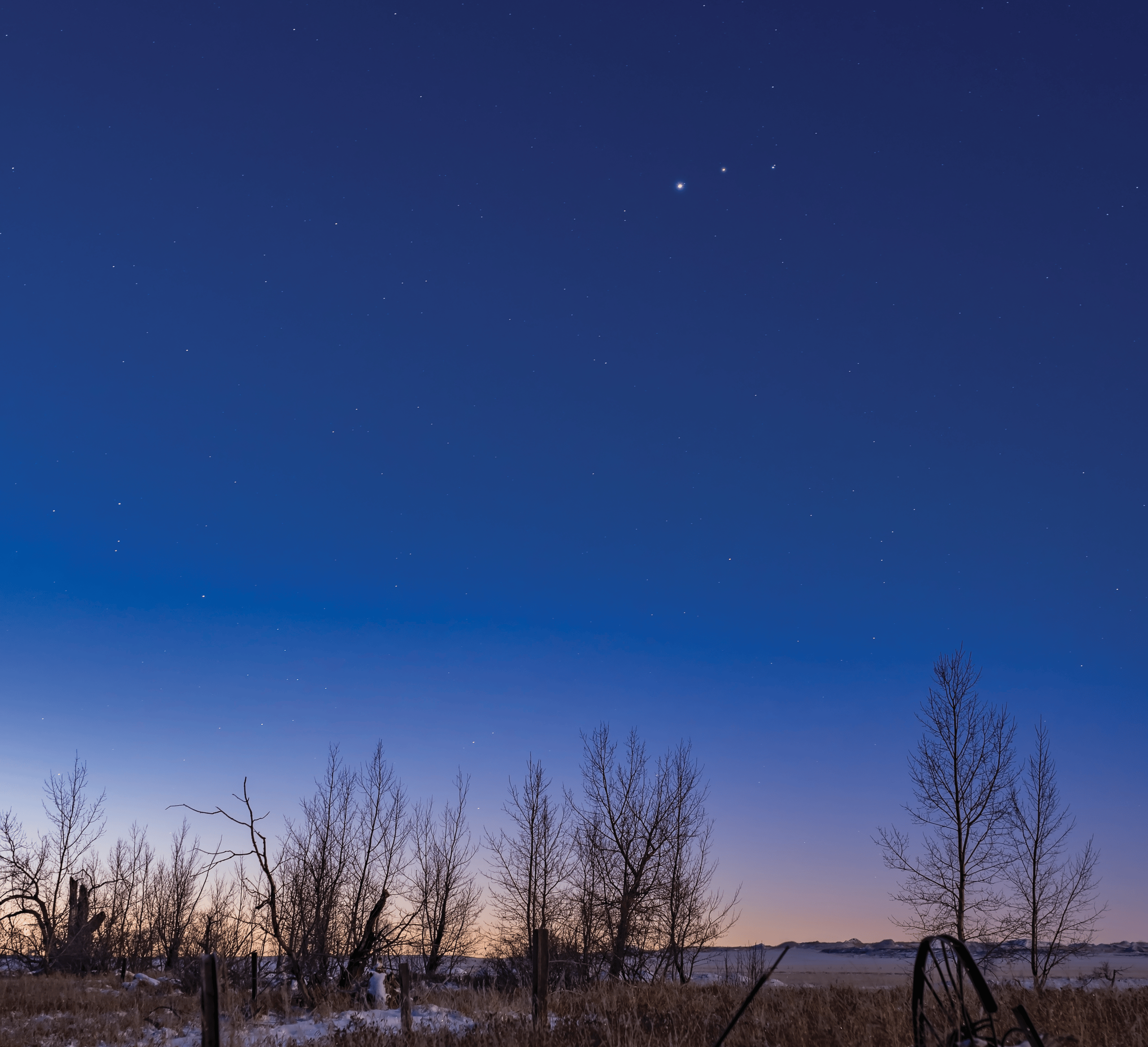
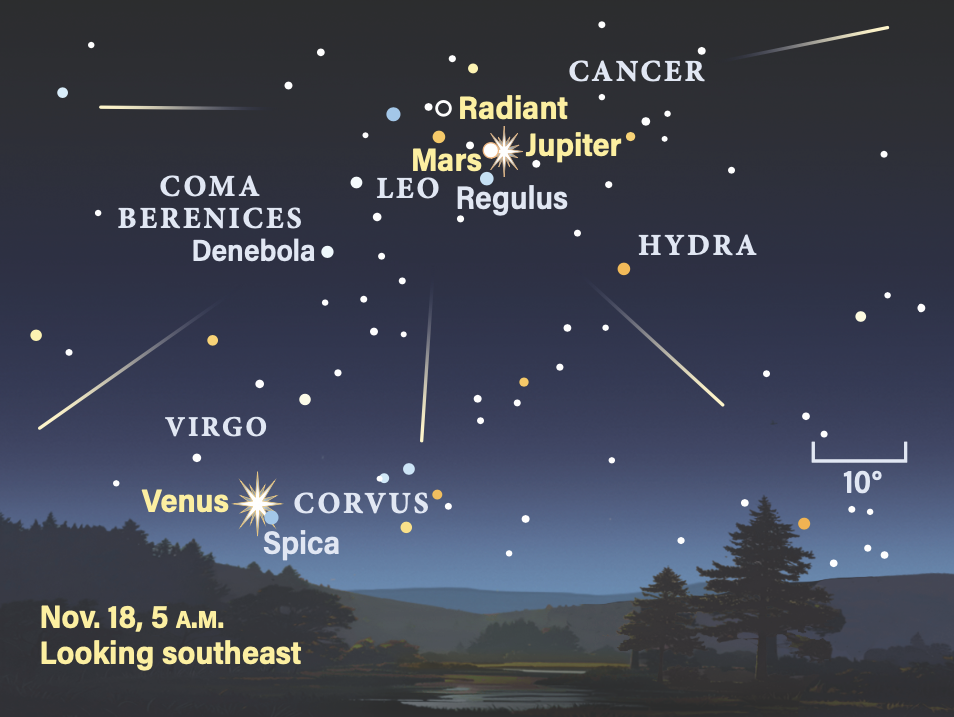
Jupiter (brightest, upper right of center) and Mars (reddish, to its right) stand 1.2° apart in January 2018, just left of Alpha Librae. The planets meet again with roughly the same separation this month. Credit: Alan Dyer
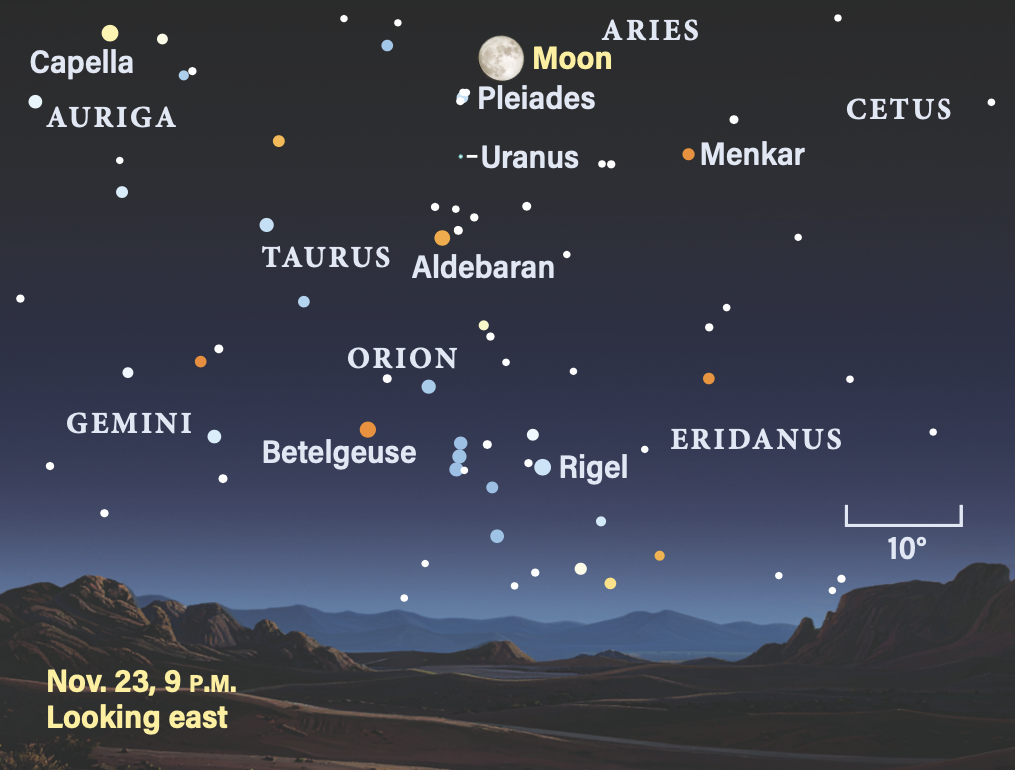
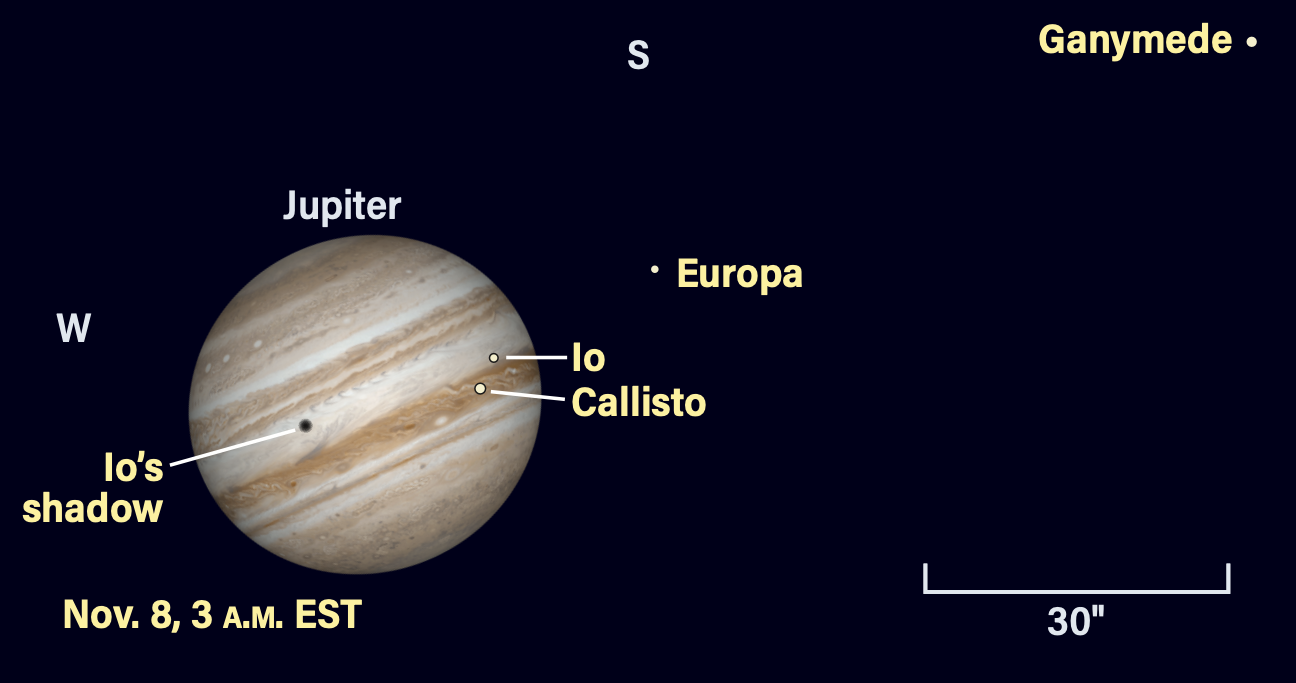
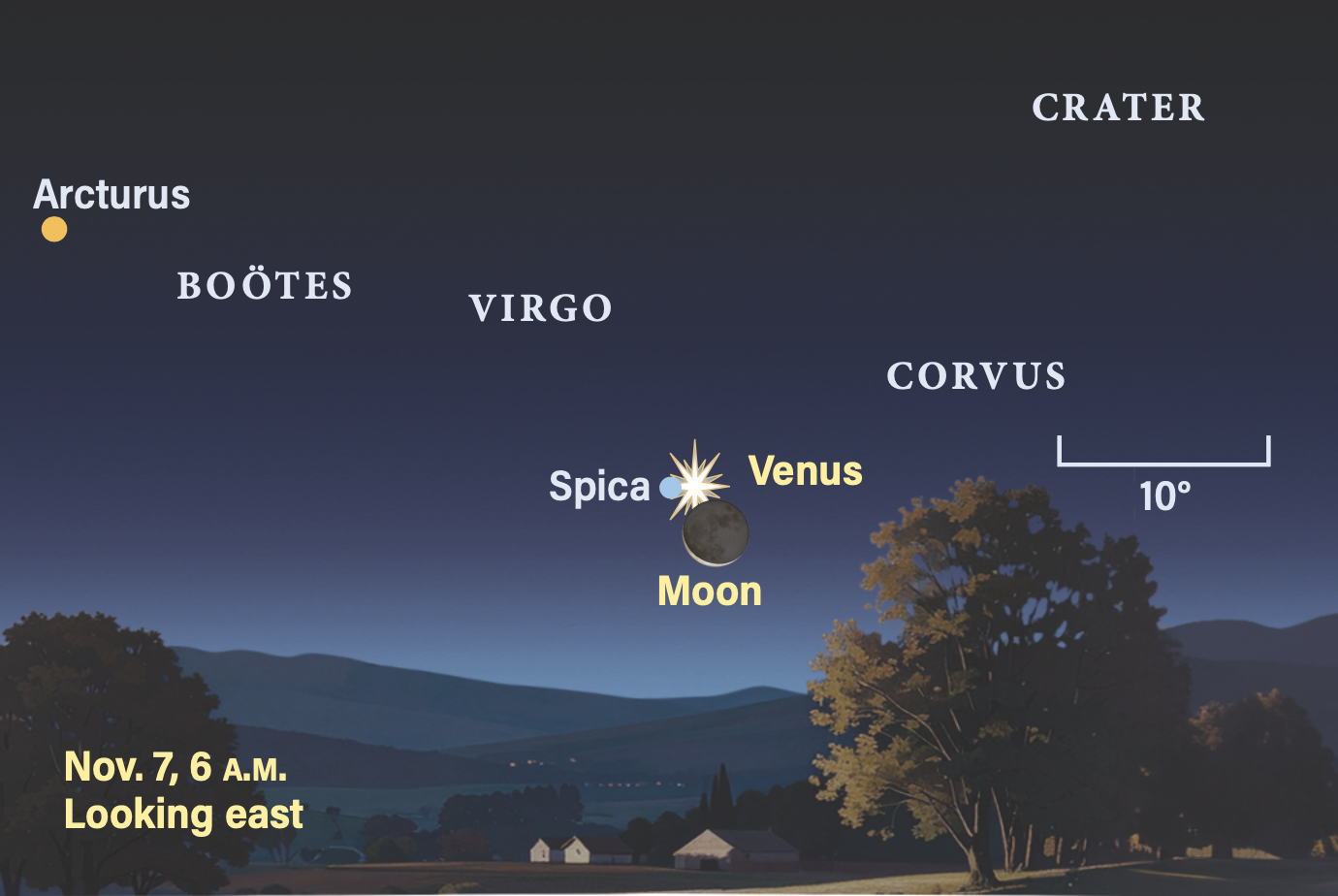
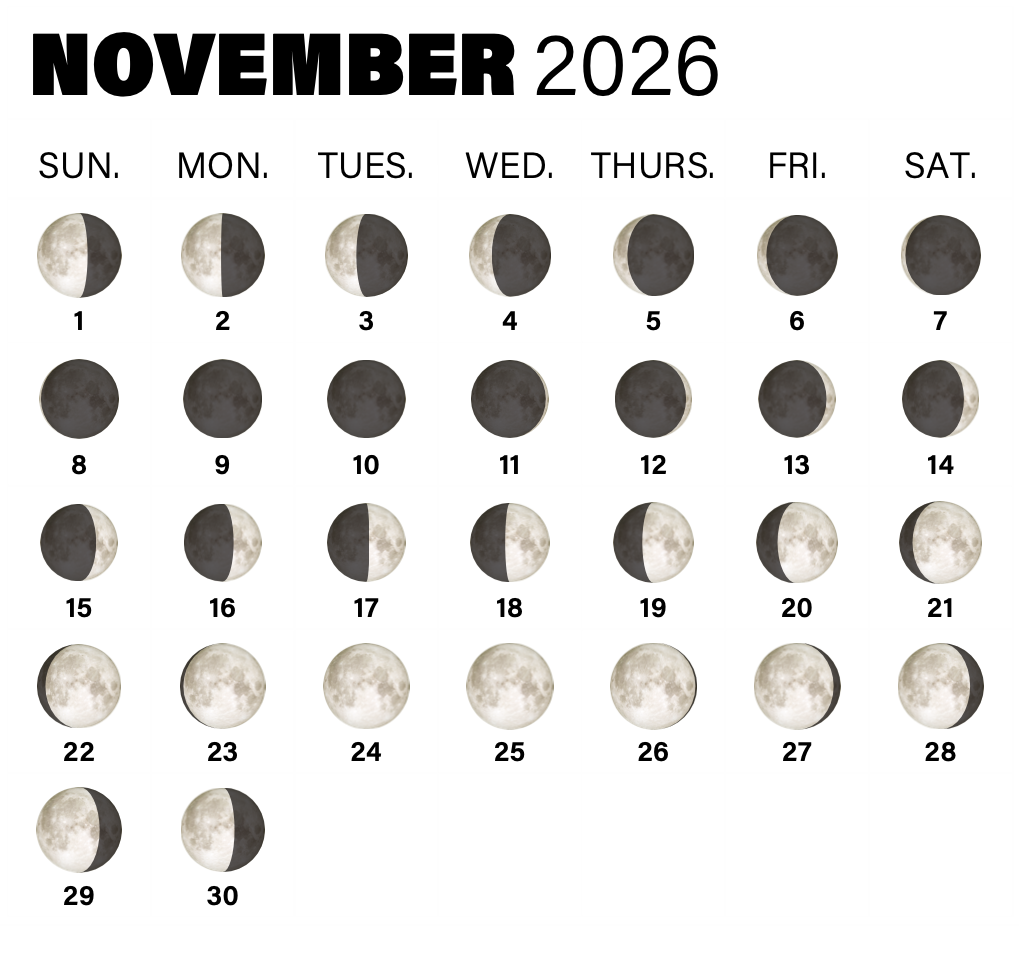
Saturn is already visible as darkness falls; some challenging transits of its moons occur this month. Neptune is a binocular object close to Saturn, while Uranus is an easy target in Taurus. A Full Moon courses in front of the Pleiades in late November. Mars and Jupiter dominate the early-morning sky, and in the hour before dawn, look also for Venus and Mercury.
Neptune and Saturn are well placed for observation after sunset. They’re about 7° apart all month, with Neptune in southern Pisces and Saturn just across the border in Cetus. Only Saturn is visible to the naked eye, shining at magnitude 0.5.…