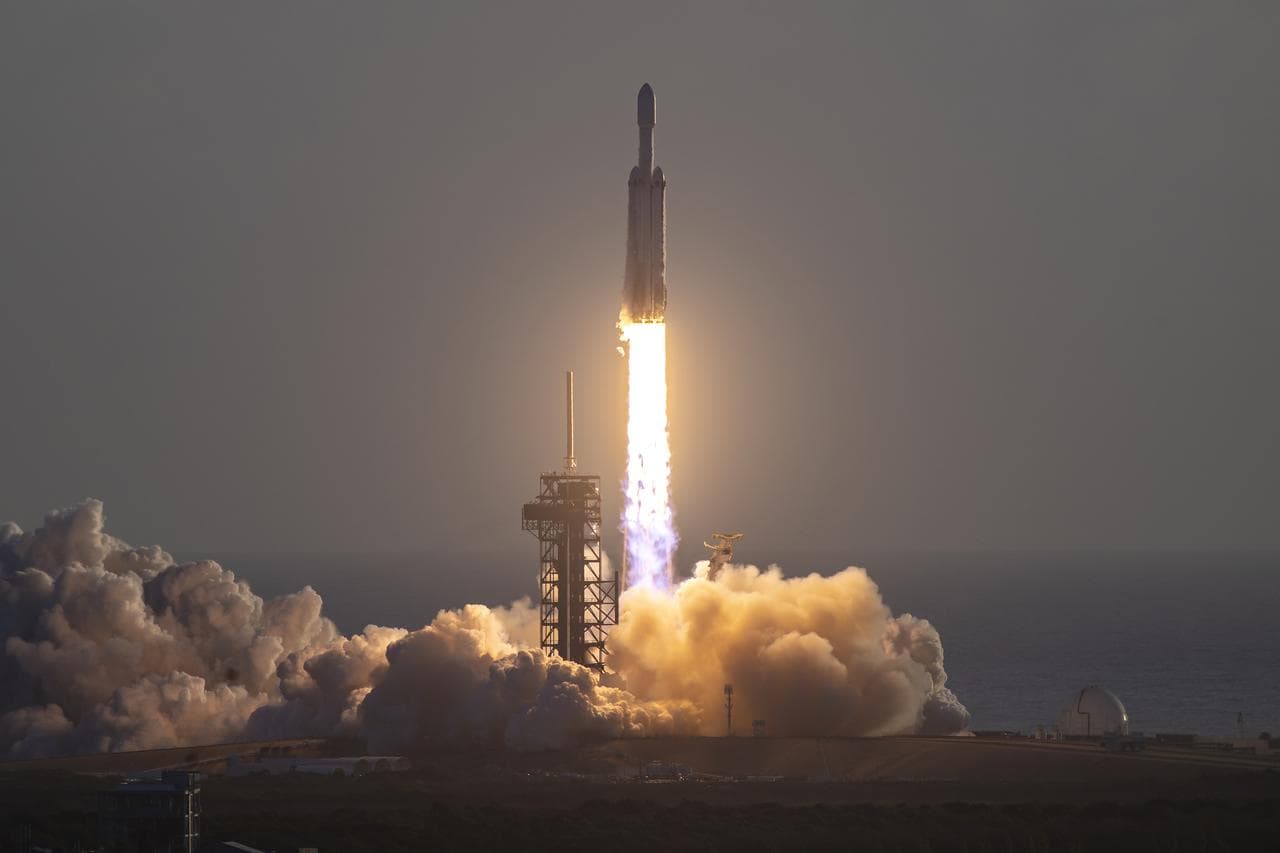
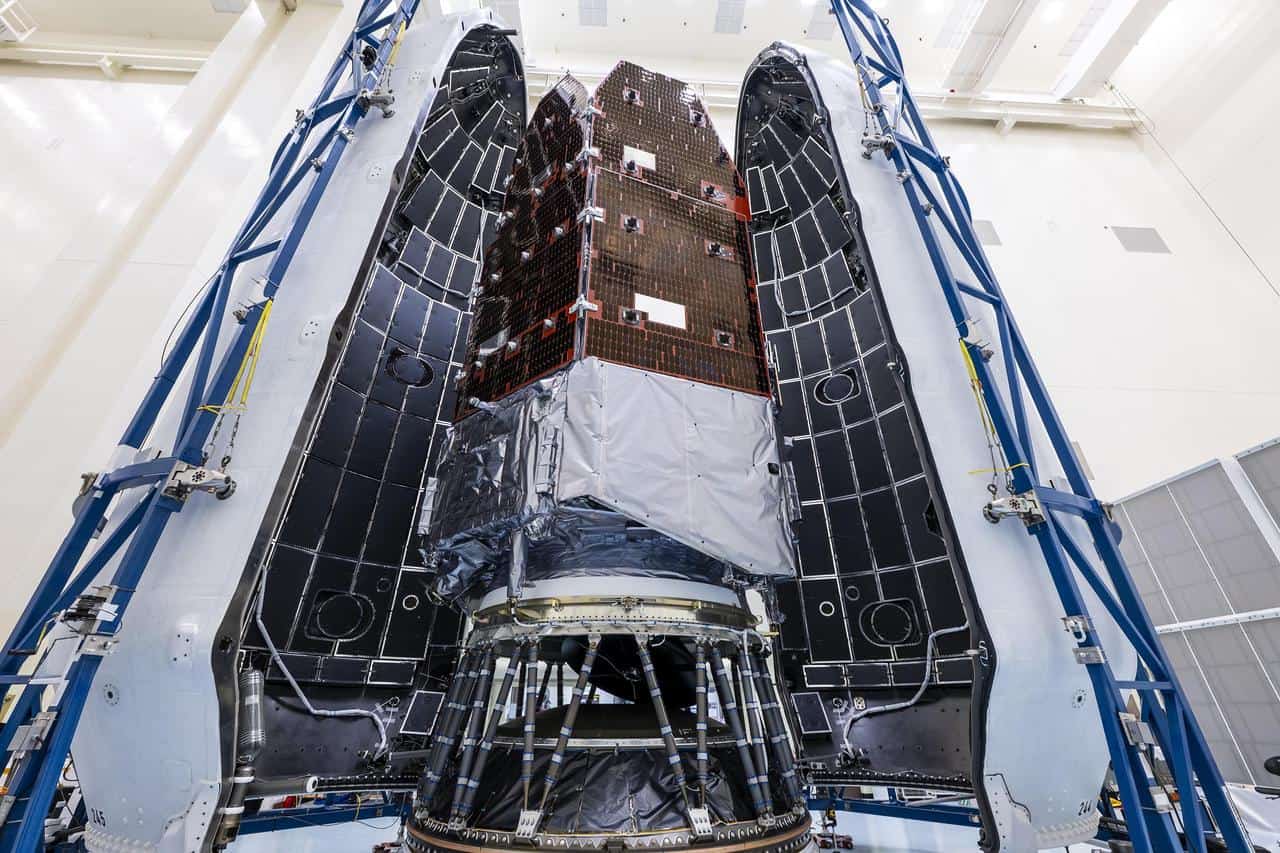
Lift-off: the Nancy Grace Roman Space Telescope will now spend three months traveling to the second Sun–Earth Lagrange point, which lies about 1.6 million kilometres from Earth. (Courtesy: SpaceX)
NASA has successfully launched the $4.3bn Nancy Grace Roman Space Telescope . The observatory took off atop a SpaceX Falcon Heavy rocket from Florida’s Kennedy Space Center at 7.26 a.m. local time on 30 August. The craft will now spend three months travelling to a point in space known as the second Sun–Earth Lagrange point (L2) where it will survey space with a field of view at least 100 times greater than the Hubble Space Telescope.
From L2, which lies about 1.6 million kilometres from Earth, the Nancy Grace Roman Space Telescope will yield insights into dark energy and dark matter, discover and characterize exoplanets, map billions of galaxies, and gain fresh understanding of black holes.
It will do so via a 2.4 m primary mirror that is accompanied by two instruments: a wide-field instrument will obtain images…