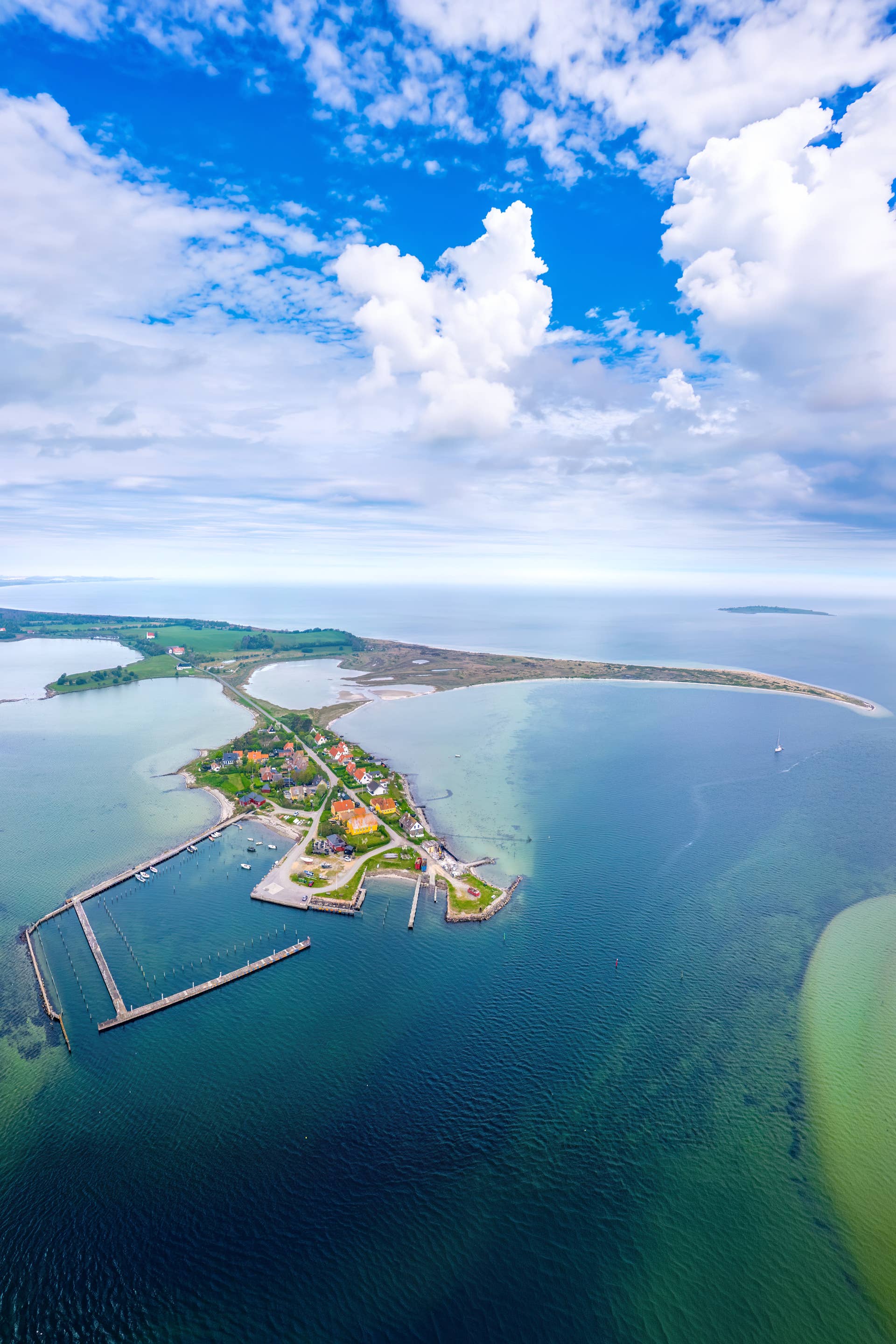
After becoming the world’s first renewable-energy island, Samsø, smack-dab in the middle of Denmark, has turned its attention to another sustainability challenge: restoring the marine life lost to centuries of stone fishing. Where has all the marine life gone? A better question might be: Where has all the habitat gone?
During the last ice age, glaciers deposited billions of boulders across the seabeds of northern Europe, creating rocky habitat for seaweed, mussels, and the fish that depend on them. But over the past several hundred years, the stone-fishing industry dredged up much of that glacial rubble, leaving vast stretches of Danish seabed stripped of its natural structure.
Without hard surfaces to cling to, seaweeds and mussels struggled to establish themselves. And as habitat disappeared, so did some of the creatures that depended on it. Off Samsø, roughly 21 square miles of seafloor were reportedly stripped of stone between 1900 and 2000. The changes were apparent within a generation.…