Menu

Post image 1
Post image 2
Post image 3
Post image 4
Post image 5
Post image 6
Post image 7
Post image 8
Post image 9
Post image 10
Post image 11
Post image 12
Post image 13
Post image 14
Post image 15
Post image 16
Post image 17
Post image 18
Post image 19
Post image 20
Post image 21
Post image 22
Post image 23
Post image 24
Post image 25
Post image 26
Post image 27
Post image 28
Post image 29
Post image 30
Post image 31
Post image 32
Post image 33
Post image 34
Post image 35
Post image 36
Post image 37
Post image 38
Post image 39
Post image 40
Post image 41
Post image 42
Post image 43
Post image 44
Post image 45
Post image 46
Post image 47
Post image 48
Post image 49
Post image 50
Post image 51
Post image 52
Post image 53
1 / 53
0

How Uber Protects Against Retry Storms

Hacker News·How Uber Protects Against Retry Storms·about 3 hours ago
#33epx8i9
#uber#photo#englishlanguage
Reading 0:00
15s threshold

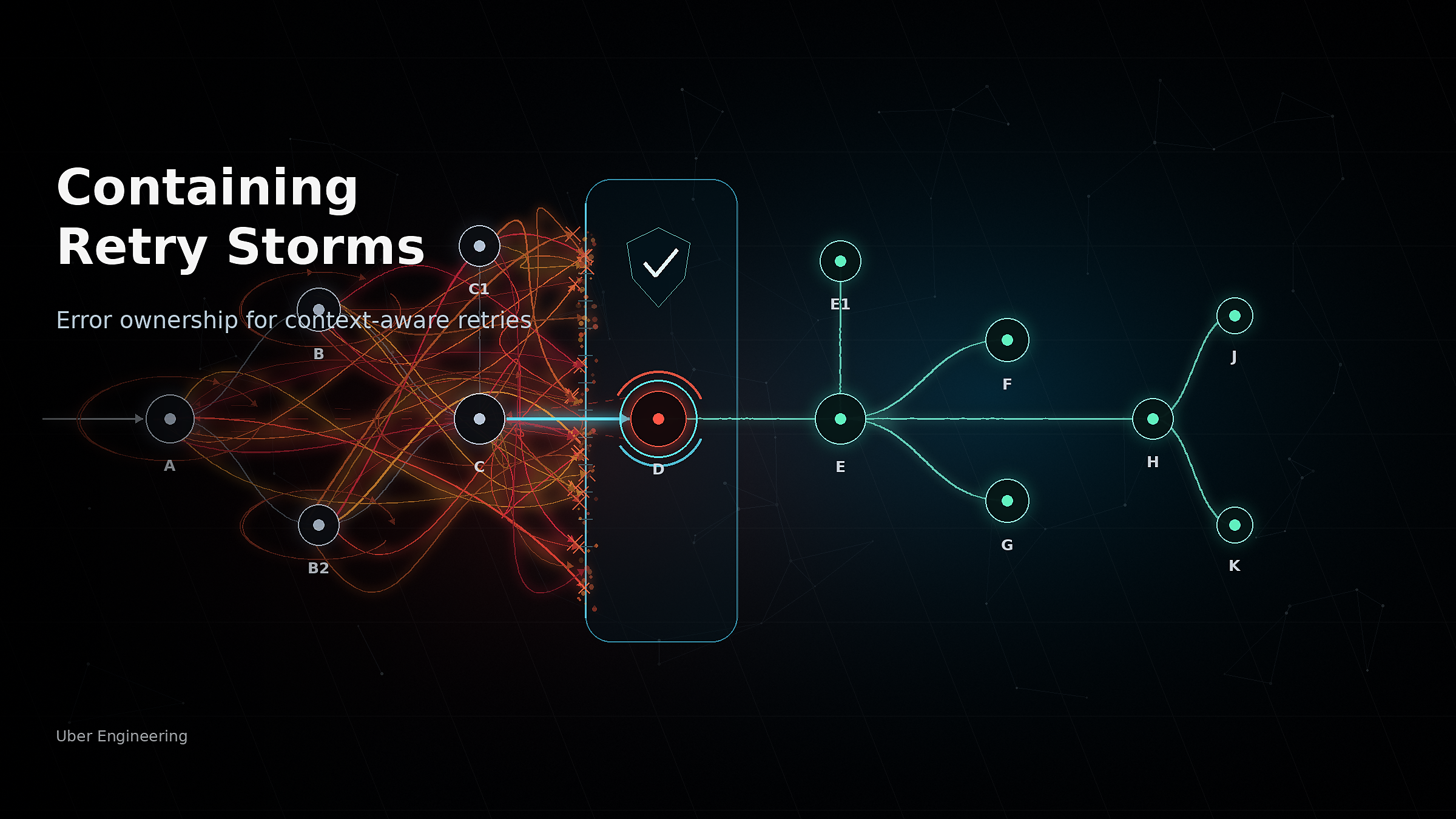
Introduction Retry storms historically impact business operations and brand trust. While retry configuration tuning and retry budgets provide meaningful mitigation at the service level, they’re manually configured and lack visibility into cross-service amplification caused by deep dependency chains and fan-out patterns. As a result, it can be difficult to shield infrastructure against the domino effect triggered by a single service outage deeper in the stack.  A key reason is that retry behavior today isn’t context-aware. While we can control how many retries occur, we can’t precisely control when they occur. This stems from the challenge of reliably distinguishing between errors generated by a service and those merely propagated through it. As a result, retries are applied uniformly rather than conditionally. This approach works for transient or low-rate failures. However, during moderate or severe degradation, it becomes counterproductive.…
Continue reading — create a free account

Join HashtagPLUS to read full articles, follow hashtags, vote, and join the conversation.

Read More