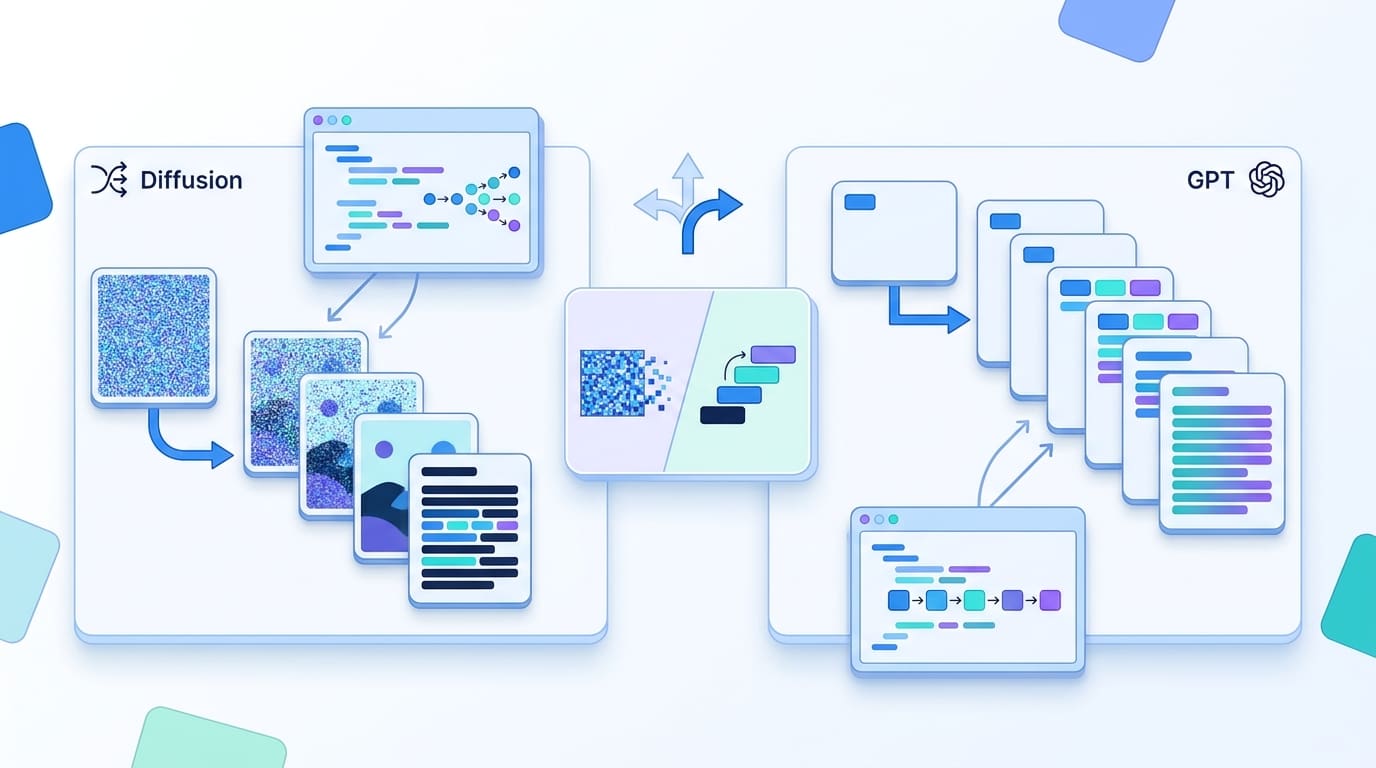
In this article, you will learn how diffusion language models generate text by iteratively refining a masked sequence, and how this differs from the token-by-token generation of GPT-style models.
Topics we will cover include:
How autoregressive models and masked diffusion models differ in the way they generate text.
How forward and reverse diffusion work, and how masking adapts diffusion to discrete text tokens.
The open challenges diffusion language models still face, from token dependencies to key-value caching.
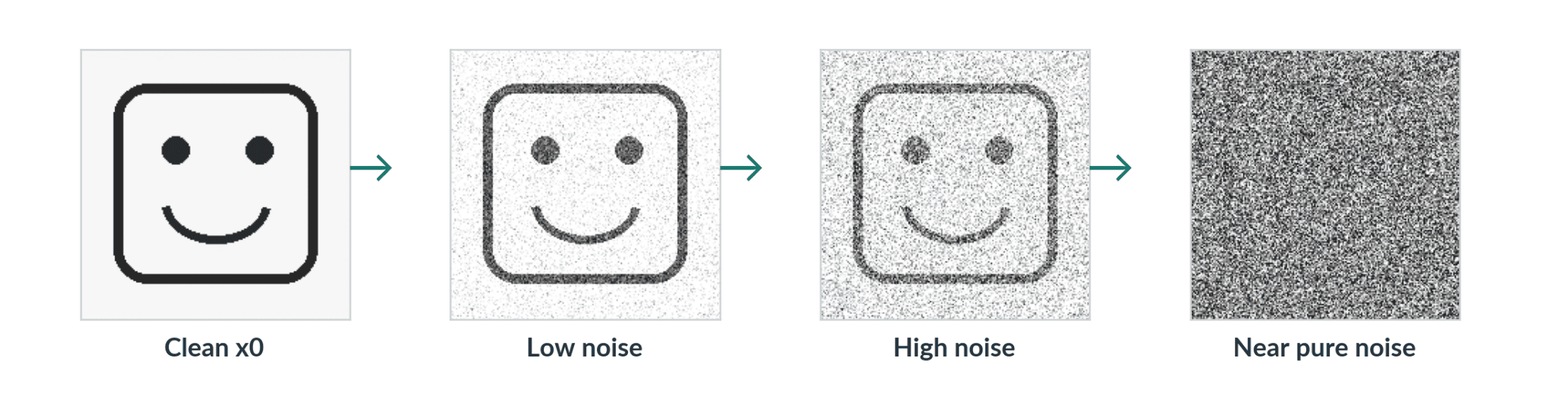
Diffusion itself is not a new idea. It is well known from the image generators that transform random noise into meaningful images, and this work was presented in the Denoising Diffusion Probabilistic Models paper. However, the problem is that this idea of starting with something noisy and then refining it is easier to understand with images, which consist of continuous values.…