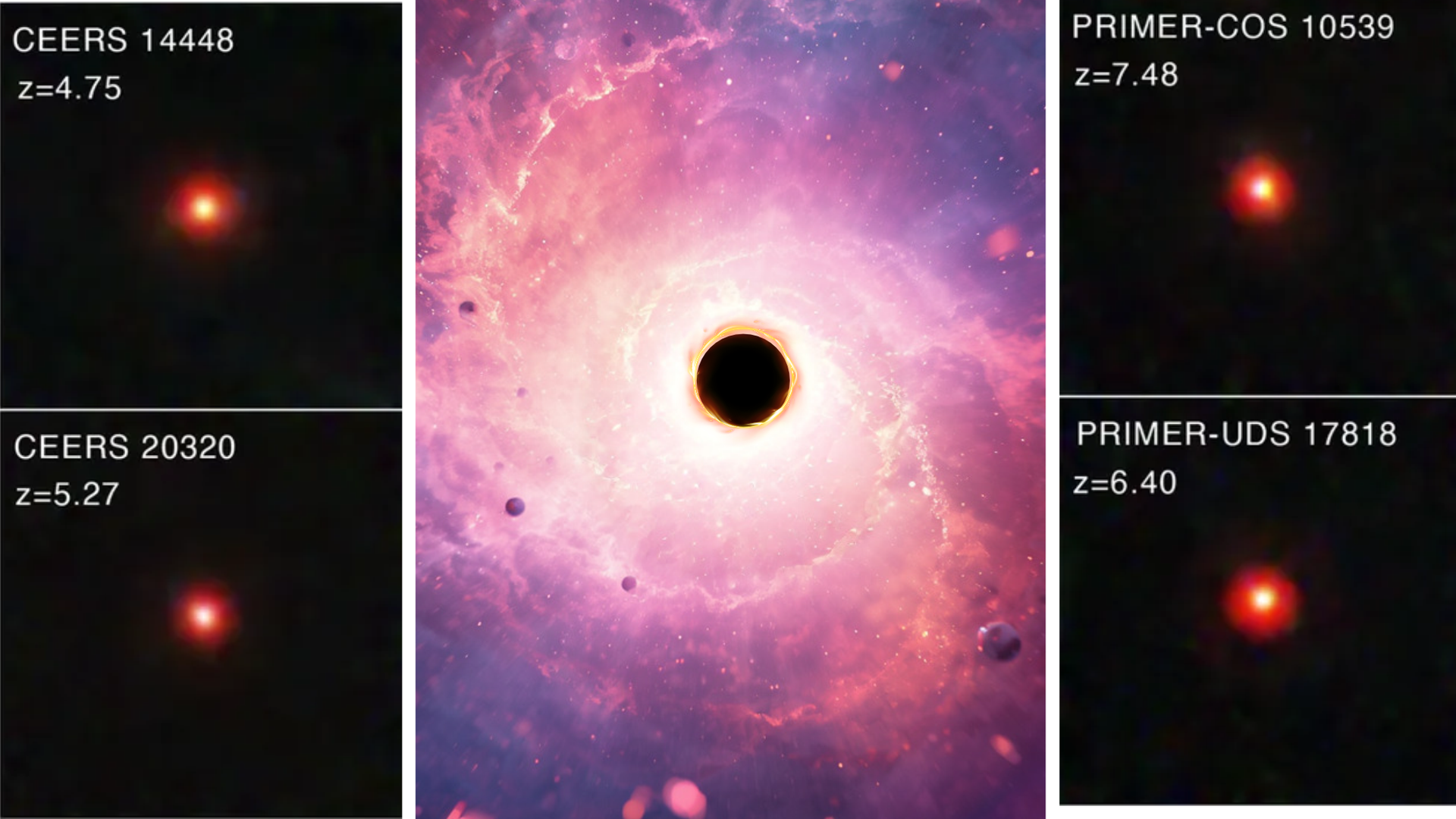
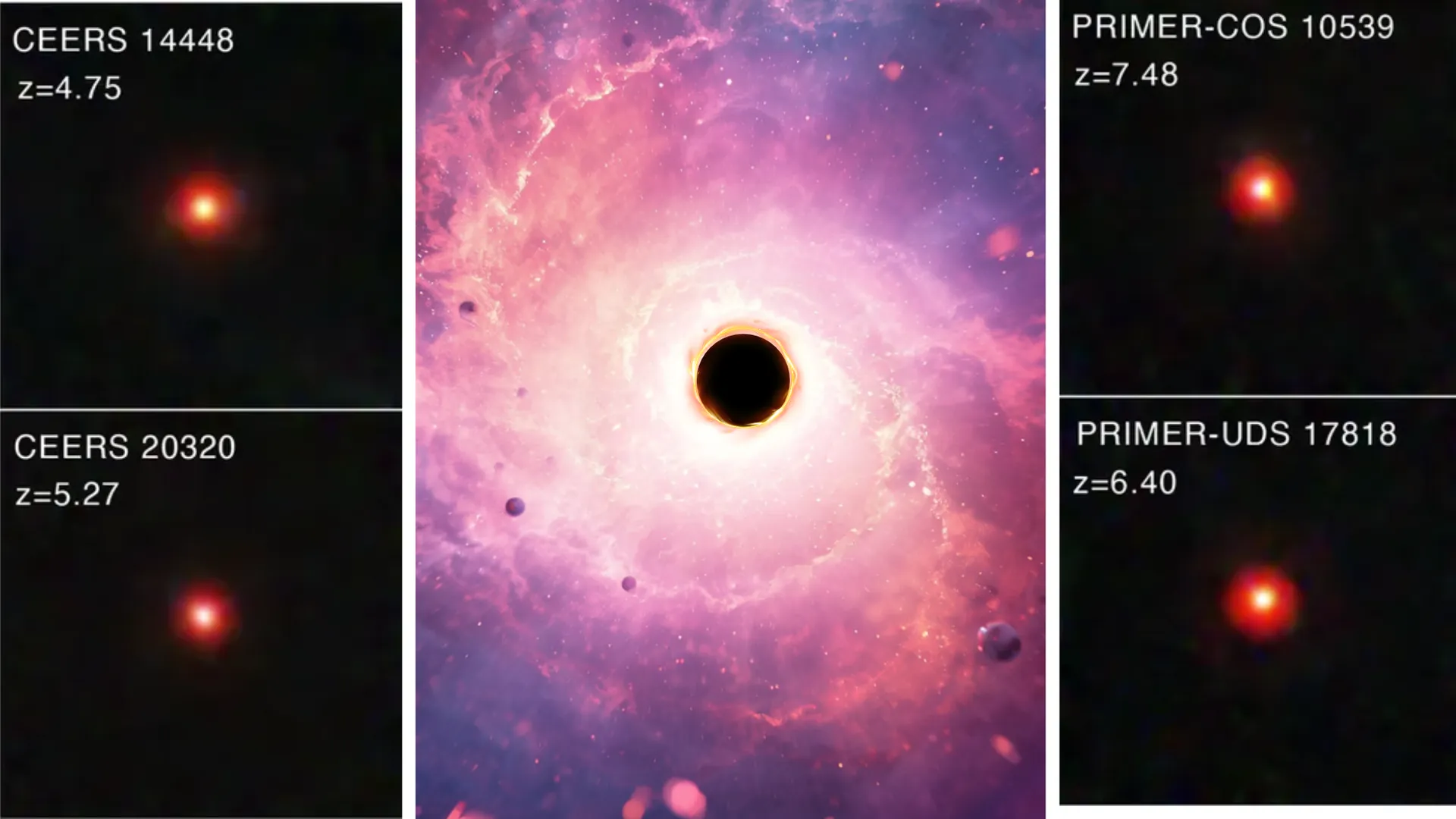
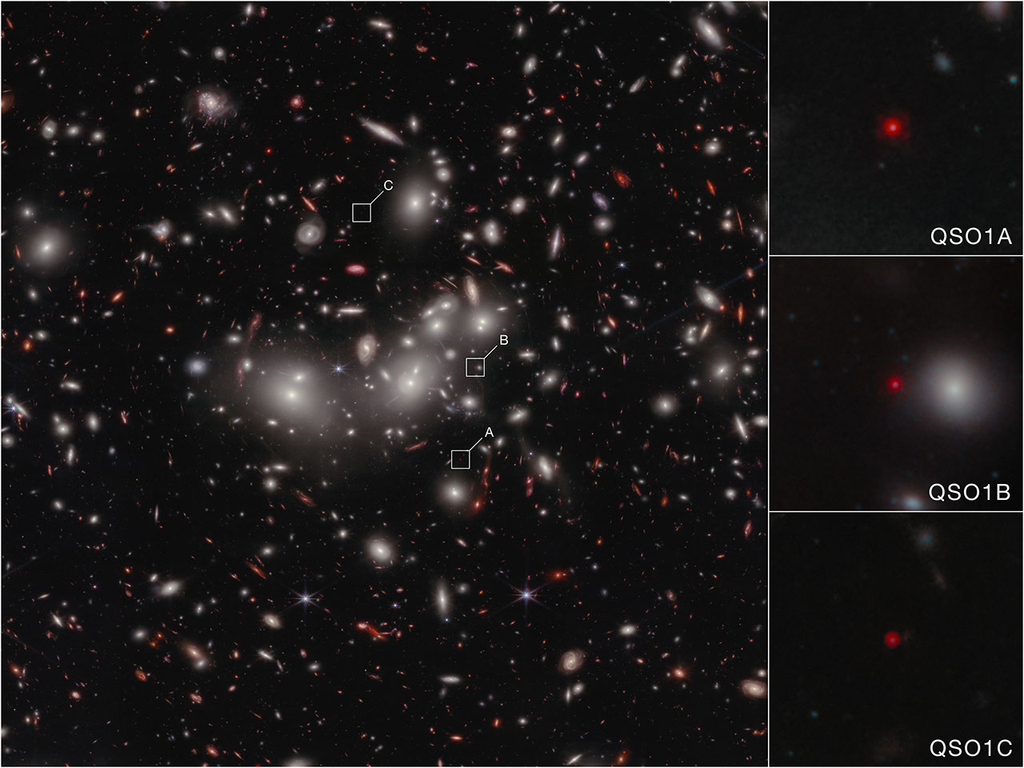
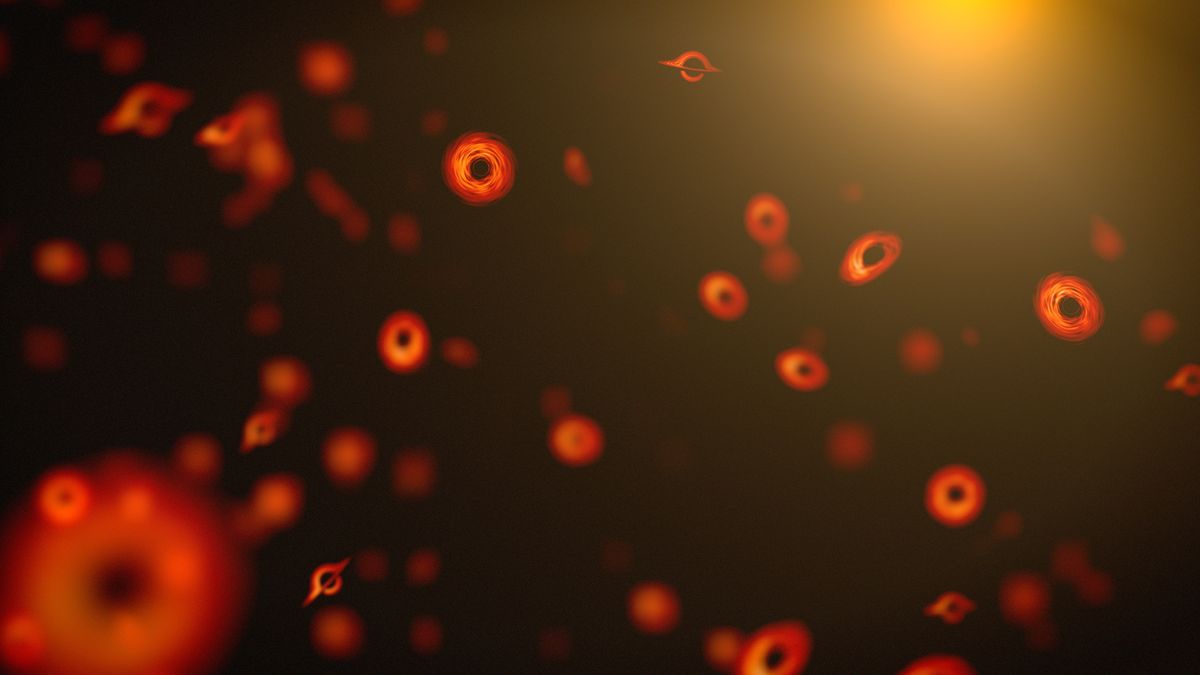
Main: an illustration of a tiny primordial black hole emerging from the earliest matter in the cosmos. Left and right: Some of the "Little Red Dot" galaxies discovered in the early universe by the James Webb Space Telescope. (Image credit: Robert Lea/NASA, ESA, CSA, STScI, Dale Kocevski (Colby College)))
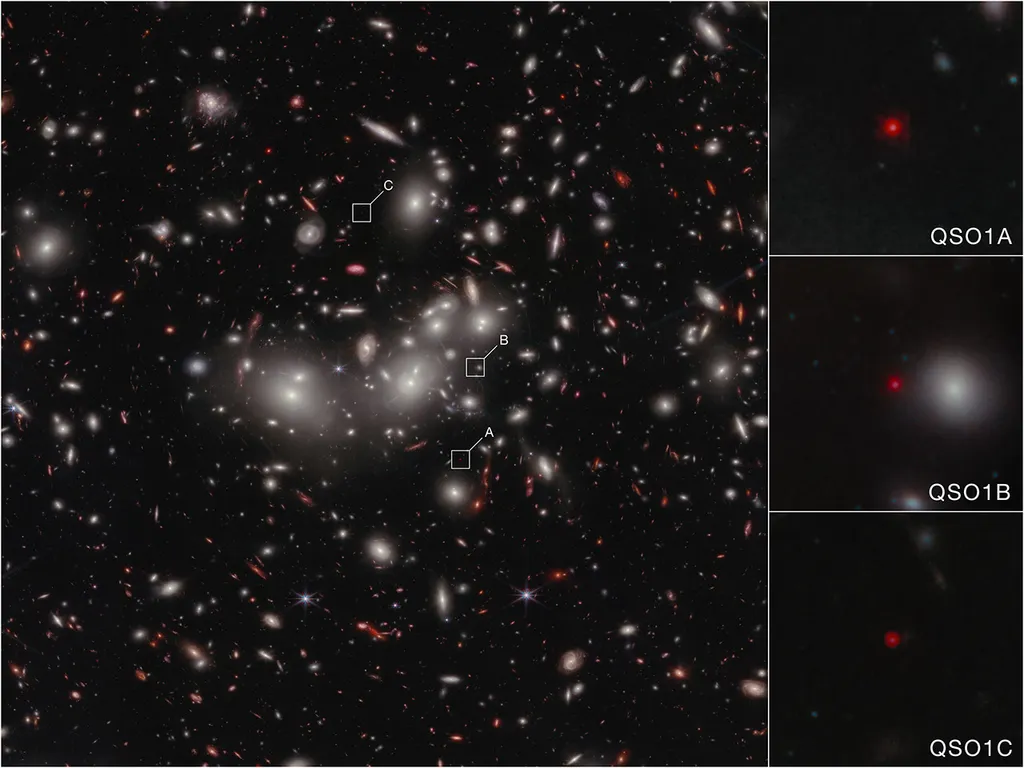
Ever since NASA's James Webb Space Telescope (JWST) started observing the early universe, it has been providing almost as many surprises as it has answers. One such surprise are the so-called Little Red Dots, cosmic objects that seemingly disappear completely before the universe is two billion years old.
New research suggests that
Little Red Dots may actually be connected
primordial black holes , tiny black holes born not from dying stars but rather from fluctuations in the density of matter just after the
Big Bang, in the earliest moments of cosmic history.…