On the night of 18 August 1913, the story goes, a roulette ball at the Casino de Monte-Carlo landed on black 26 times in a row. Somewhere around the tenth black, gamblers started piling money onto red, sure that a streak that long had to break. It didn't, and the usual retelling is that they lost millions of francs. The details vary from one retelling to the next, so I'd treat the exact numbers loosely. The mistake behind the story is real enough to have a name: the gambler's fallacy.
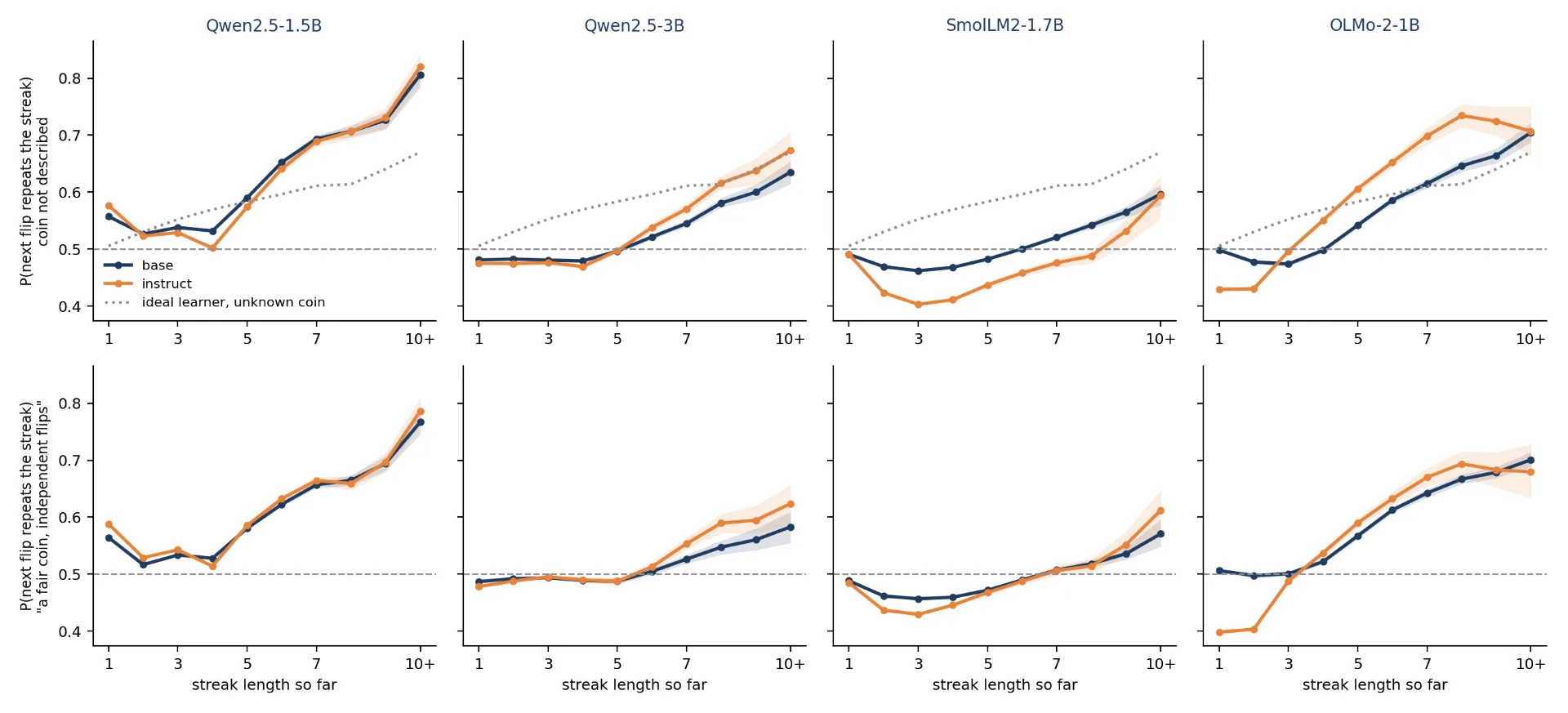
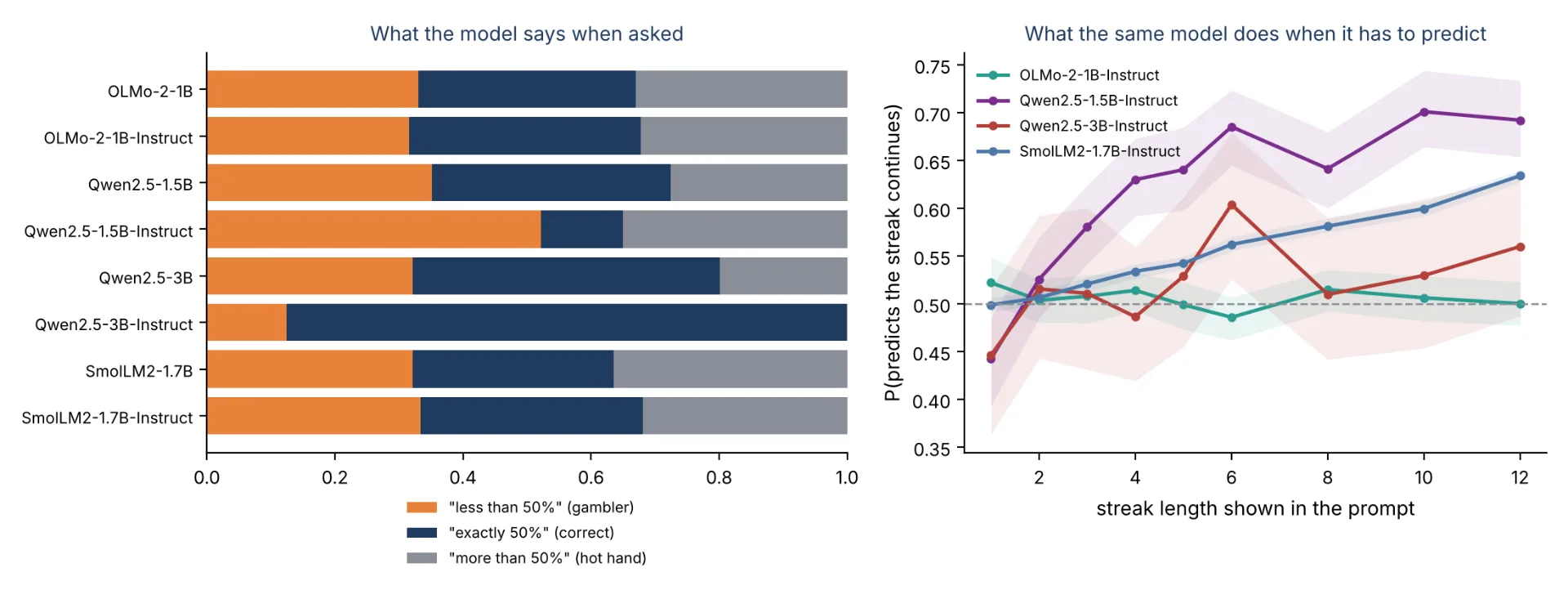
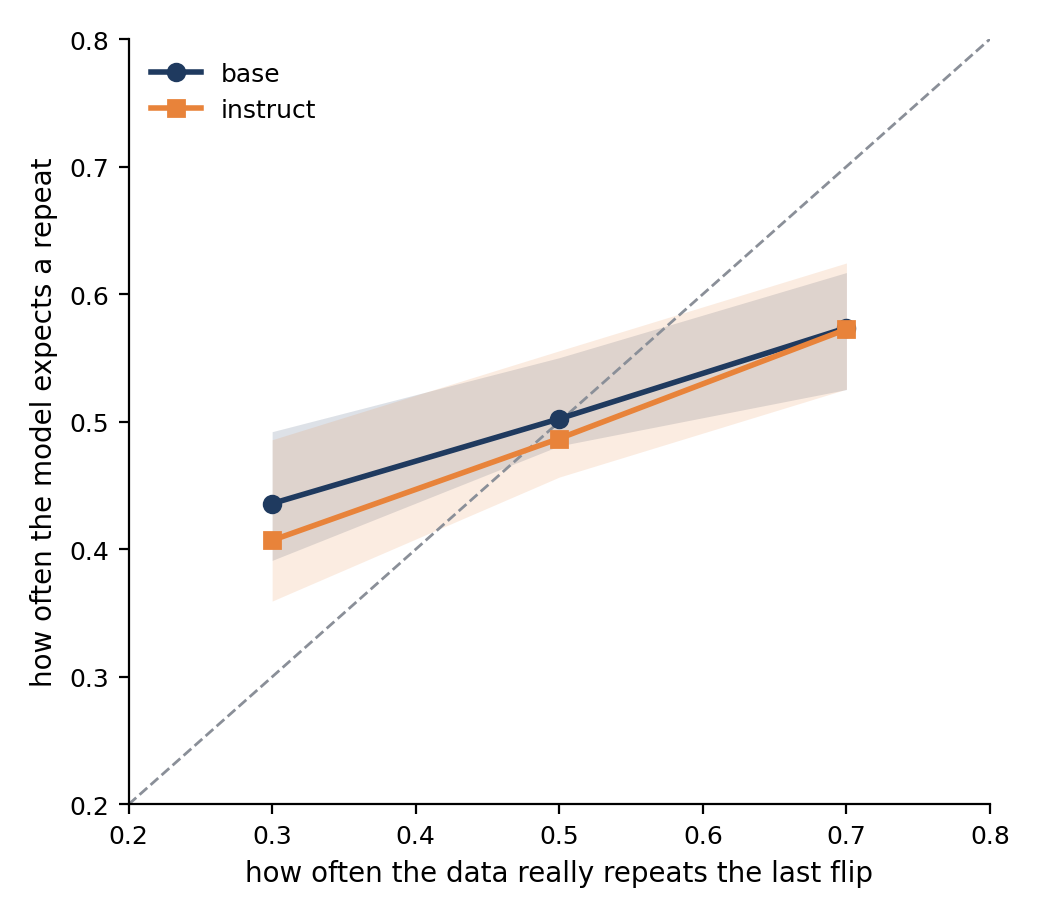
Humans make it constantly. I wanted to know whether language models do, and I wanted to know in a way that doesn't depend on how politely a chat model answers a trivia question. Asking "is a coin due for tails after five heads?" tests what a model says . Reading its next-token probabilities tests what it expects . Those two can come apart in interesting ways.
Why the coin can't be due
Take a fair coin.…