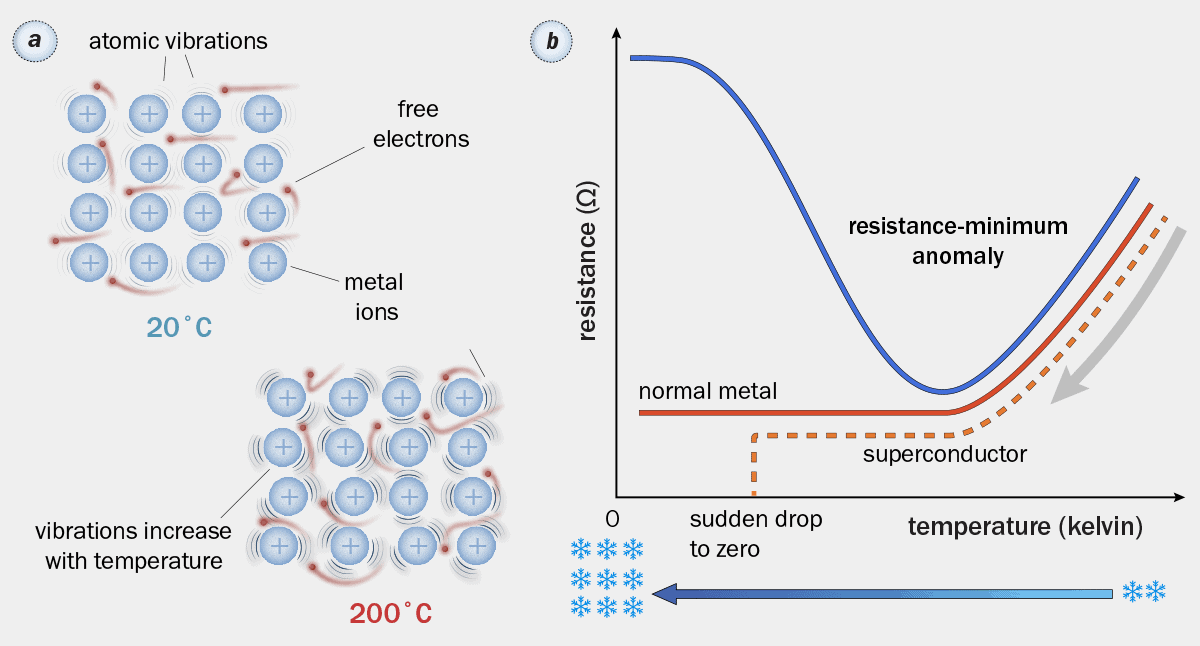
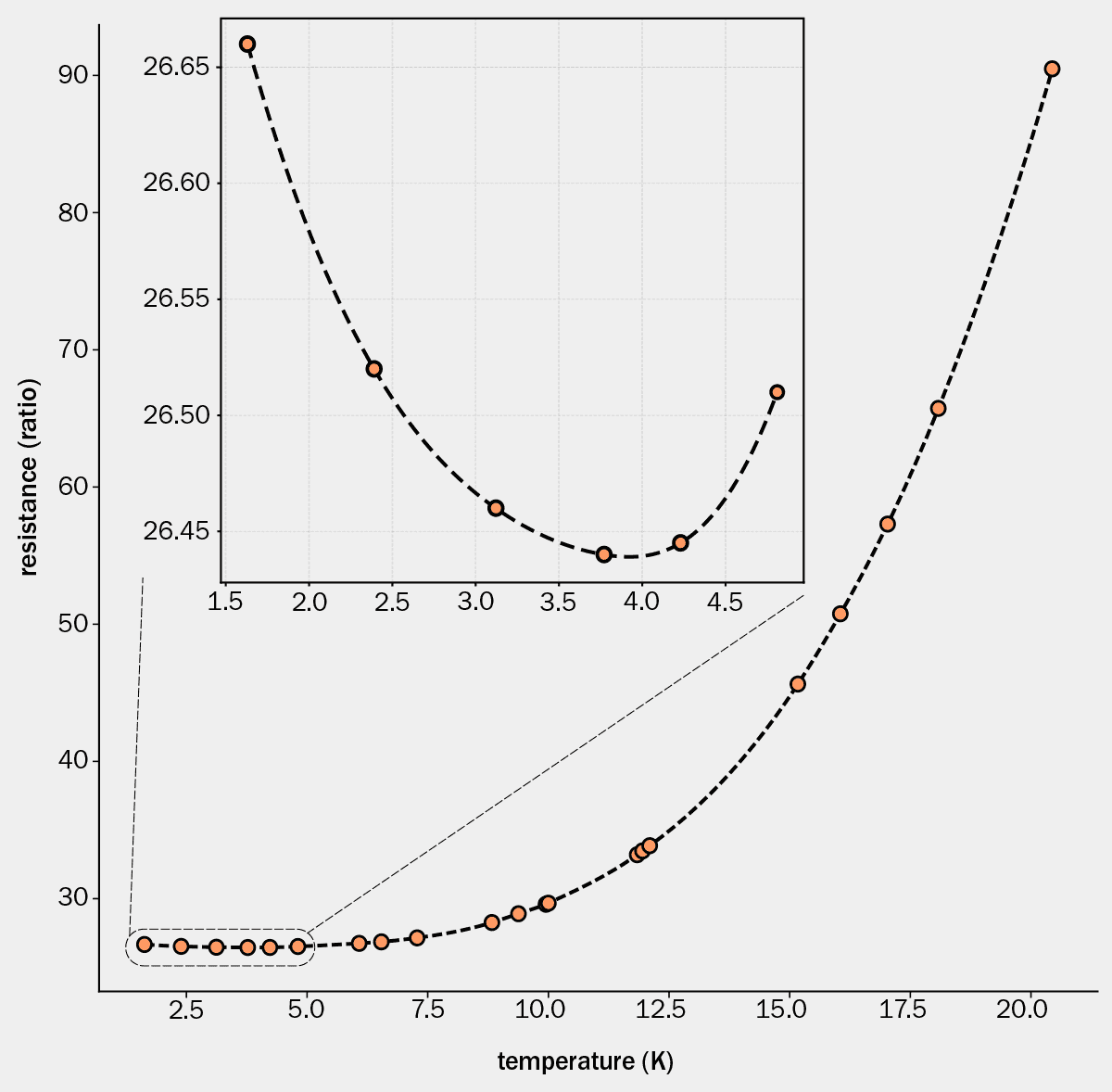
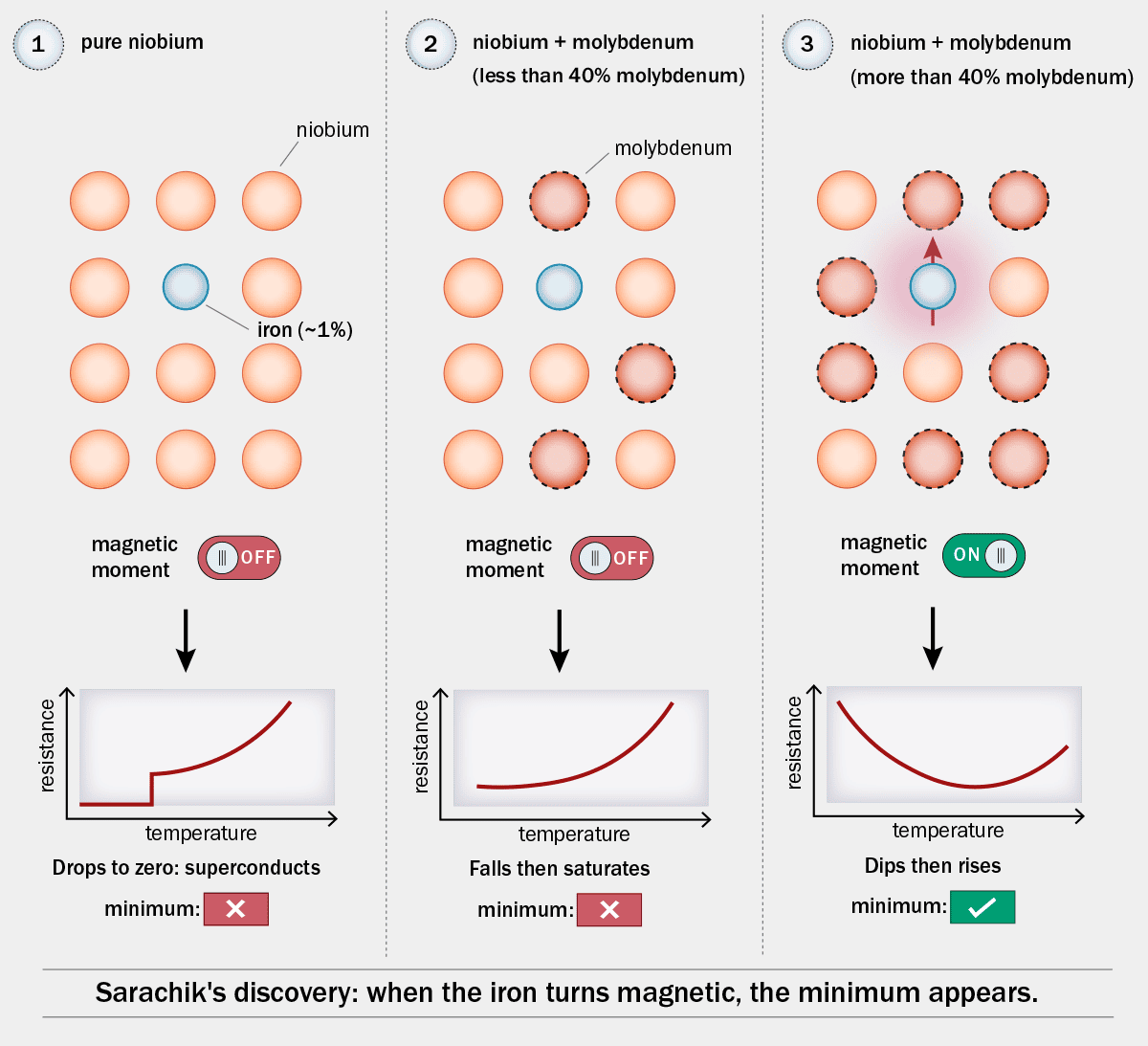
Why do some materials become more – not less – electrically resistant when cooled? In the first article of a two-part series, Mayank Shreshtha explains the overlooked contributions of the experimental physicist Myriam Sarachik to the Kondo effect – a strange phenomenon that set the foundations for some of the deepest revolutions in modern physics
Apoorva Nirala )"> (Illustration: Apoorva Nirala )
“Why would anyone still want to study a physical phenomenon that was discovered in the 1930s, explained in the 1960s and has been the subject of numerous reviews since the 1970s?” So began an article by the physicists Leo Kouwenhoven and Leonid Glazman in Physics World just over a quarter of a century ago. The authors were referring to the “Kondo effect” – a phenomenon that had once occupied a niche corner of low-temperature physics. But with the advent of nanotechnology, it appeared to be undergoing a resurgence.
More than 25 years later, the authors’ question still holds true.…