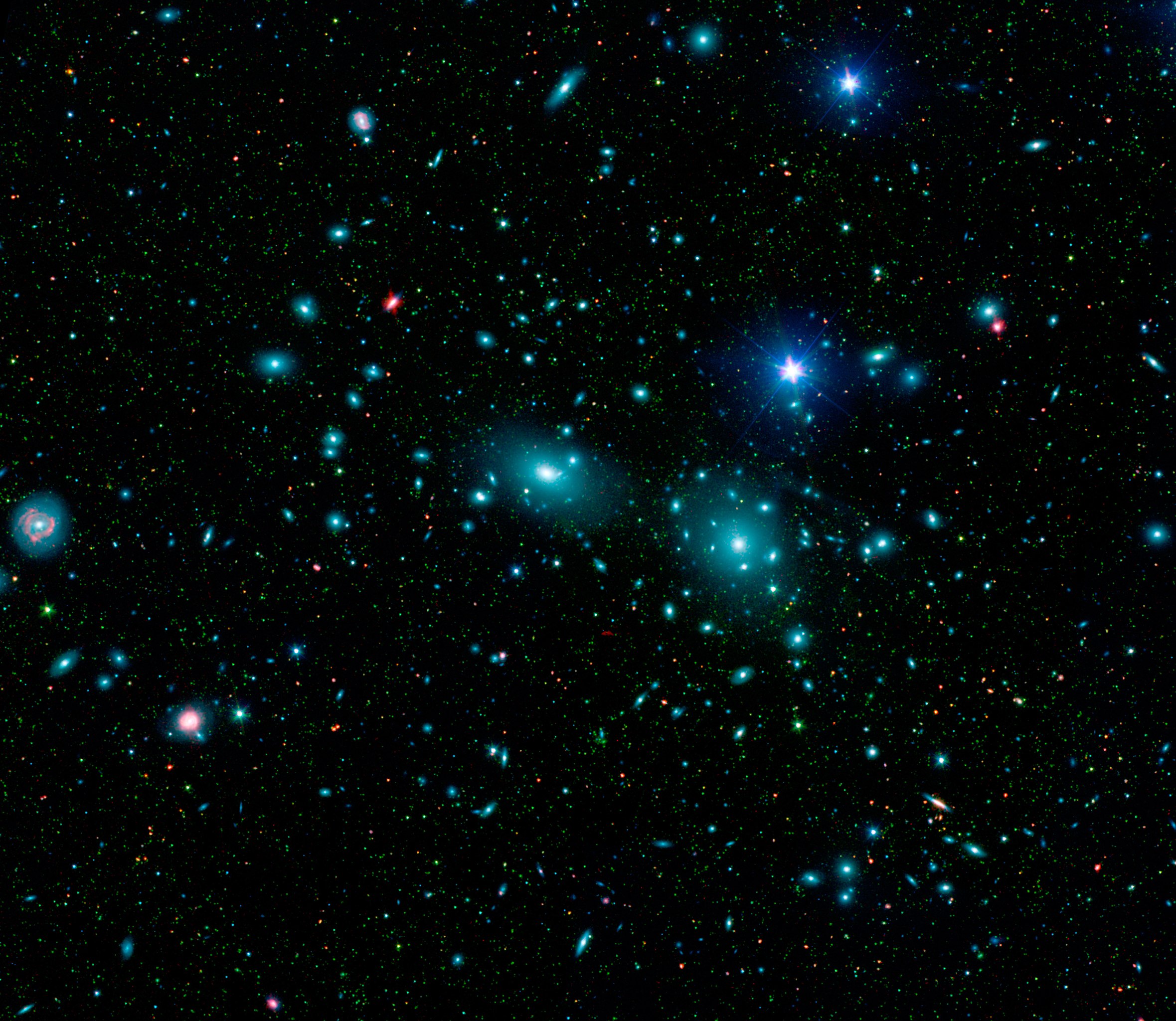
It’s hard to believe, but the idea that the Universe was dominated not by normal matter but rather by dark matter — a novel form of non-interacting matter that’s completely distinct from protons, neutrons, and electrons — goes all the way back to 1933: nearly a full century ago. For decades, the overwhelming majority of the leading astronomers and physicists dismissed the idea as being ill-motivated and lacking sufficient evidence backing it, and it gained very little traction on both the theoretical and observational fronts throughout the 1930s, 1940s, 1950s, and 1960s. It was only with the novel results and improved instrumentation initially leveraged by Vera Rubin and Kent Ford, and then further developed by Rubin on her own, that dark matter was brought into the cosmological mainstream in 1969 and then throughout the 1970s.
So who should get the credit for discovering dark matter?…