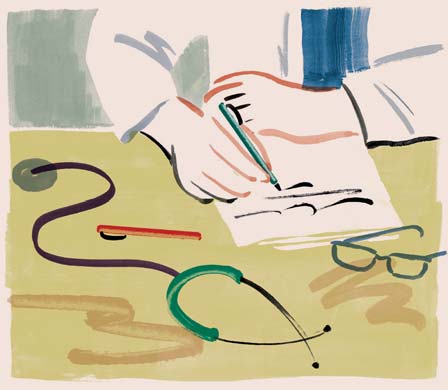
Left-handedness occurs in all human societies, typically running at about 10 per cent of the population. It is strongly polygenetically determined, the outcome of multiple interacting genes.
Archaeological studies have found evidence for it dating back millennia. For a genetic trait to persist, it must confer reproductive advantage – left-handed individuals must be better able to pass on their genes. Links have been identified with creativity, musical ability and potentially mathematics, all of which might confer greater socio-economic status – there is evidence that sinistral men earn around 4 per cent more than their dextrous counterparts. Left-handed brains appear to have greater connectivity between the two hemispheres, and language functions are typically distributed more symmetrically, which may be the neural underpinnings of the differences observed.
Subscribe to the New Statesman and save 40% for 1 year!