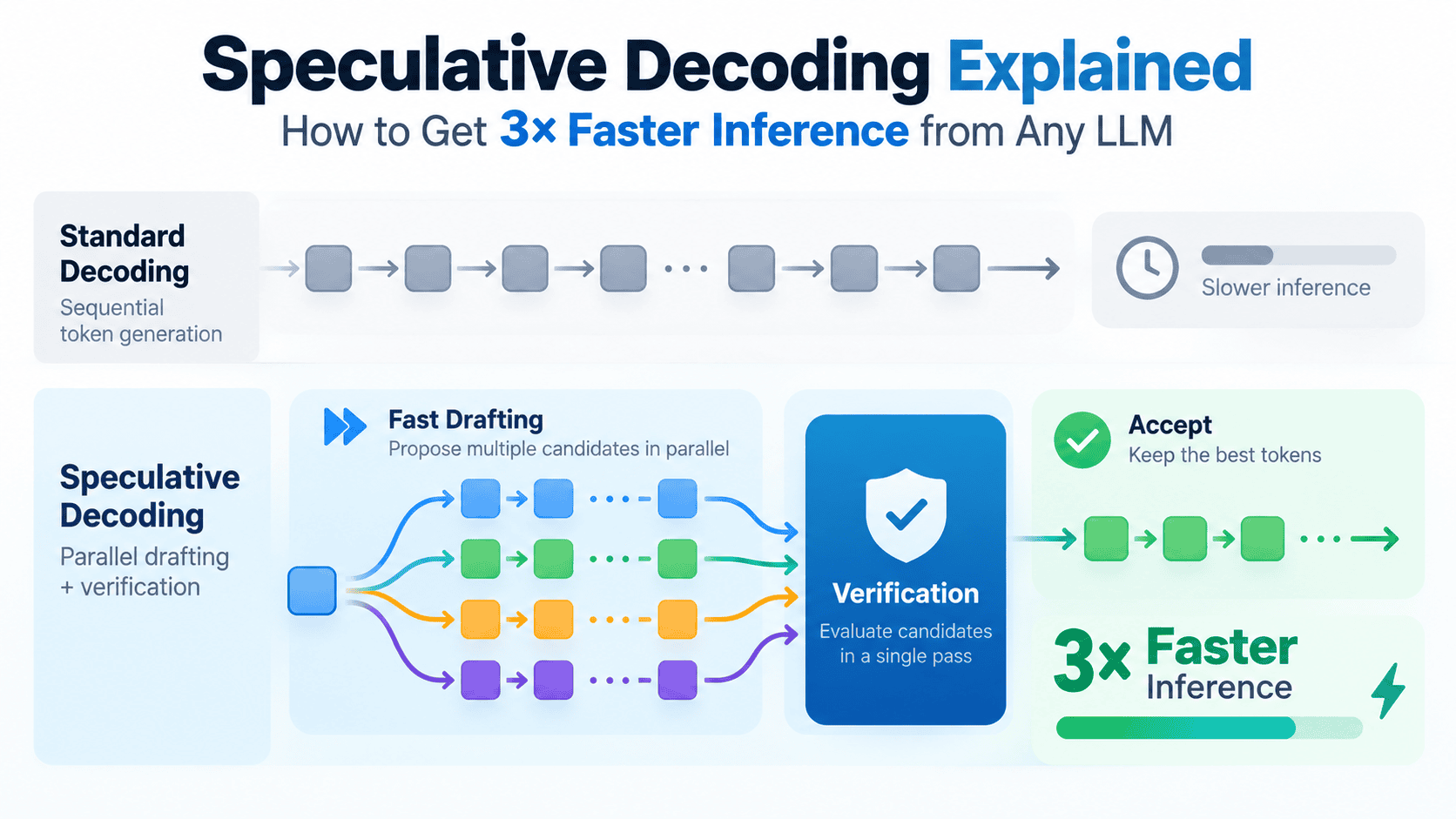
In this article, you will learn how speculative decoding works, why it produces real speed gains at the hardware level, and what modern implementations look like in practice.
Topics we will cover include:
The core memory-bandwidth bottleneck that makes standard autoregressive token generation slow.
How the draft-and-verify loop works and why it preserves the target model’s output distribution exactly.
Modern variants of speculative decoding — including Medusa, Eagle, and Prompt Lookup Decoding — and the practical trade-offs involved in enabling the technique in production.
Introduction
Every time you send a message to an AI chatbot, the model generates its response one token at a time. That single constraint is one of the most significant barriers to deploying large language models at scale.…