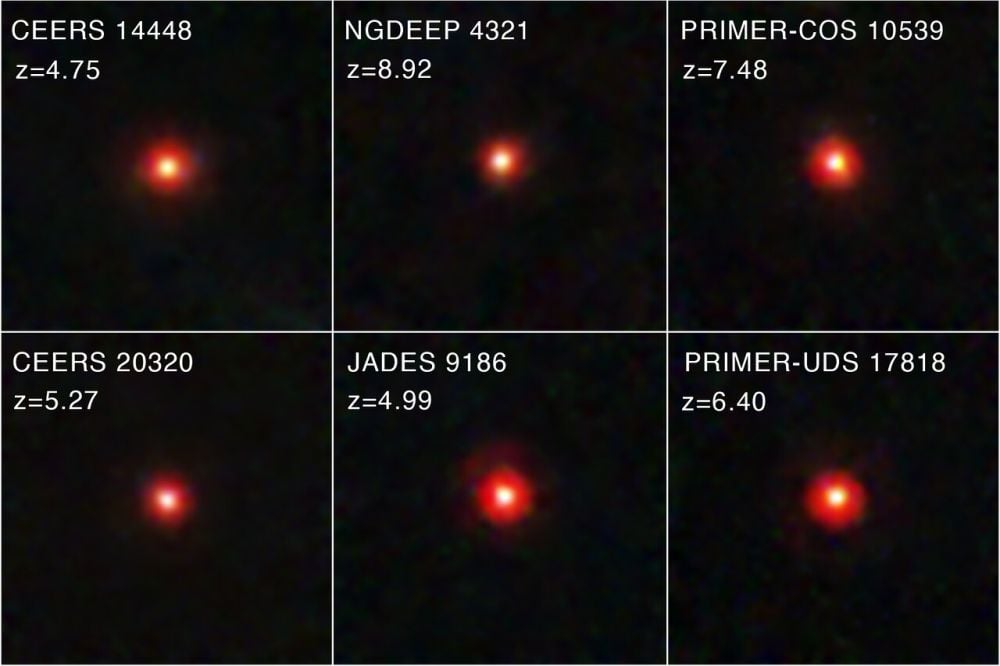
Astronomers are in an ongoing scientific wrestling match with some of the JWST's observations. The telescope can gaze back in time by sensing red-shifted light from the early Universe. One of its surprising findings is that supermassive black holes (SMBH) existed long before theory says they should. Some of the SMBHs it detected were found only 400 million and 500 million years after the Big Bang.
So far, there's no solid, widely-held explanation for this. But one contender involves stellar mergers.
New research suggests that in the dense stellar environment in the early Universe, repeated stellar mergers could've lead to eventual SMBHs. It's titled " A Cosmological Framework for Stellar Collisions at High Redshift in Proto-globular Clusters, Nuclear Star Clusters, and Little Red Dots, " and it's published in The Astrophysical Journal.…