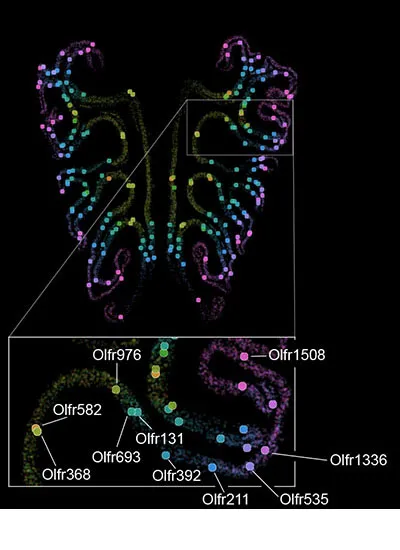
In two new studies, researchers used genetic techniques to upend a long-standing assumption that the nerve cells with scent detectors were randomly arranged. They don’t know whether the same spatial organization is found in human noses
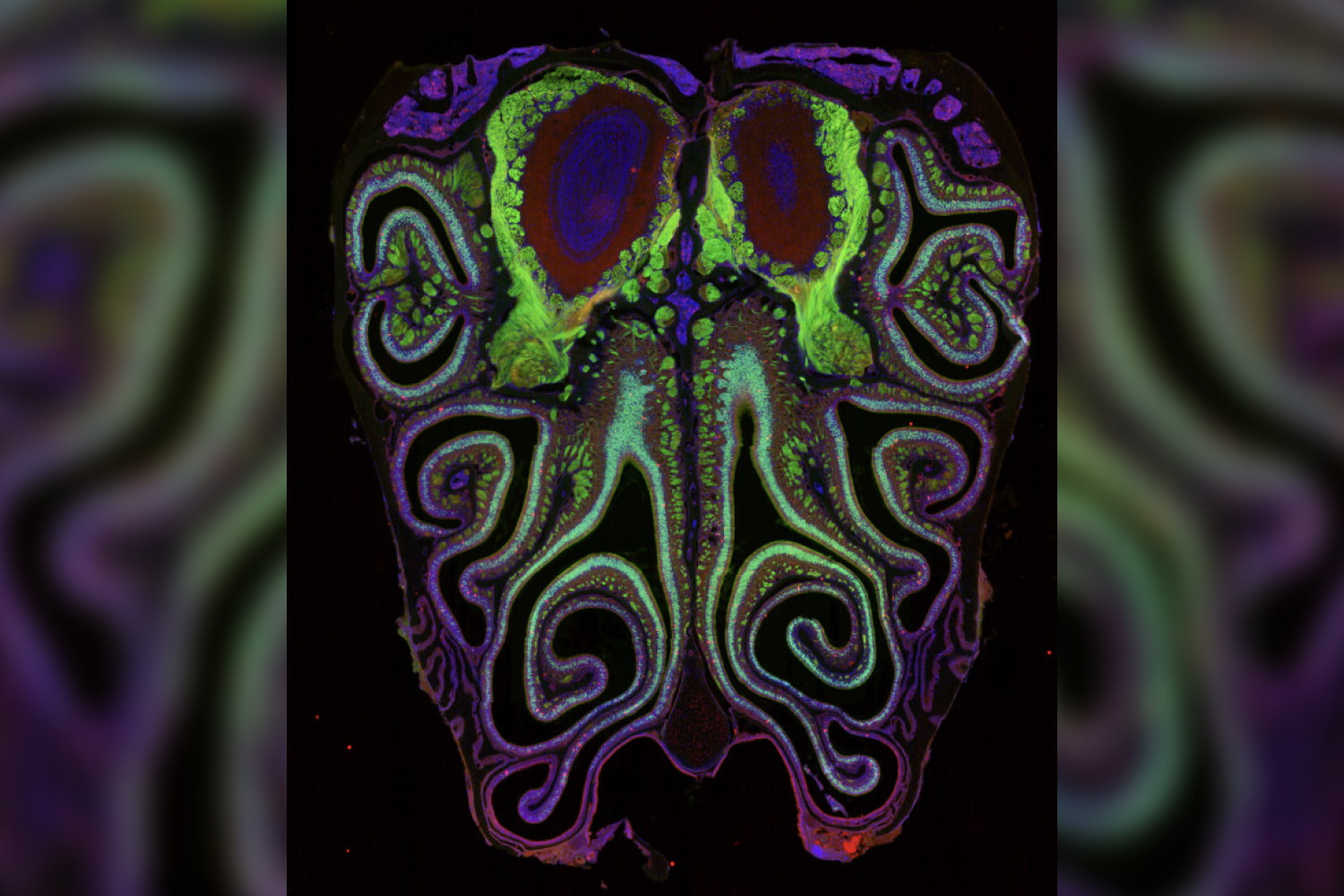
Microscope image of a cross-section of a mouse nose. The animal was genetically altered so that its nerve cells used for smell glow green. Some dying nerve cells appear red. Datta Lab
How, exactly, the nose’s odor detectors are arranged has long remained a mystery.
Other sensory organs have been charted within the past century, and researchers now know that cells responsible for touch, sight and sound are organized in specific spatial patterns.…