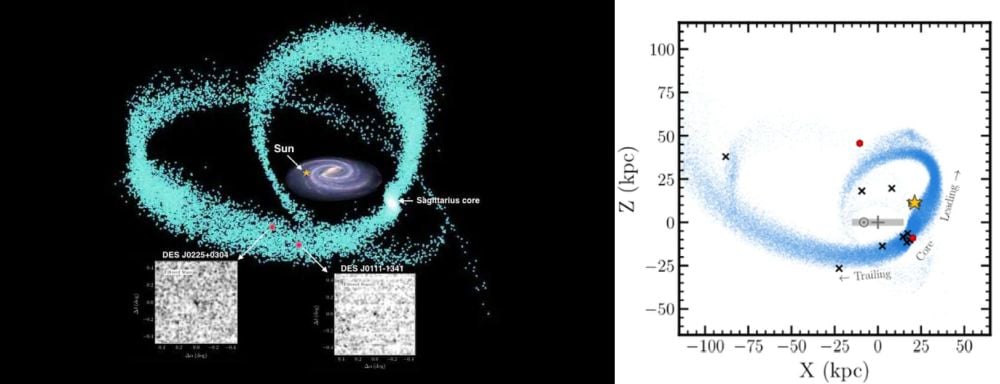
Massive galaxies like the Milky Way have a retinue of smaller, dim satellites on their outskirts. They're hard to detect, and while astronomers have found about 65 of the Milky Way's dwarf satellite galaxies, and about 40 globular clusters in its halo, they suspect there are many dwarf satellites and globular clusters yet to be found. Now the Vera Rubin Observatory has found two more.
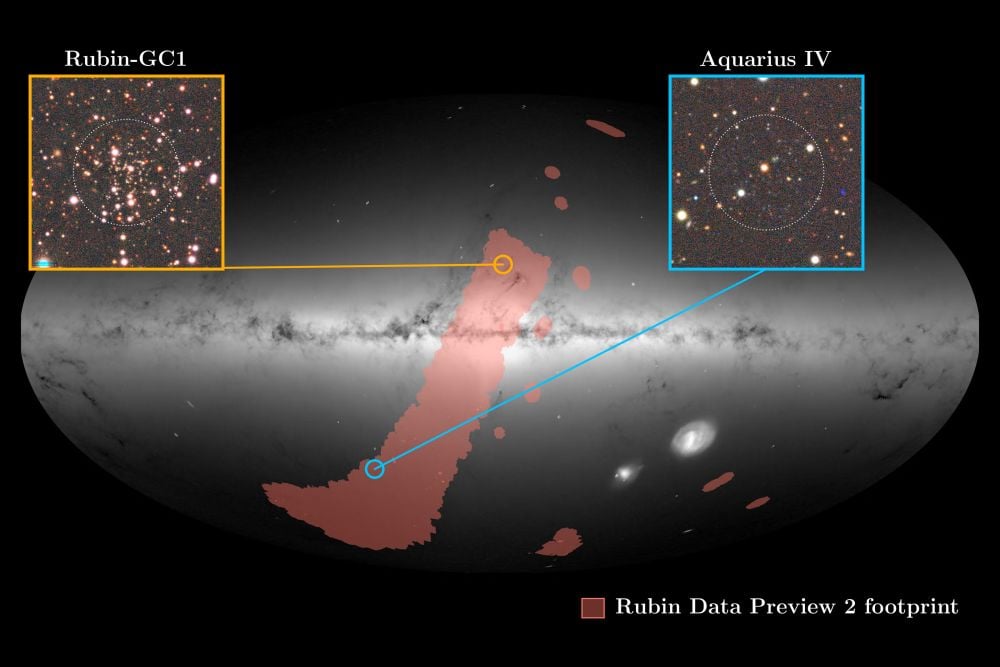
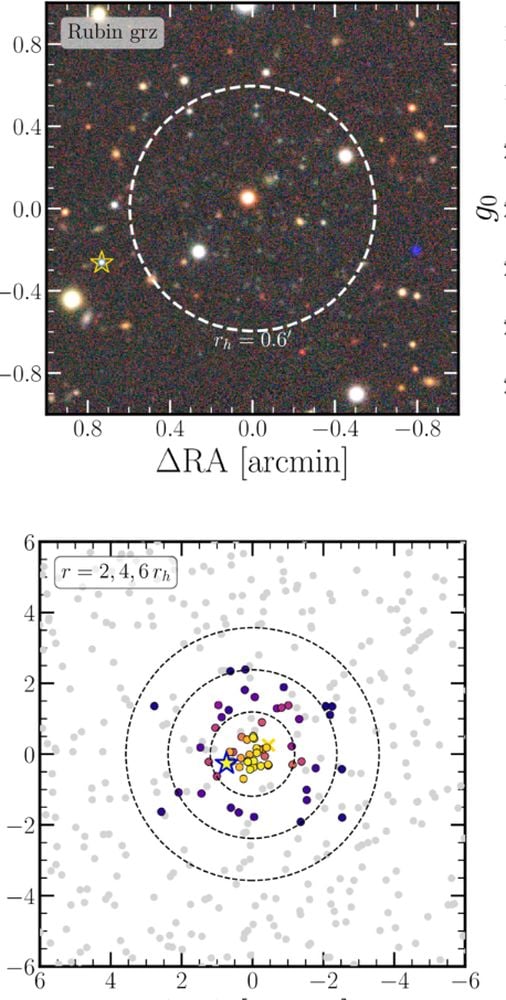
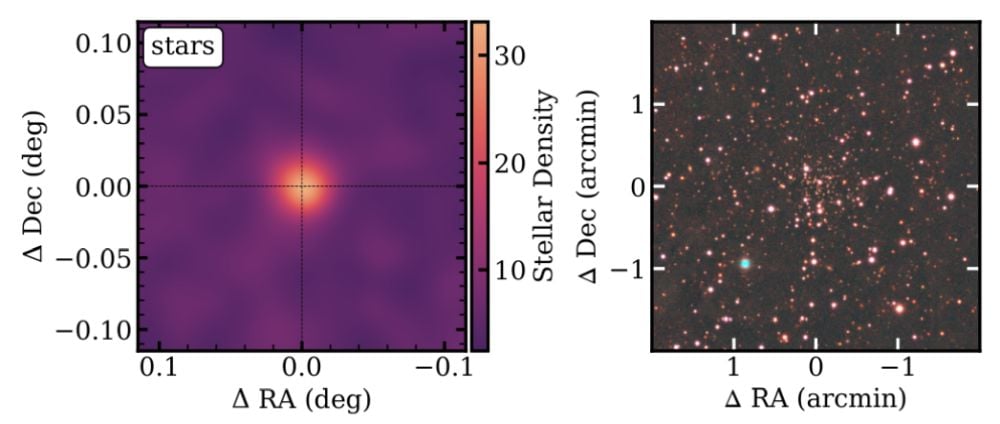
The Milky Way's satellites are either small dim galaxies or globular clusters, and both are part of the assembly history of the Milky Way through mergers. These two detections by the Rubin, found in its Early Data Preview 2 (EDP2) released in July 2026, are almost certainly the beginning of many more discoveries of Milky Way satellites by the powerful observatory. One is a most likely a dim dwarf galaxy named Aquarius IV, and one is a globular cluster named Rubin-GC1.
This figure shows the locations of both Rubin-GC1 and Aquarius IV.…