From a naked eye perspective, stars are stable and predictable. Not much goes on but shining. The Sun itself is fairly plane and nondescript and will shine relatively steadily for billions of years. It's considered a low-mass star compared to the most massive stars, which are rarer and contain many times its mass.
Powerful telescopes bring millions of stars of different types and ages into view. Astrophysicists and astronomers watch the Sun and its low-mass brethren, and note changes in their shining, just as they do all types of stars. Their observations reveal the changes stars experience during their long lifetimes.
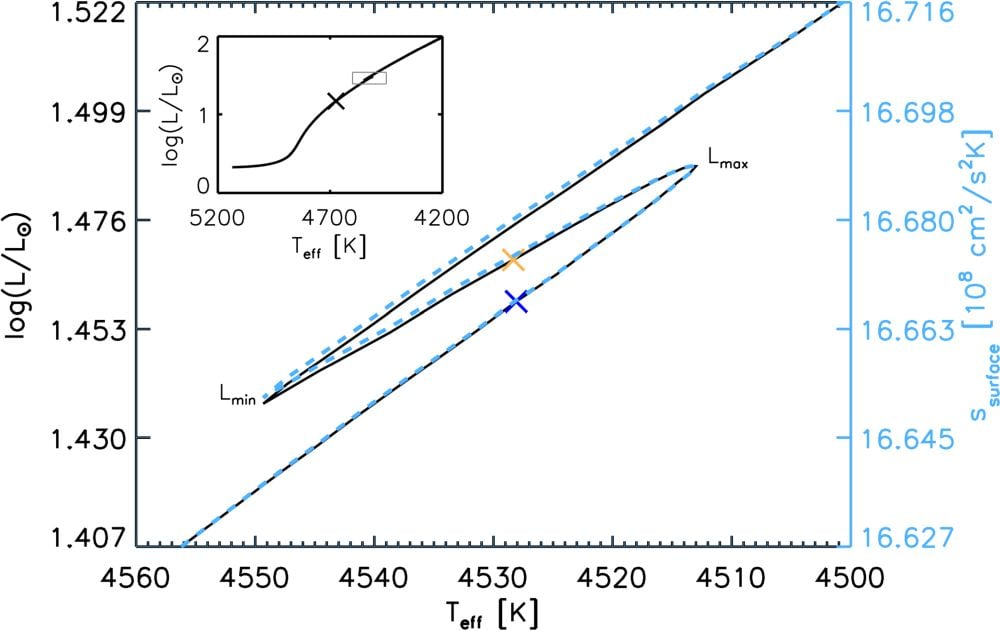
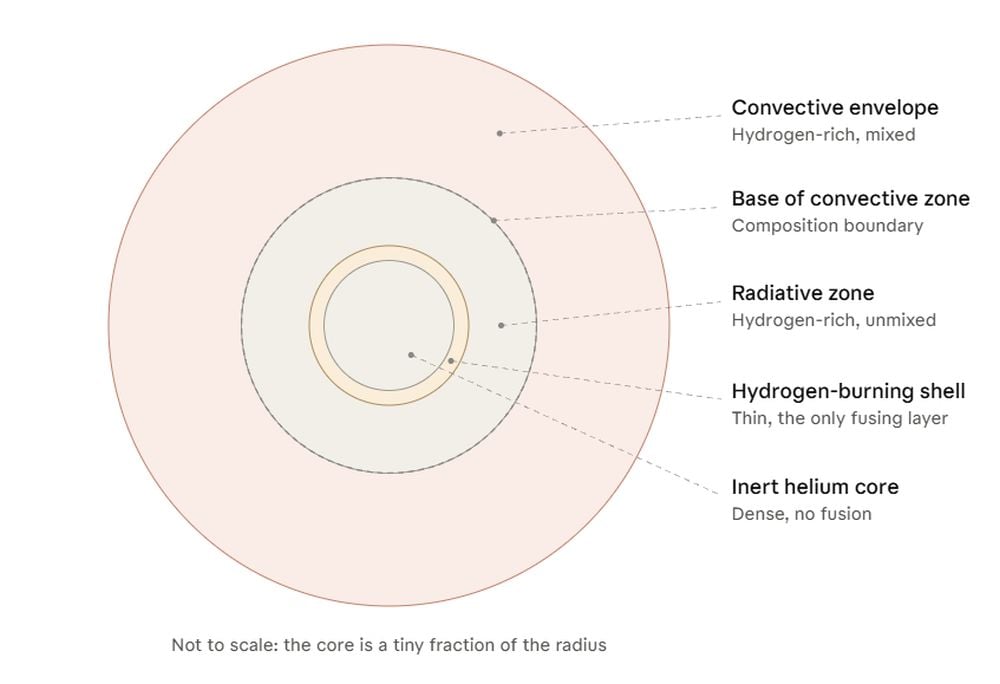
As low-mass stars like the Sun exhaust their hydrogen supplies and evolve, they become Red Giant Branch (RGB) stars. This is not only theoretical, it's an observational conclusion. RGB stars are easy to observe and study for two reasons: they're bright, and they're numerous. Arcturus, Aldebaran, and Pollus are all bright, naked-eye stars and are all RGB stars.…