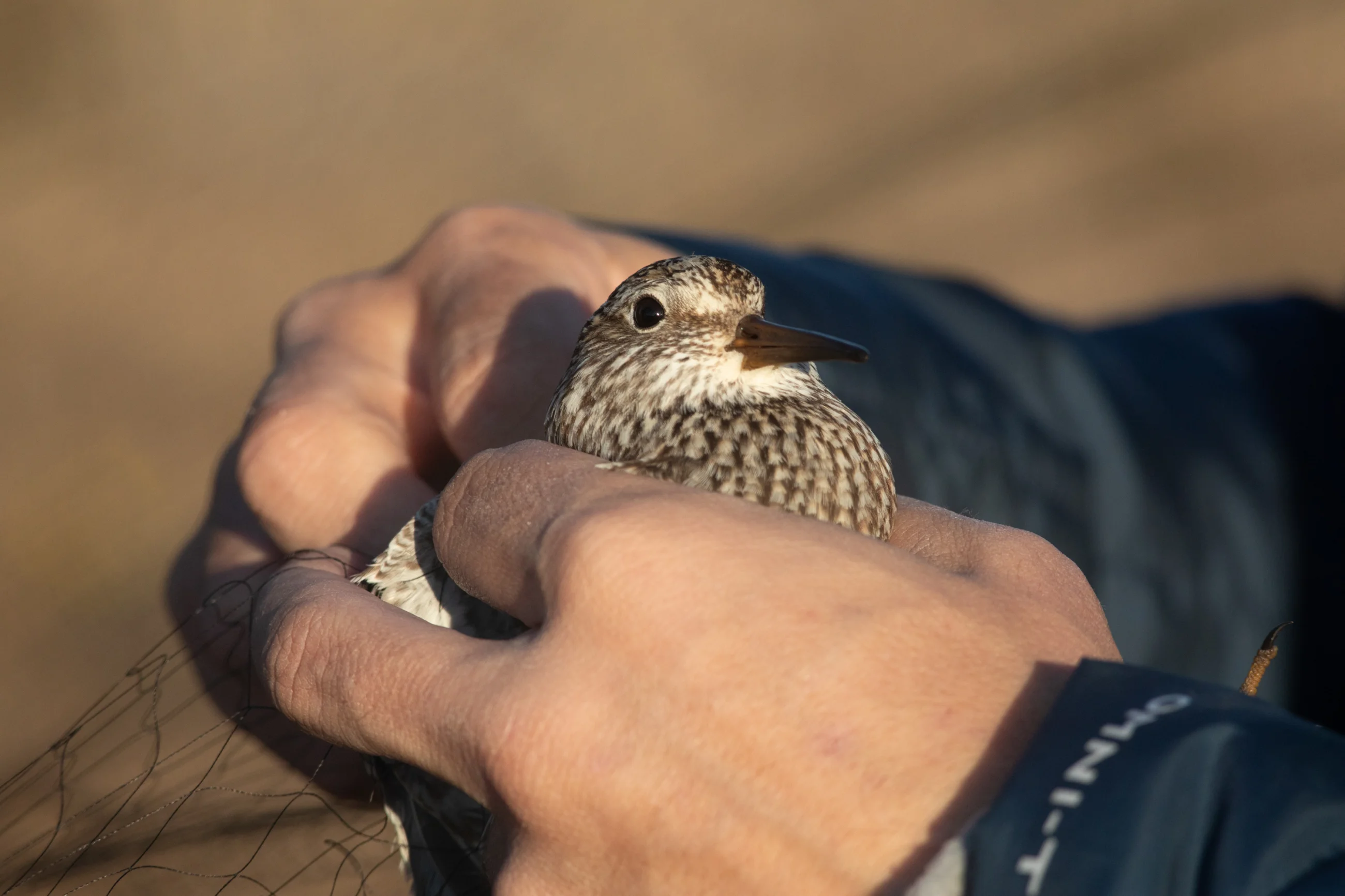
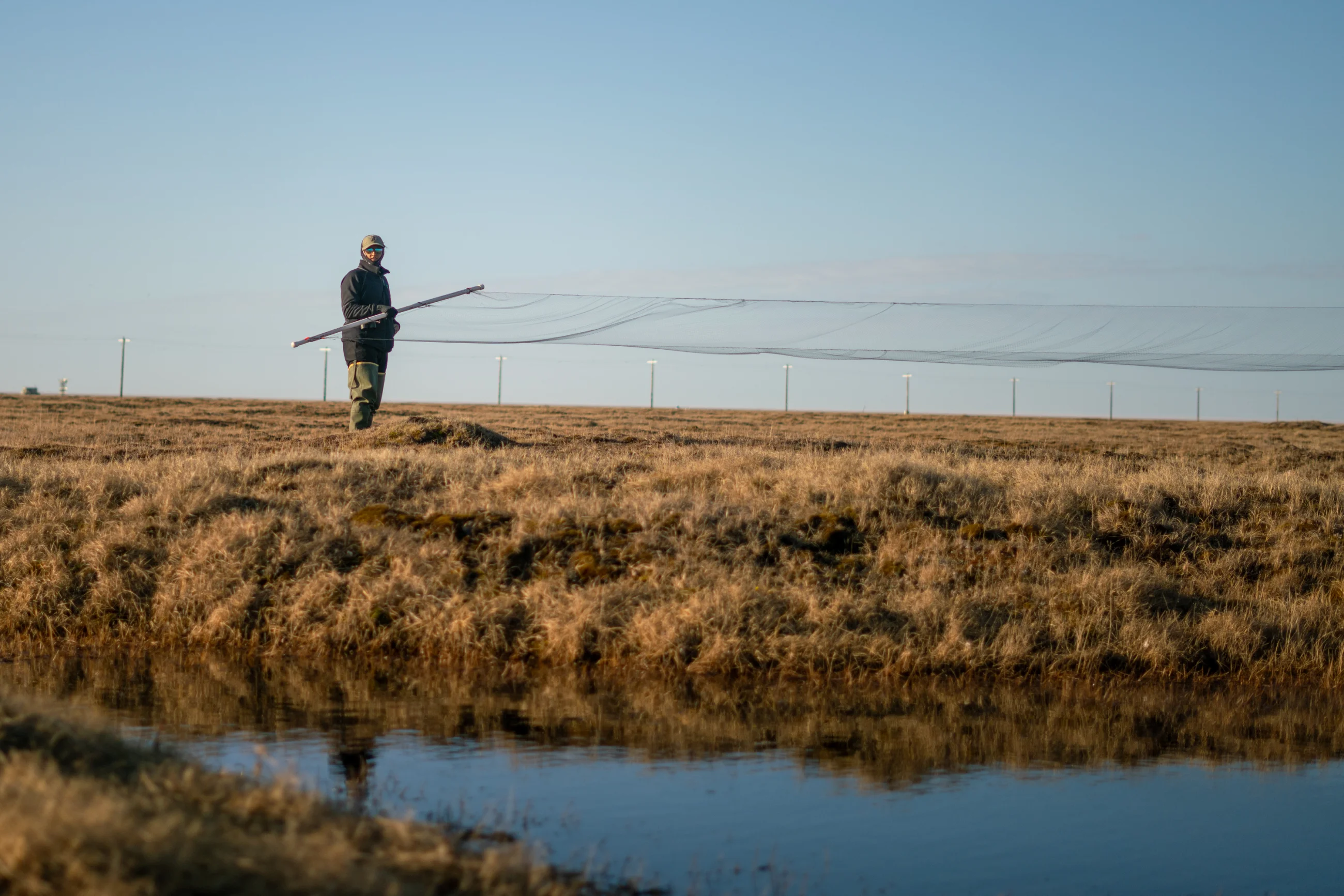
Pectoral sandpipers are among more than 12 million shorebirds that migrate to Alaska every year to breed. For years, scientists have been trying to understand how these unassuming birds make such monumental journeys. Ryan Kellman/NPR hide caption
Ryan Kellman/NPR
Pectoral sandpipers are ultra-marathoners. They fly more than 17,000 miles a year, crossing entire continents on their migration from Alaska to Argentina and back again. They don't soar or coast on the wind – they flap the entire way. And these elite athletes are only the size of a robin, weighing around three ounces.
The sandpipers are among more than 12 million shorebirds that migrate to Alaska every year to breed, spending the short summer season in open lands near water. For years, scientists have been trying to understand how these unassuming birds accomplish such monumental journeys from places like New Zealand, Asia, South America.
Rick Lanctot studies shorebirds with the U.S. Fish and Wildlife Service.…