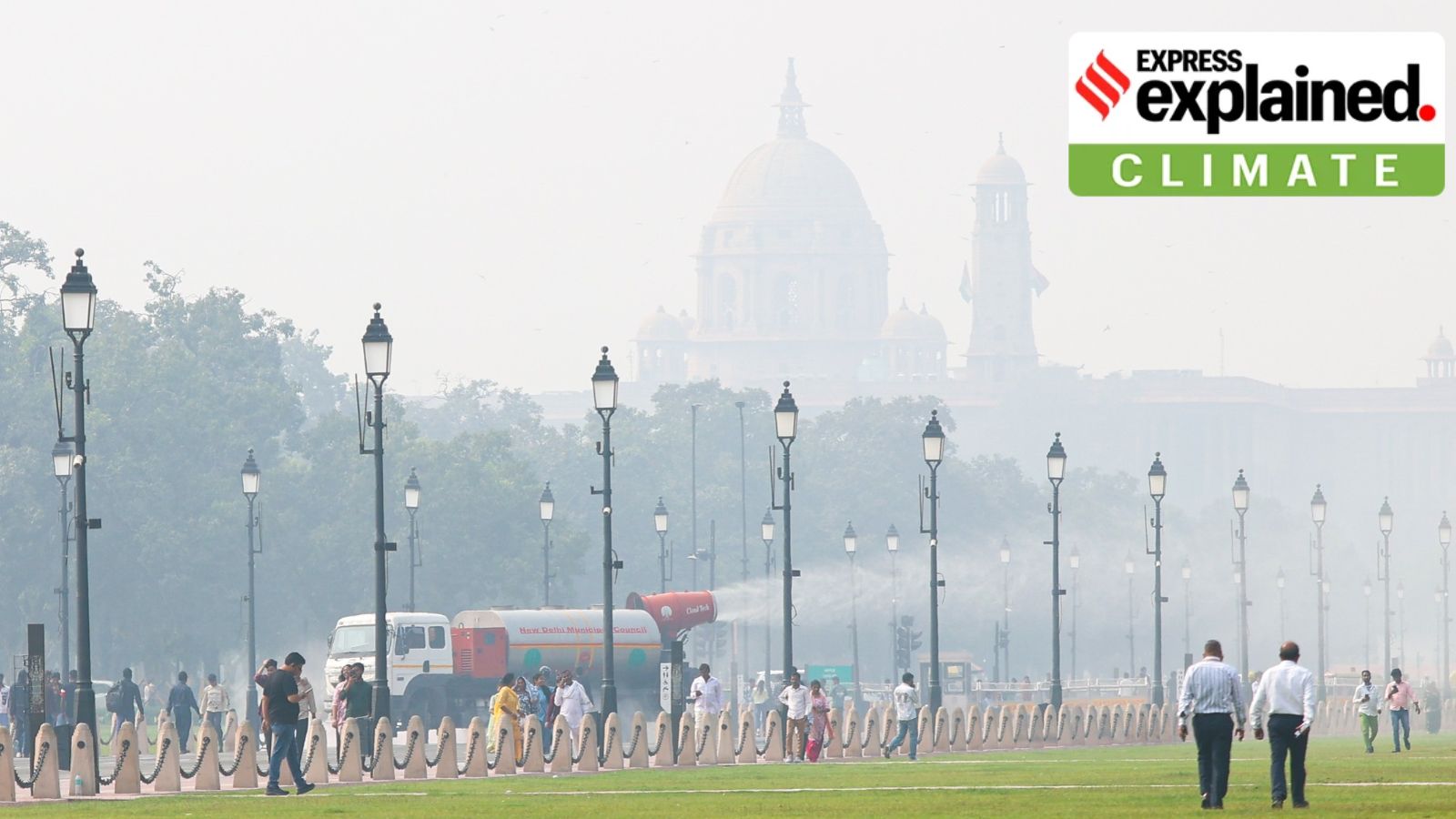
Days after Diwali, the Delhi-NCR region remains blanketed in smog, the thick haze that returns every winter as pollutants accumulate in the air. This year, firecrackers added to the problem, accounting for over 71% of Delhi’s fine particulate pollution in the early hours following Diwali, according to an assessment by the Indian Institute of Tropical Meteorology (IITM), Pune.
But what causes this recurring winter phenomenon, how is smog different from fog, and why is Delhi particularly vulnerable?
Smog, derived from ‘smoke’ and ‘fog’, occurs when pollutants accumulate in the air, often reducing visibility. These include fine particulate matter, such as PM2.5 and PM10, and gases released by vehicles, industries and other sources.
Some pollutants, including nitrogen oxides and volatile organic compounds, can also react in sunlight to form ground-level ozone.…