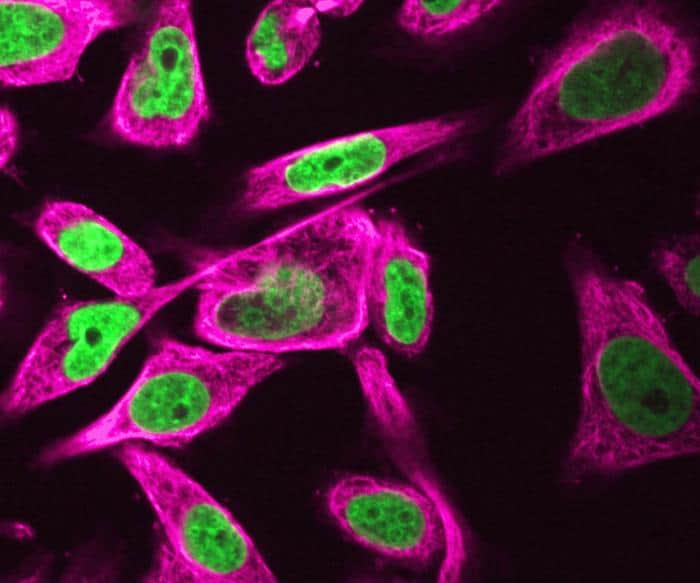
Going with the flow: Human cells with fluorescently labelled chromatin (green) and microtubules (magenta) appear elongated after 24-hour exposure to flows. (Courtesy: Nikitas Kanellakopoulos and Alexandra Zidovska, Department of Physics, New York University)
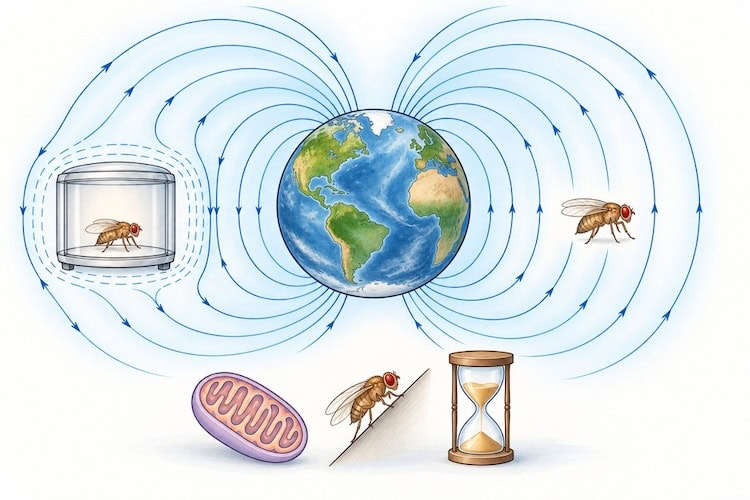
The human genome doesn’t seem to mind being in zero-gravity environments, and in some cases, the mitochondria that produce energy for our cells actually benefit from spending time outside the Earth’s magnetic field. These two findings – which come from separate research groups in the US and the UK – could have important implications for space travel, while the latter hints at a new pathway for treating neurodegenerative conditions such as Parkinson’s disease.
The human genome encodes information in molecules of DNA, and its structure is directly linked to its function. Any changes to this structure can lead to disease.…