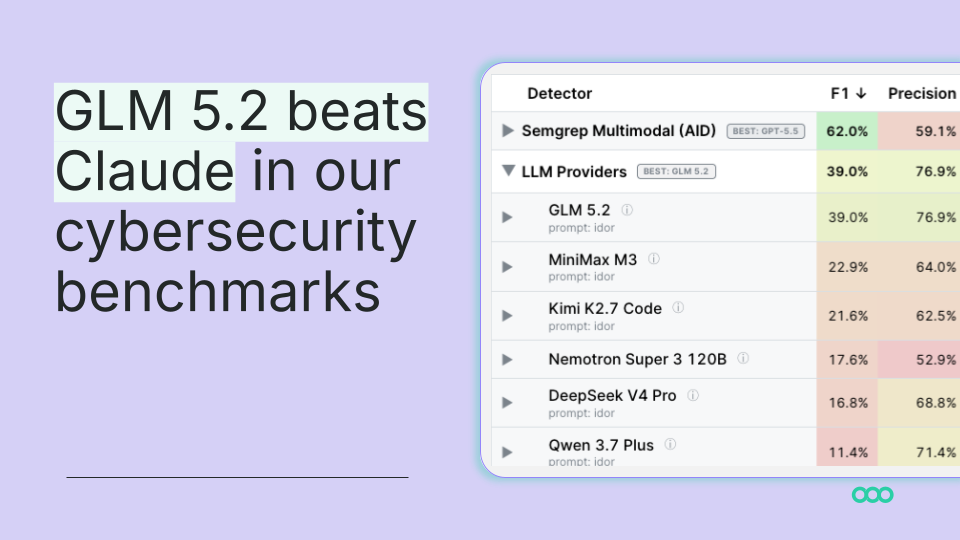
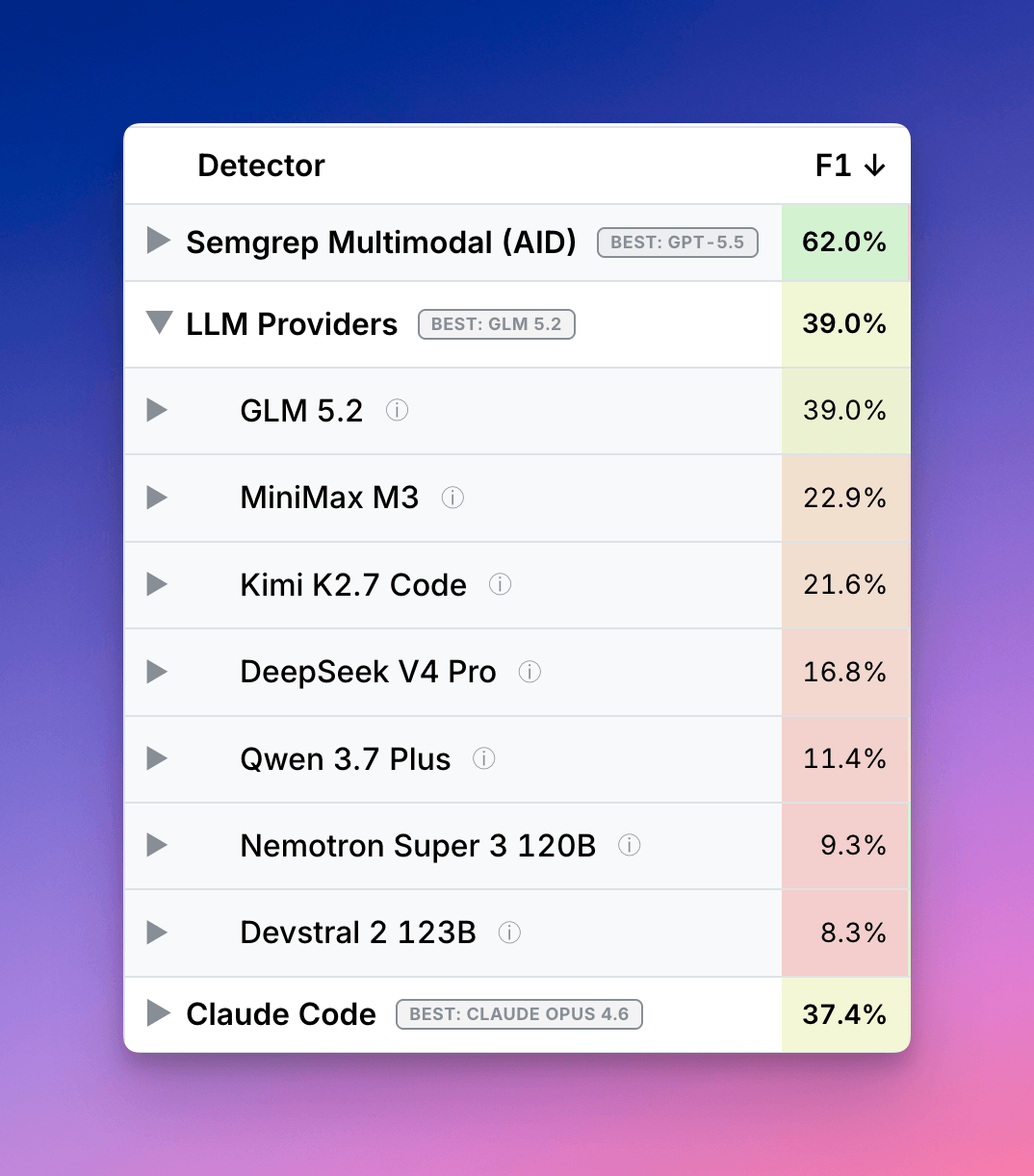
We ran a set of popular open-source models against our IDOR benchmark, the same dataset and the same prompt we've used to evaluate frontier coding agents. The result surprised us: GLM 5.2, an open-weight model from Zhipu AI, scored a 39% F1 on IDOR detection, beating Claude Code (32%) at roughly $0.17 per vulnerability found. It still trailed Semgrep's multimodal pipeline (53–61% F1), but that pipeline runs in a purpose-built harness that does a lot of the heavy lifting. Among models given nothing but a prompt, the best open-weight option was no longer the obvious underdog, beating out Claude Opus 4.8.
We weren't trying to crown an open-weight champion, really. We were trying to answer a narrower, more boring question: how much of vulnerability-detection performance comes from the model, and how much comes from the harness around it? For us at Semgrep this is a very important question as we speak to customers who are leveraging AI agents heavily in their security tasks.…