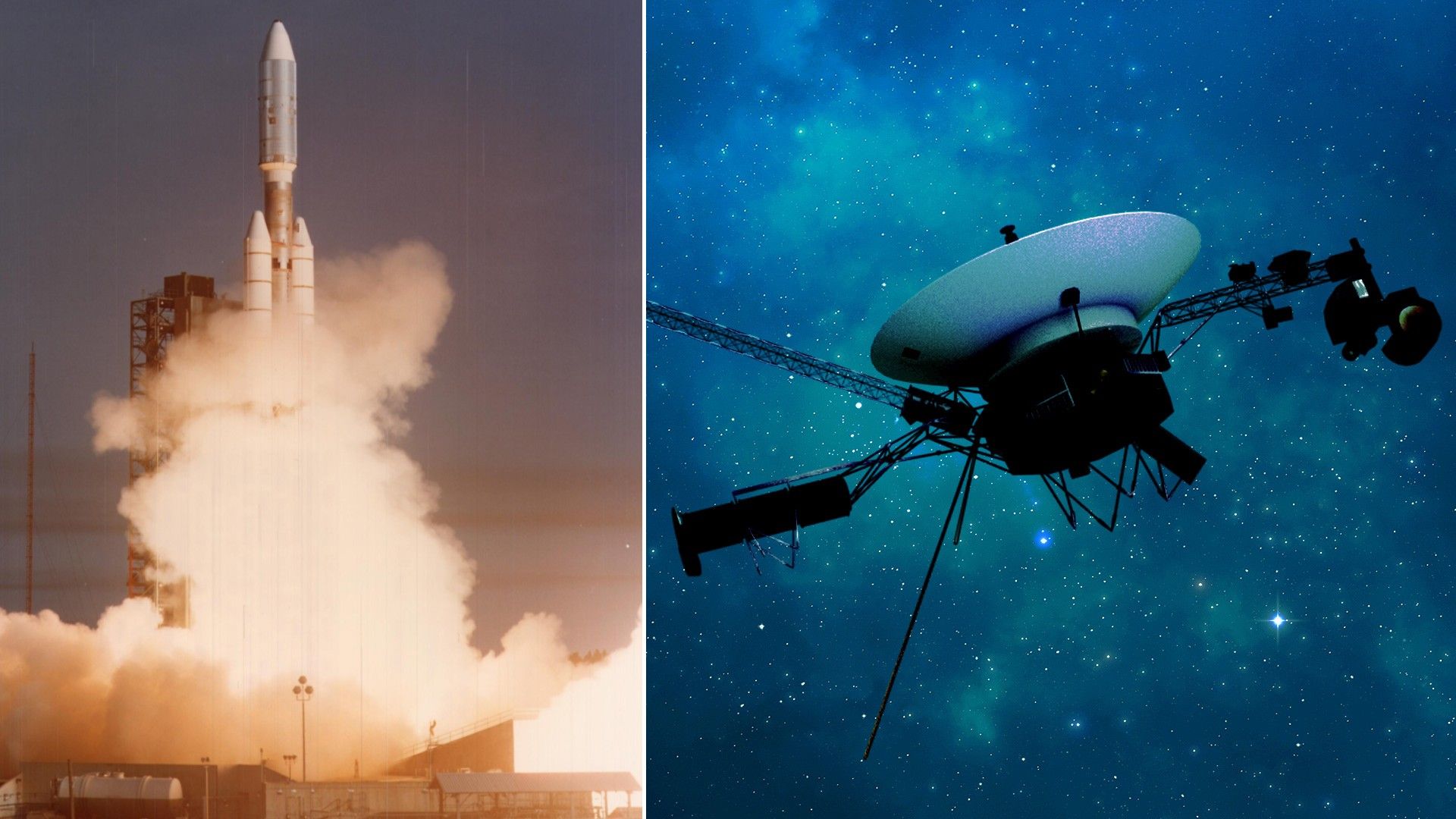
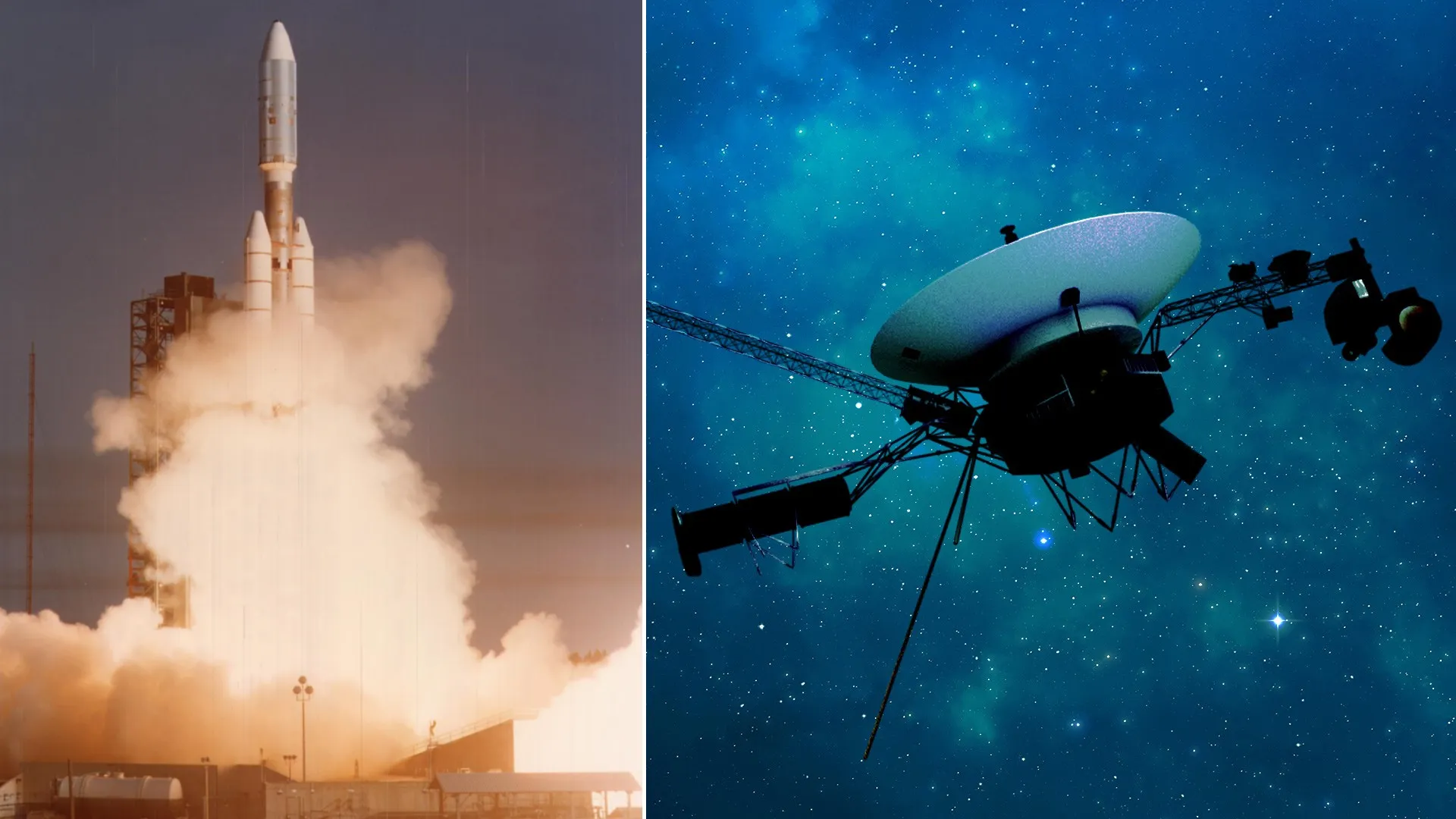
NASA's Voyager 1 spacecraft launches atop a Titan/Centaur-6 rocket from Kennedy Space Center in Florida on Sept. 5, 1977 (left); an illustration of Voyager 1 in interstellar space. (Image credit: NASA)
Voyager 1 is about to reach a light-day of distance in space, but Voyager 2 won't hit the mark until about 2035. Why the big difference?
On Nov. 18, Voyager 1 will be so far away from Earth that it will take a full light-day (24 hours) to send a signal to the distant spacecraft, at 16,094,799,096 miles (25,902,068,356 kilometers). Since light is essentially the maximum speed in the universe (absent using devices like wormholes, or quantum-physics puzzles), it's a big deal — so big that NASA will be celebrating the milestone by asking fans to shine Morse Code signals at the sky.
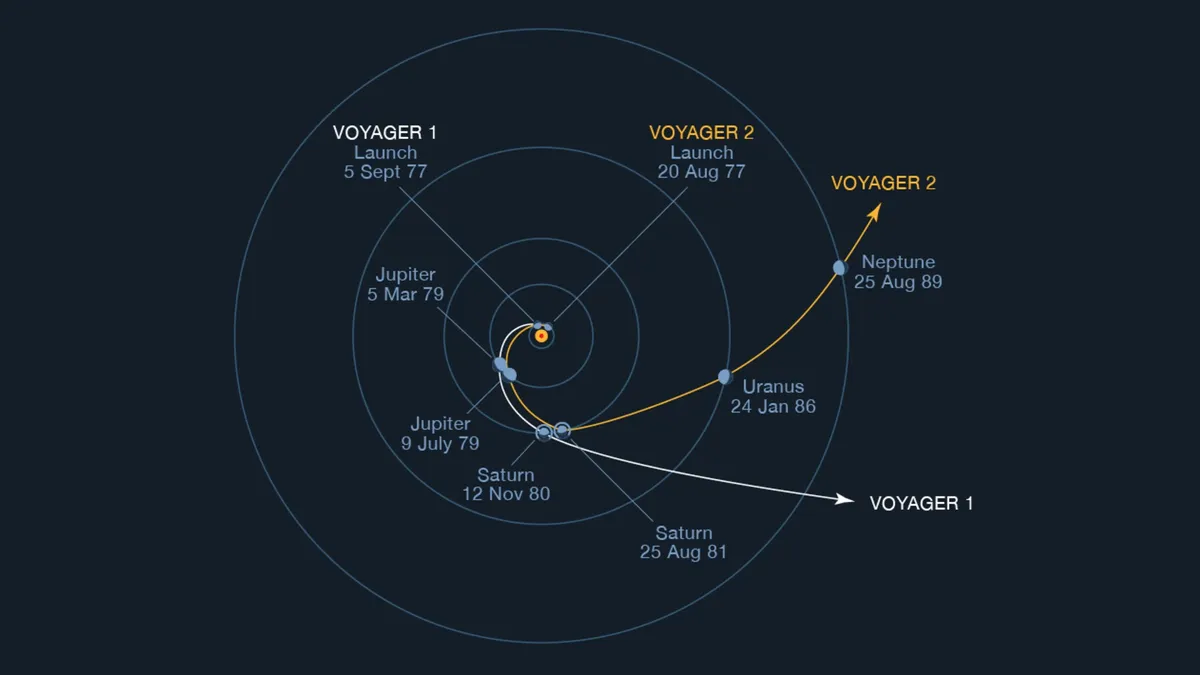
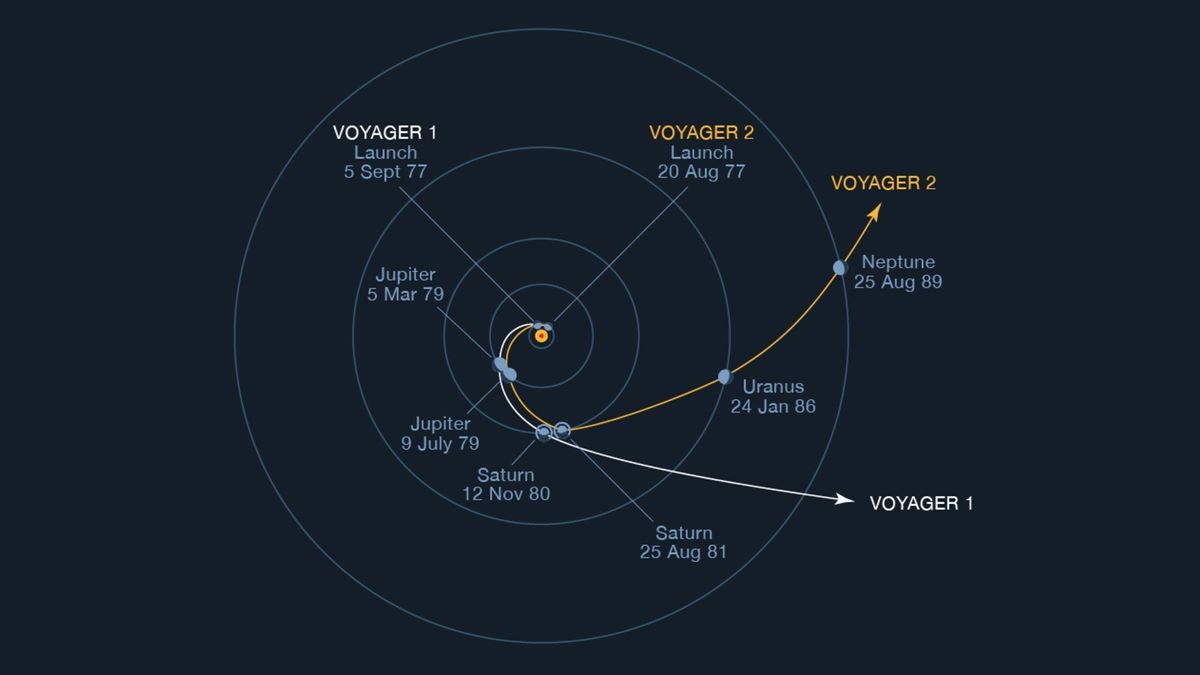
But why will Voyager 2 take nearly a decade longer? It comes down to choices made for speed and science during the twin missions' nearly 50-year journey, specifically during the first bit when they were flying by planets.…