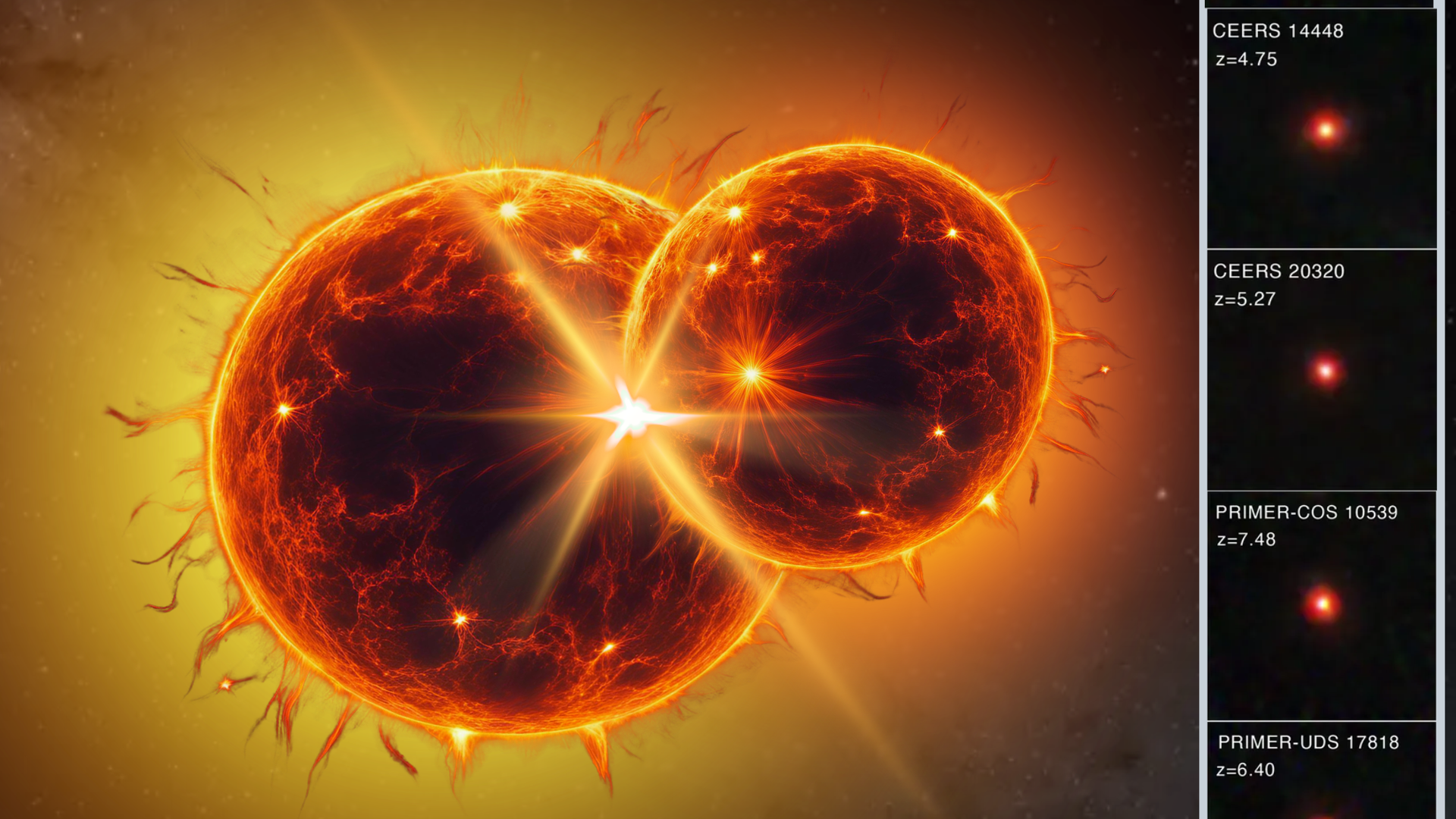
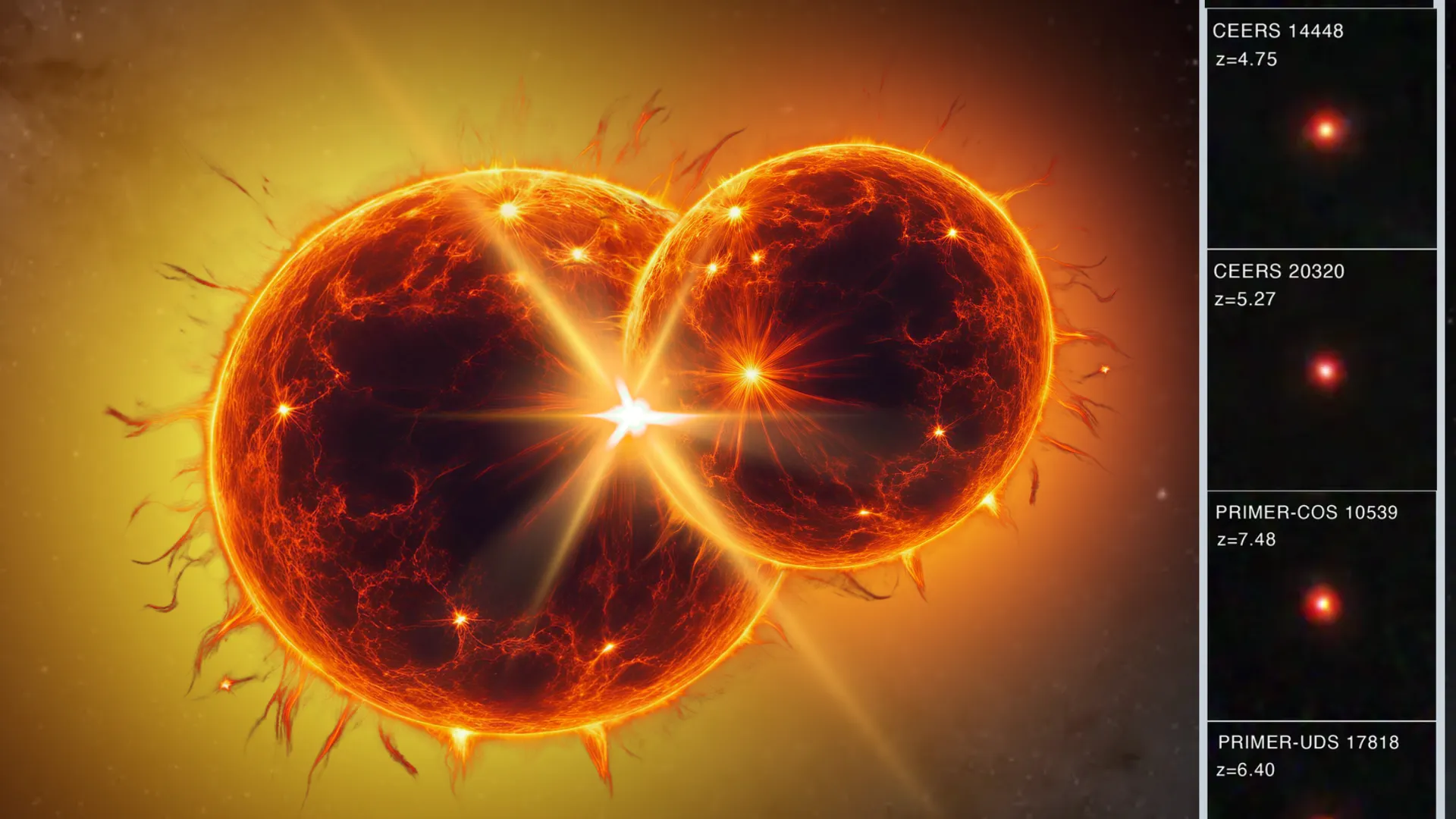
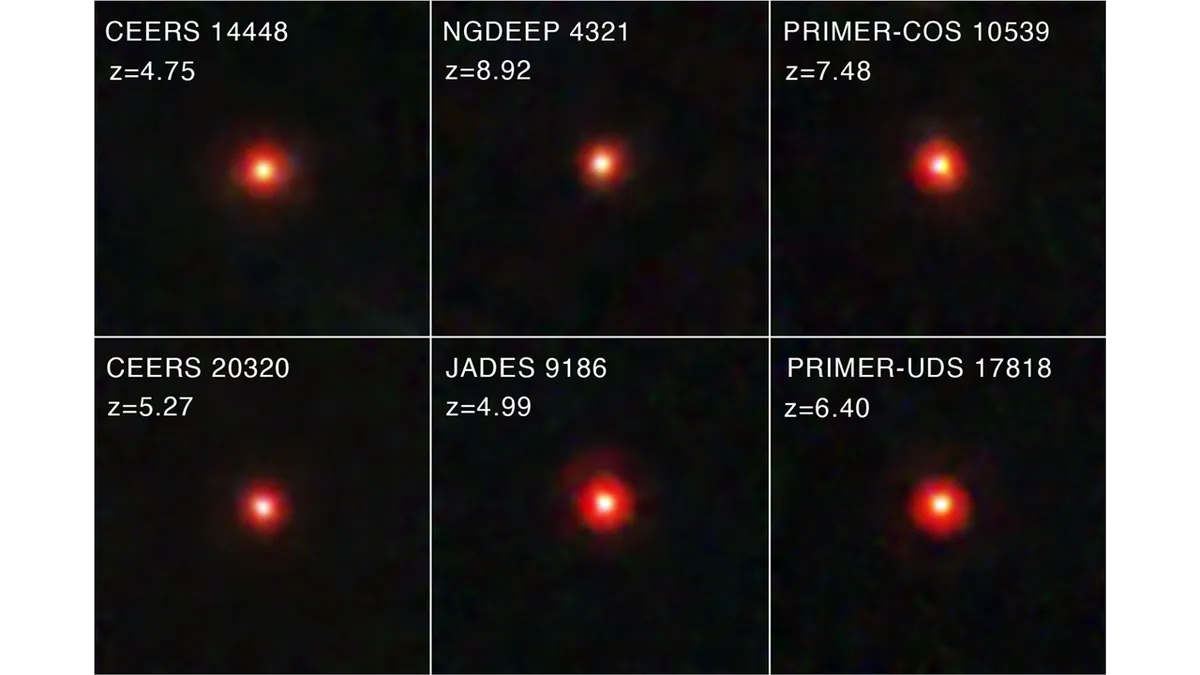
(Main) an illustration of collsiding stars in the early universe (Inset) A strip of Little Red Dots as seen by the JWST (Image credit: Robert Lea)
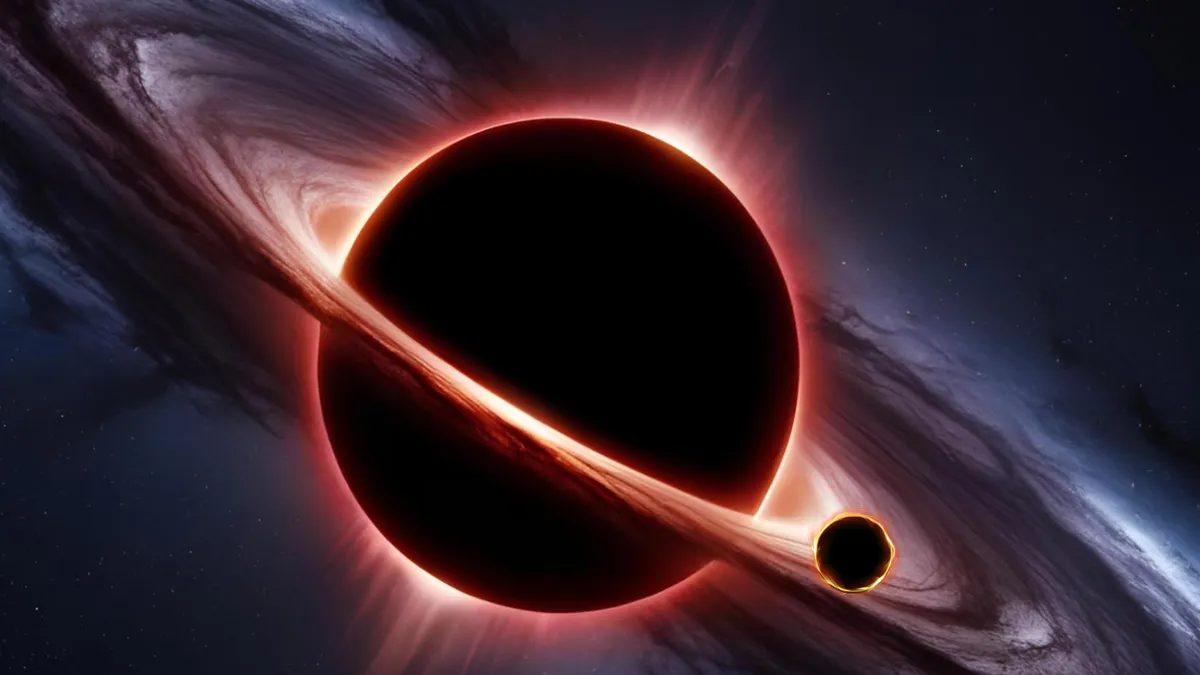
New research suggests that collisions between stars in the early universe were common, which could help explain the rapid growth of supermassive black holes and the existence of strange Little Red Dots seen by the James Webb Space Telescope (JWST).
The team behind this research performed simulations of the early universe and found stellar systems were densely packed, leading to stars frequently slamming into each other. While rapid collisions would have destroyed the stars involved, slower collisions would have led to repeated mergers, creating single over-massive stars, which could collapse and form larger-than-usual black holes at the end of their lives.…