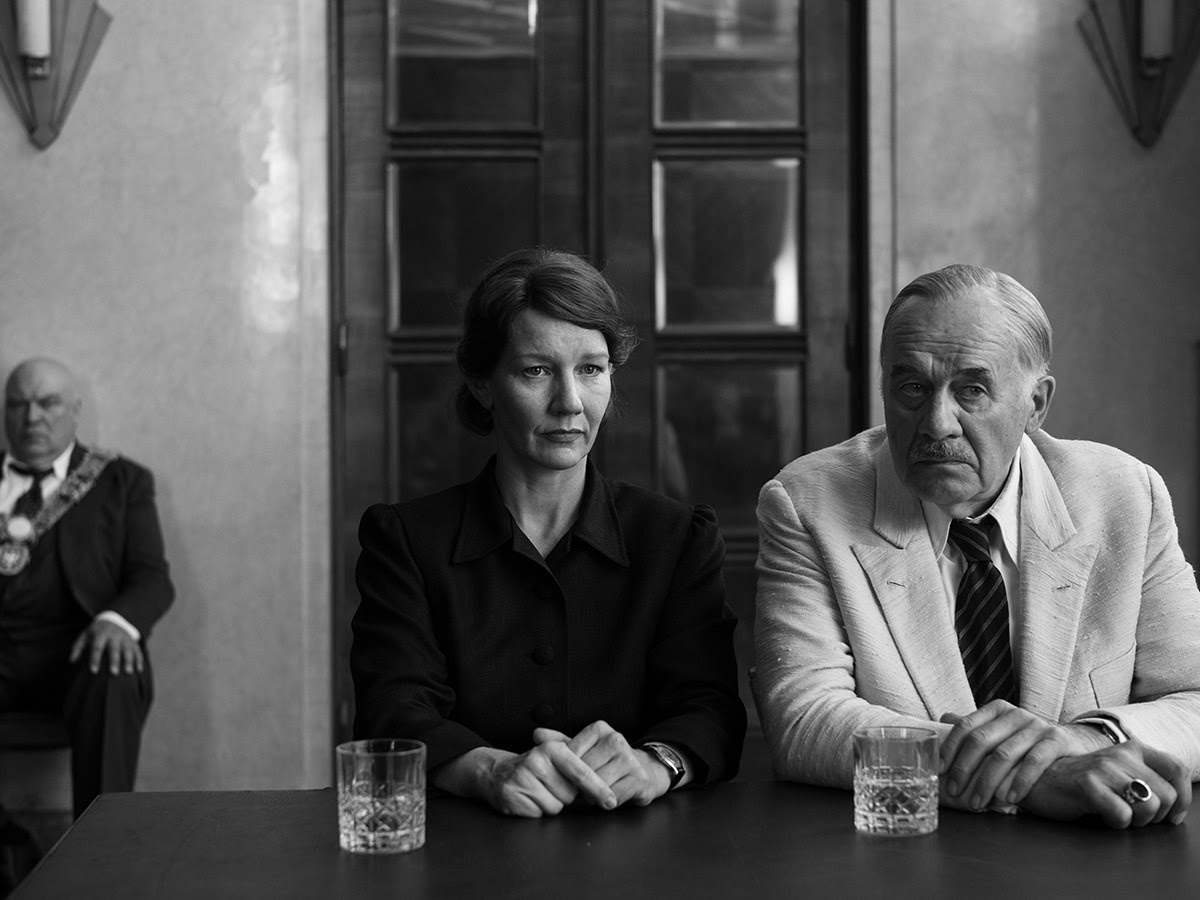
The title of Pawel Pawlikowski’s extraordinary, compact drama Fatherland has a double meaning. In this somewhat fictionalized story of Thomas Mann’s brief 1949 visit to Germany, the Nobel Prize-winning author, after having lived in exile in California for 16 years, is challenged with finding his mooring in a country he can no longer call home; if it’s his fatherland, it long ago turned its back on him and his ideals. But fatherland can also be a state of mind where fathers live, a state both more specific and more elusive than fatherhood. In Pawlikowski’s telling of this portion of Mann’s story, it’s during this trip that Mann learns of the death of his son, Klaus—also a writer, though not as successful as his father—by suicide. If the elder Mann feels any emotion when he hears this news, it’s frozen inside him, a bubble of feeling isolated on its own ice floe.…