the loneliest plant on earth lives under glass
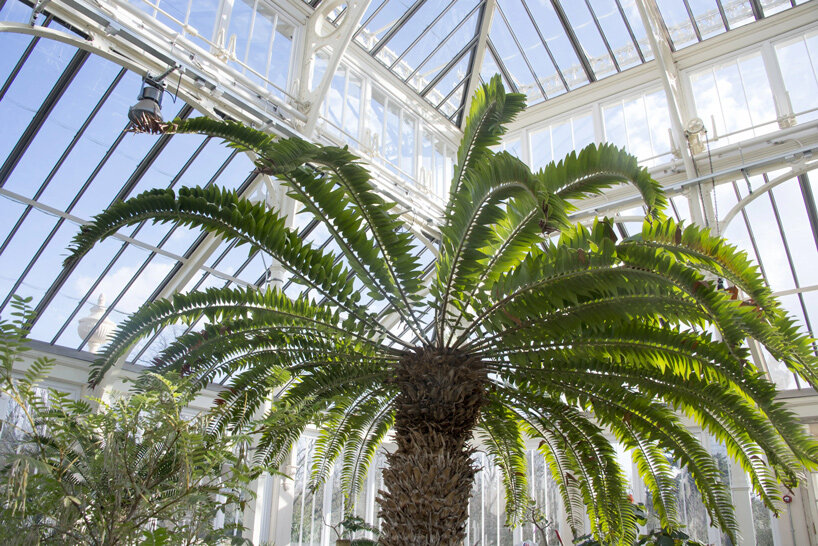
Inside London’s Kew Gardens, a cycad called Encephalartos woodii has spent more than a century beneath the glass roof of the Victorian Temperate House. Its enormous crown of dark green fronds appears perfectly healthy, though it may be one of the loneliest plants on Earth.
Discovered in South Africa in 1895, the species is known from a single wild individual. It was male. Every surviving specimen is a clone of that original plant, and a female has never been found. The species is now classified as Extinct in the Wild, while its descendants continue growing in botanical collections around the world.
Kew Gardens, Richmond, United Kingdom | image © Chris Johnson
Since 1899, Kew has kept its cycad alive. Yet the glasshouse cannot provide a mate or restore the forest it once inhabited. What, exactly, has been saved?
The question points to a growing architectural responsibility.…