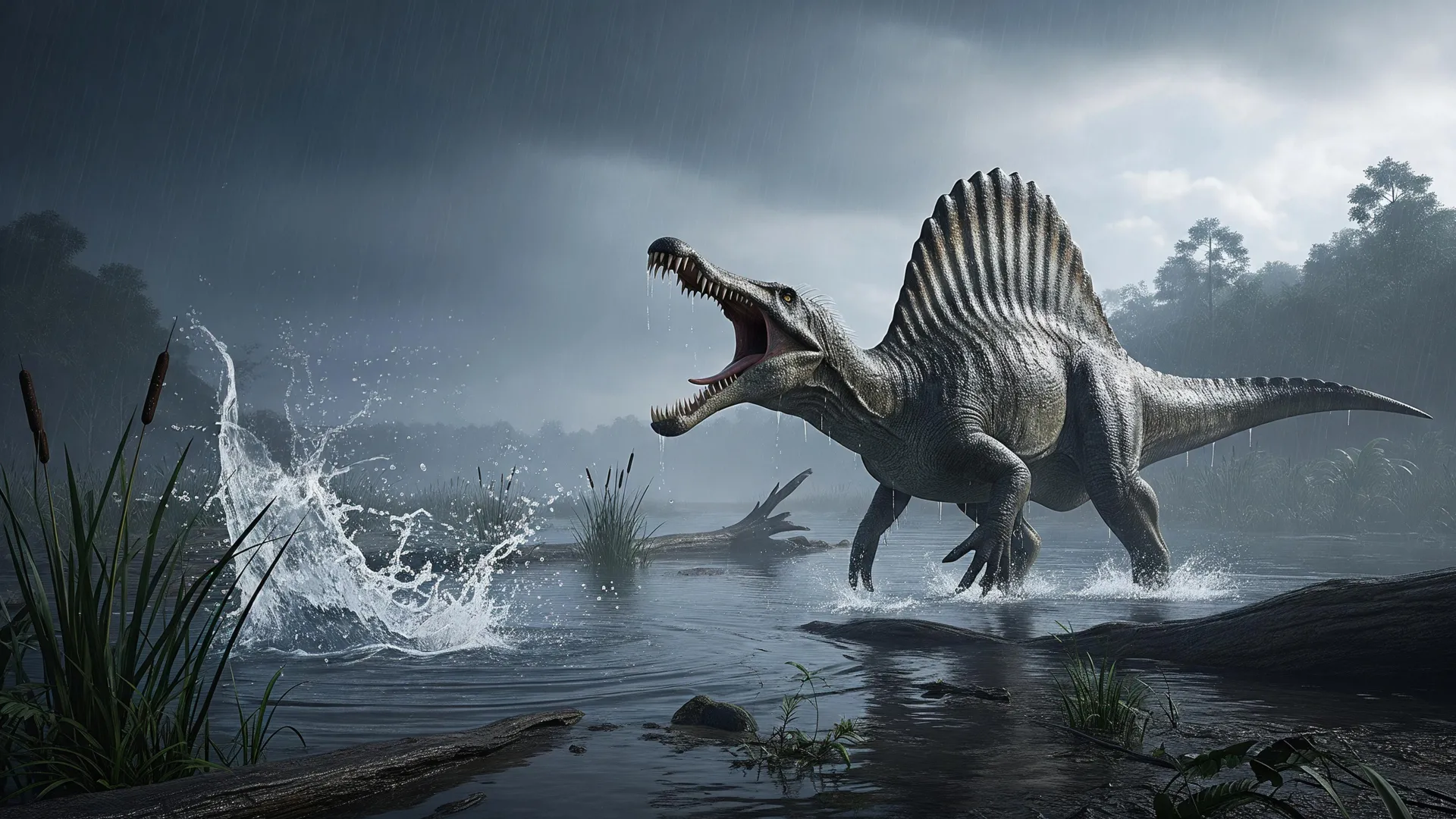
For millions of years, evolution helped animals make the transition from life in the ocean to life on land. But the journey did not always move in one direction. Many species eventually returned to the water, developing new adaptations that allowed them to thrive in aquatic environments.
Dozens of major groups of mammals and reptiles made this remarkable evolutionary reversal. Now, a new study from Yale University is shedding light on when and how these transitions occurred, as well as which ancient animals became fully aquatic and which continued to depend on land.
The findings were published in the journal Current Biology .
"These secondarily aquatic groups adapted in strikingly similar ways to their new aquatic home -- evolving flippers and a suite of other features that made them better swimmers," said lead author Caleb Gordon, who completed his doctorate at Yale's Graduate School of Arts and Sciences (GSAS) earlier this year and is now a postdoctoral researcher at the Florida Museum of Natural…