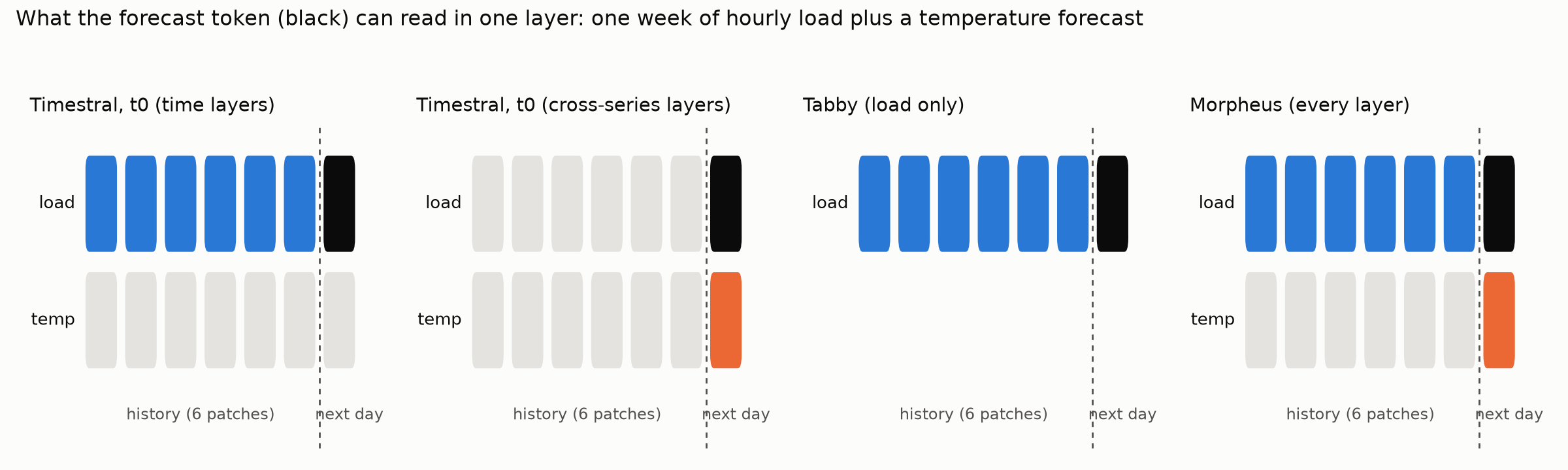
Imagine forecasting tomorrow’s hourly electricity demand at a substation. You have the last week of load readings (168 numbers) and tomorrow’s te mperature forecast. A traditional approach would fit a model to that substation’s history. A foundation model takes another route: a model trained on other series produces the forecast, uncertainty bands included, without being fitted to that substation at all.
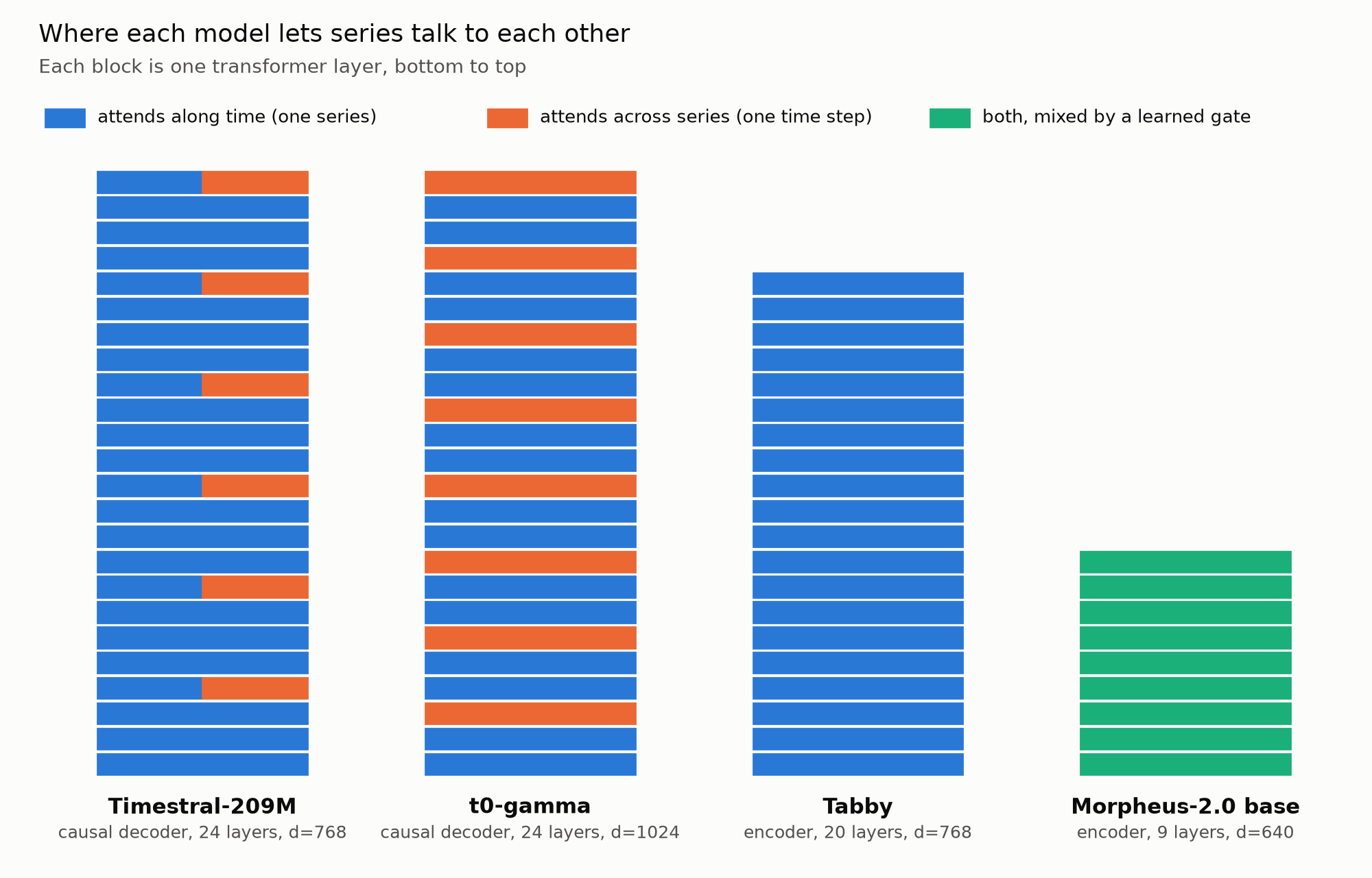
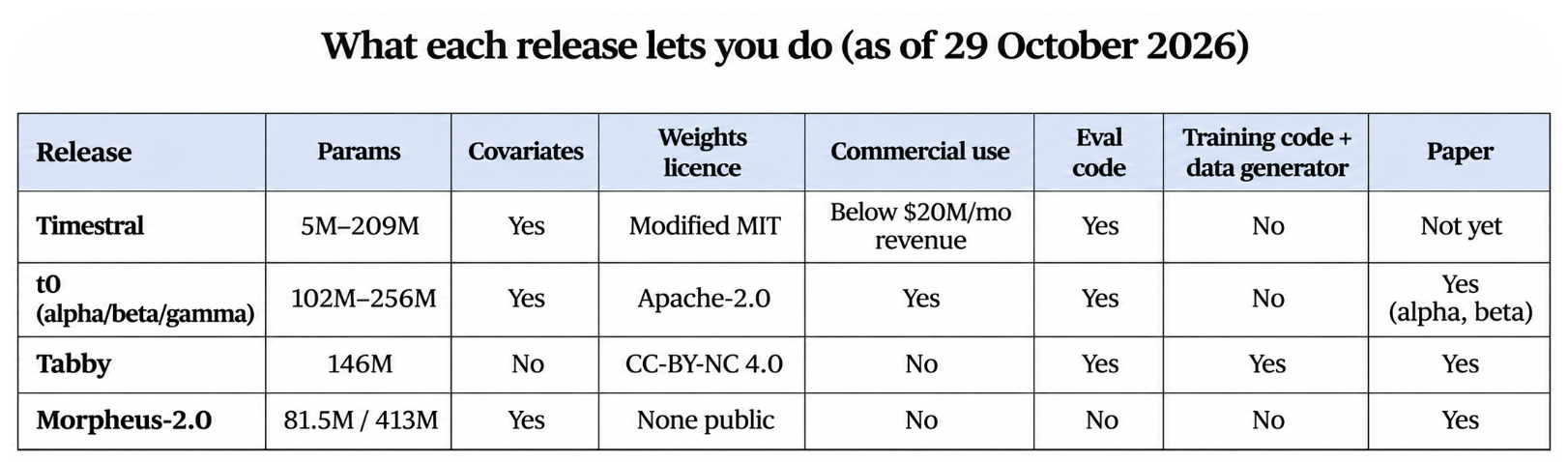
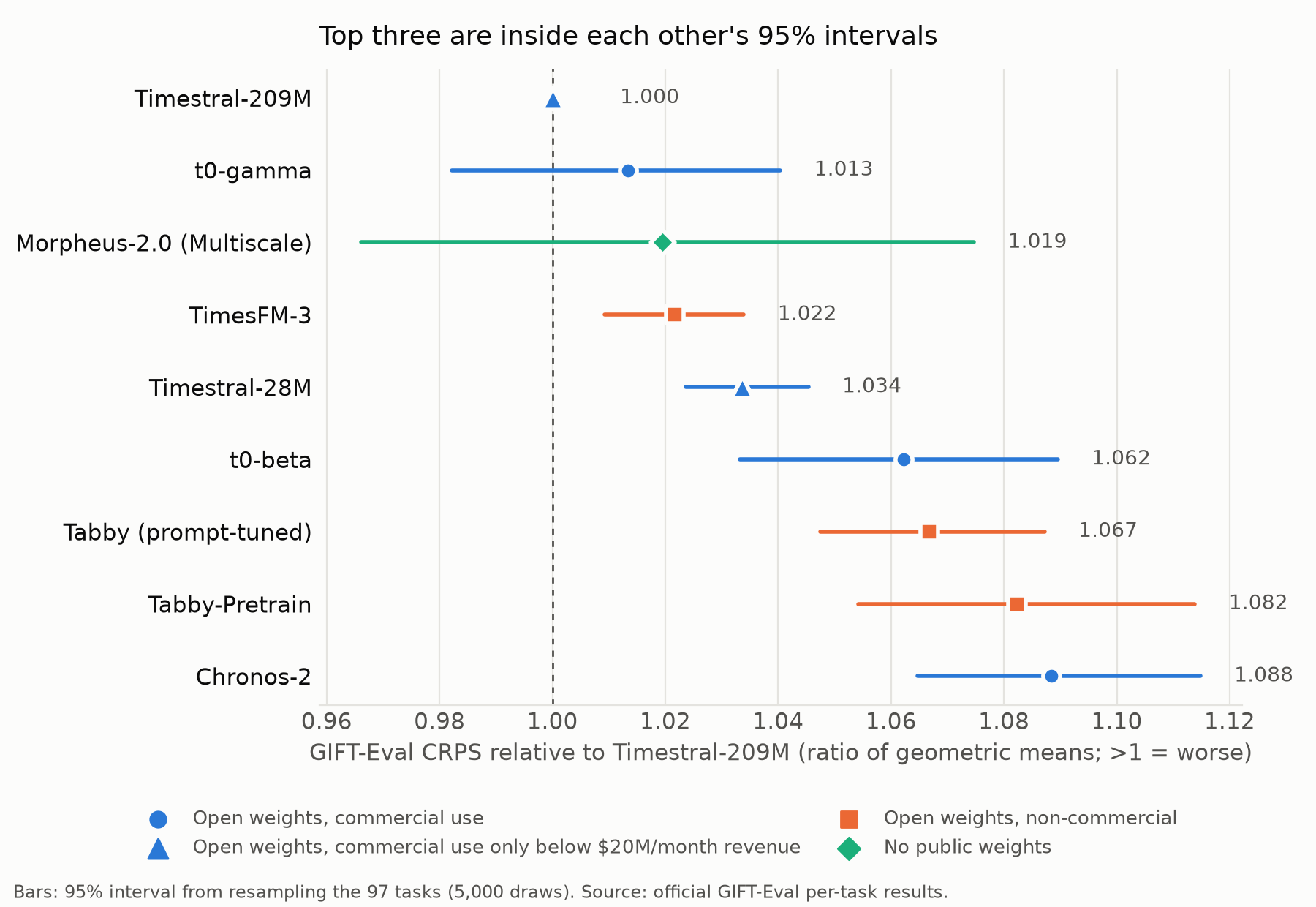
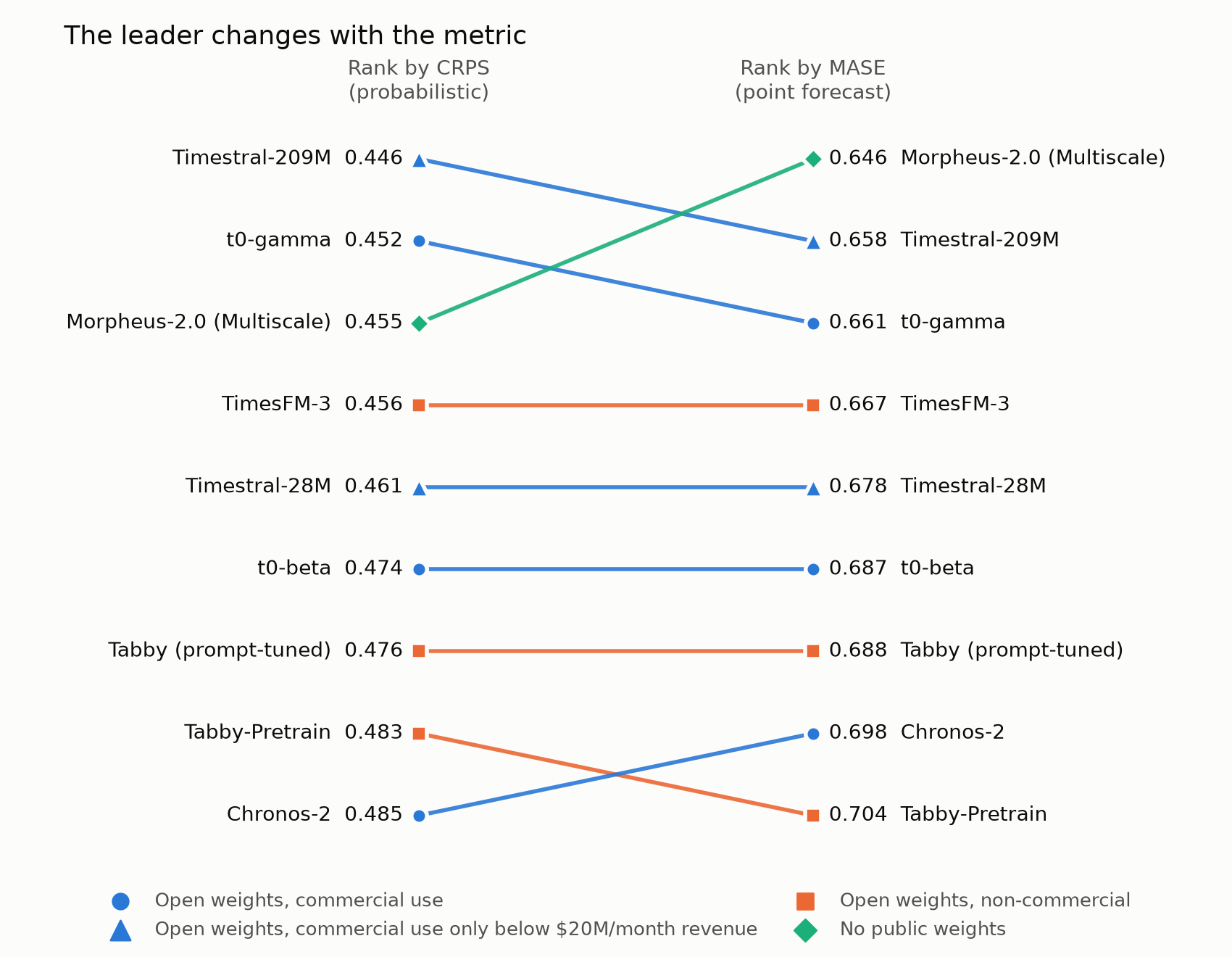
Between 10 September and 16 October 2026, four organisations released models pursuing that goal: Huawei’s Tabby , The Forecasting Company’s (TFC’s) t0-gamma , Mistral’s Timestral , and JPMorganChase’s Morpheus-2.0 . Their close release dates make for a useful comparison of how different teams approach the same problem.
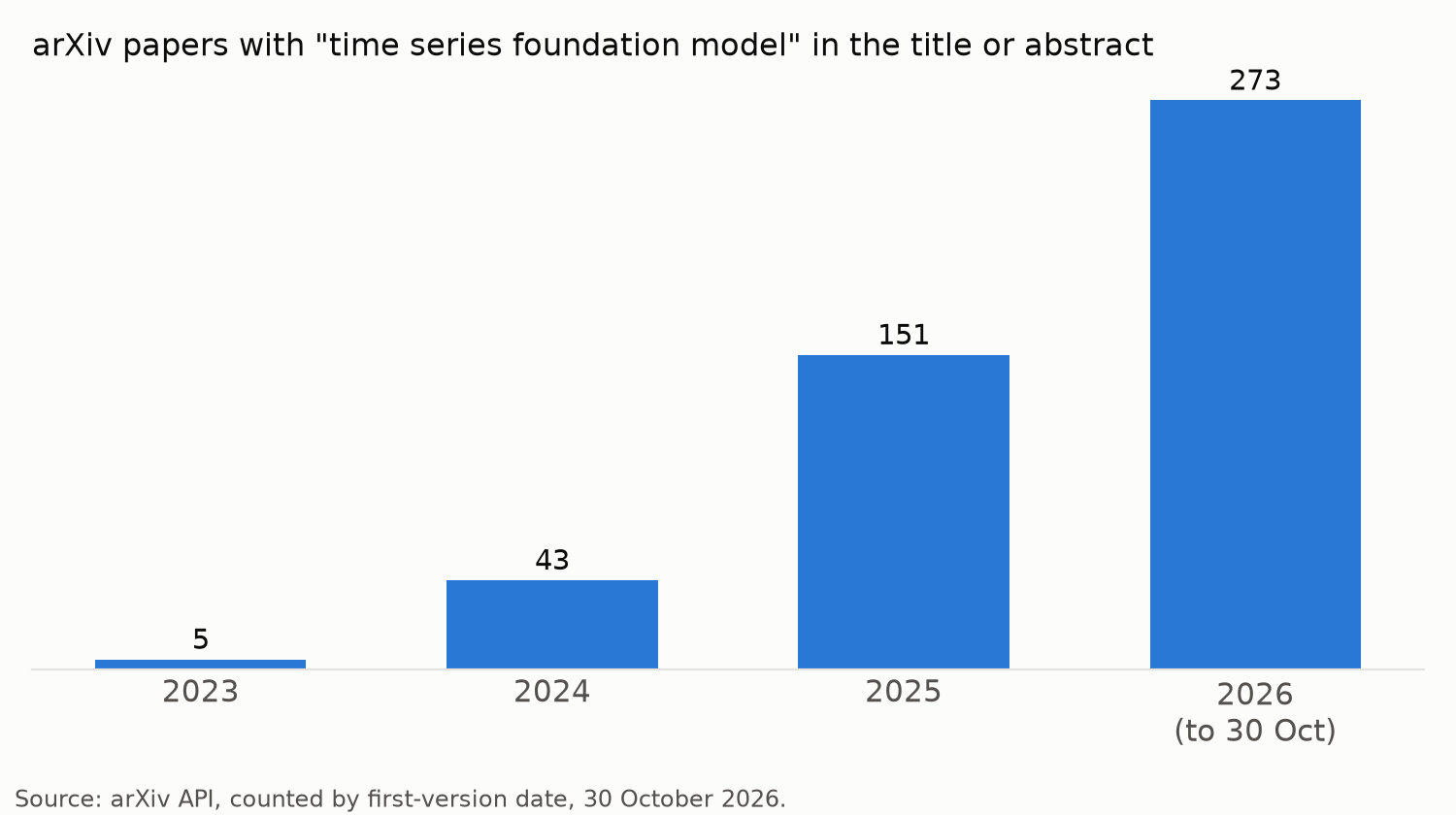
The field has grown quickly. In 2023, five arXiv papers mentioned “time series foundation m odel” in their title or abstract; the count rose to 43 in 2024, 151 in 2025 and 273 by 30 October 2026 ( arXiv search , counted by first-version date).…