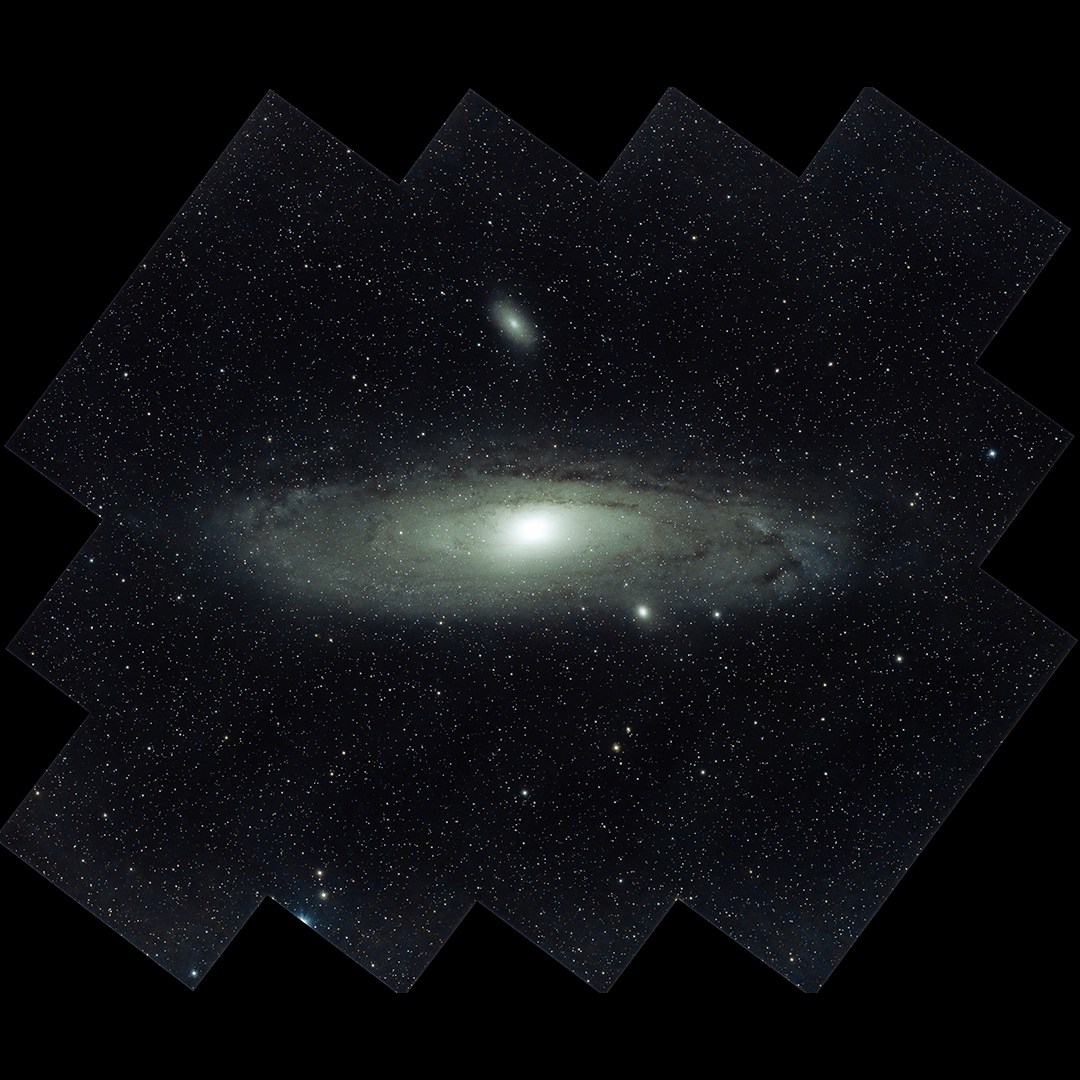
The Andromeda Galaxy (M31) and its companions M32 and M110, assembled from overlapping tiles with Celestron Origin’s Mosaic Mode. Credit: Celestron
Almost any galaxy or nebula that the Celestron Origin Intelligent Home Observatory can find will fit in its field of view in a single shot. But there is a short list of exceptions.
For instance, the Andromeda Galaxy (M31), the nearest major galaxy to our own and a popular first target, stretches about 3° from end to end. And the iconic North America Nebula (NGC 7000), which lies just 2,600 light-years away in Cygnus, spans roughly 2°. Both of these objects spill out of the field of view of the Origin Mark II, which, with its 6-inch (152 mm) f/2.2 Rowe-Ackermann Schmidt Astrograph (RASA) optics, captures a field of 1.32° by 0.75°.
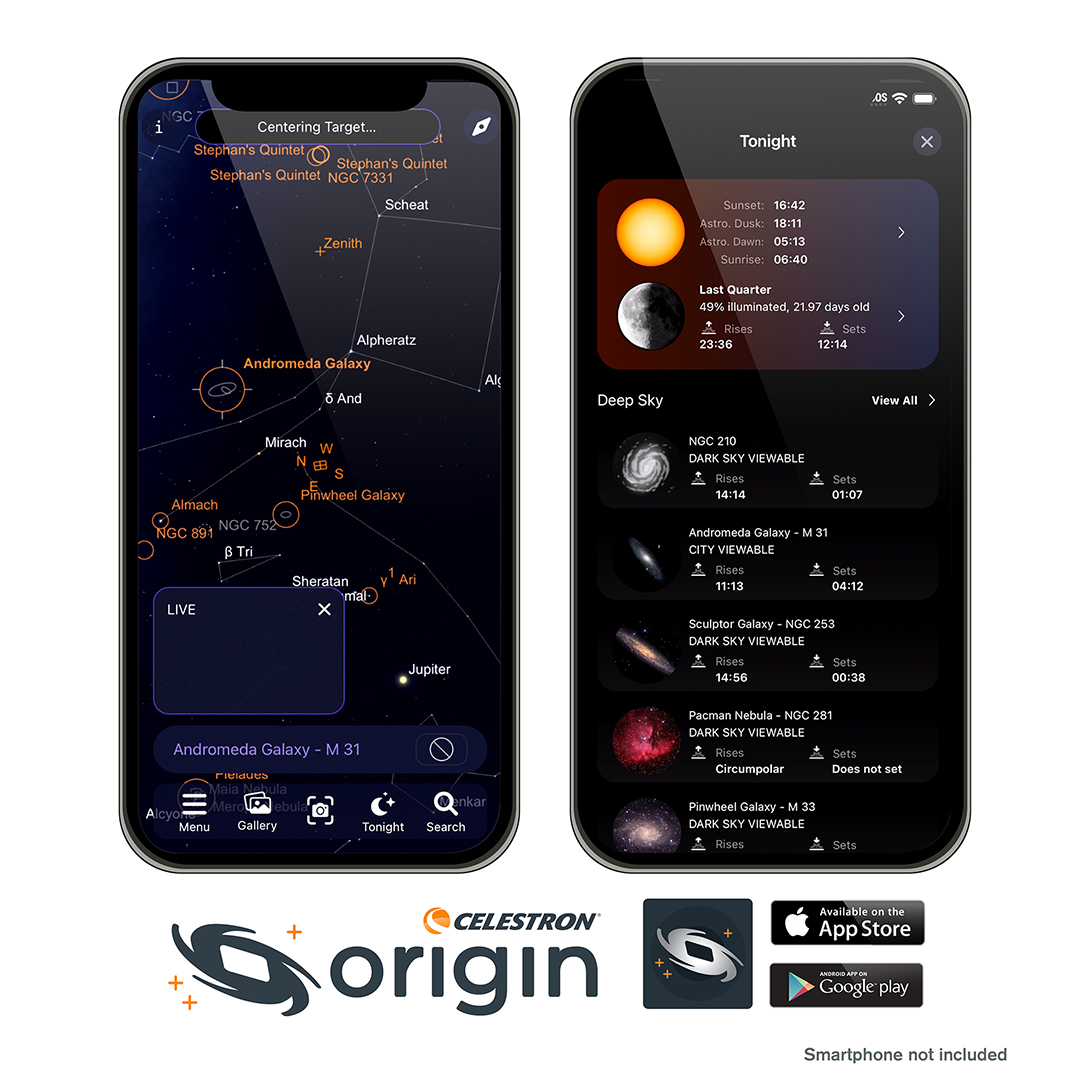
Celestron’s answer is Mosaic Mode, a free update that brings automated mosaic imaging to the Origin smart telescope. In the Origin app, users draw a box around their target.…