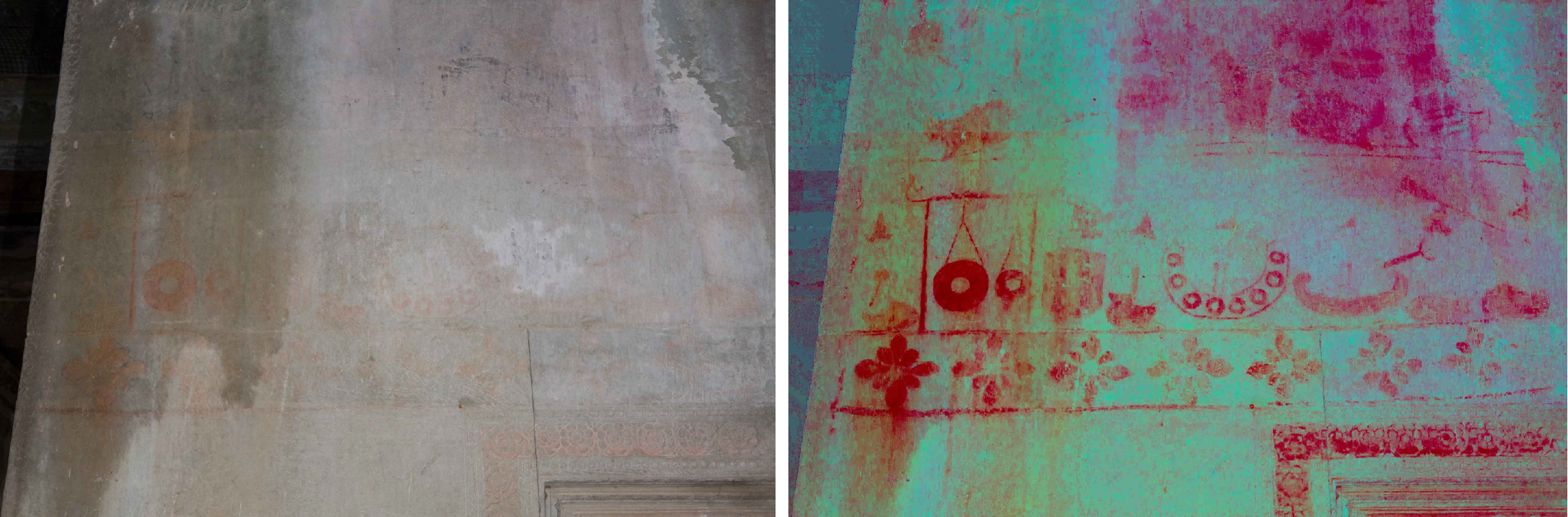
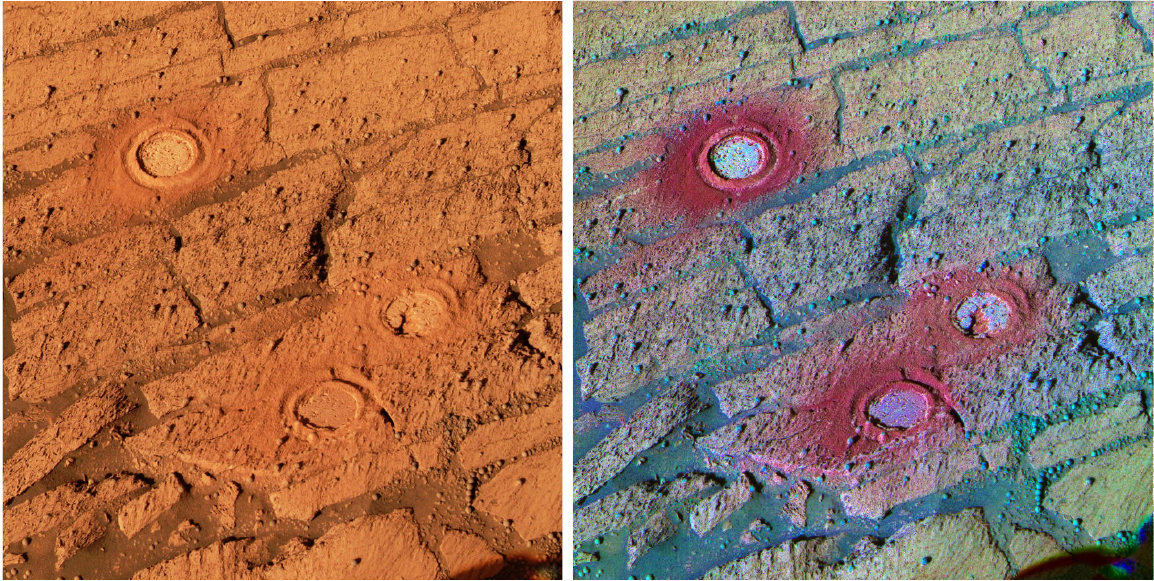
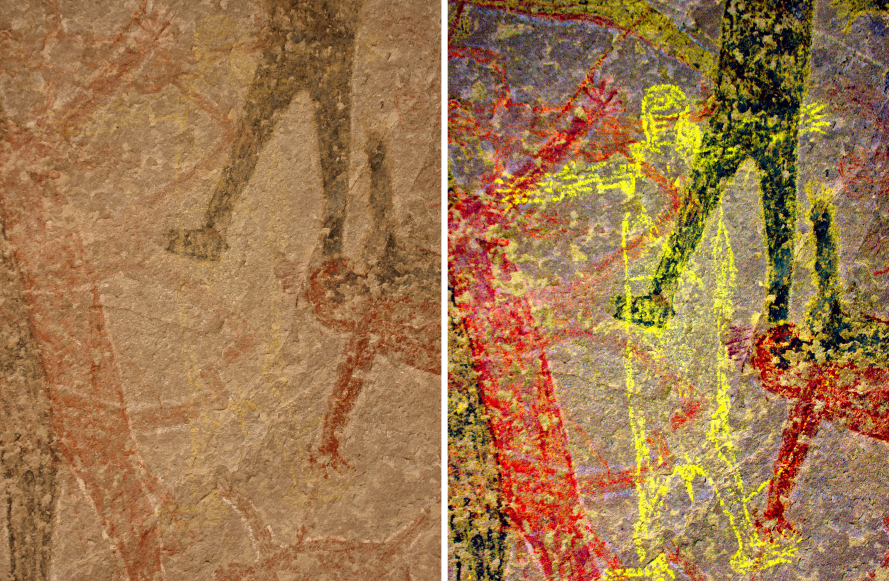
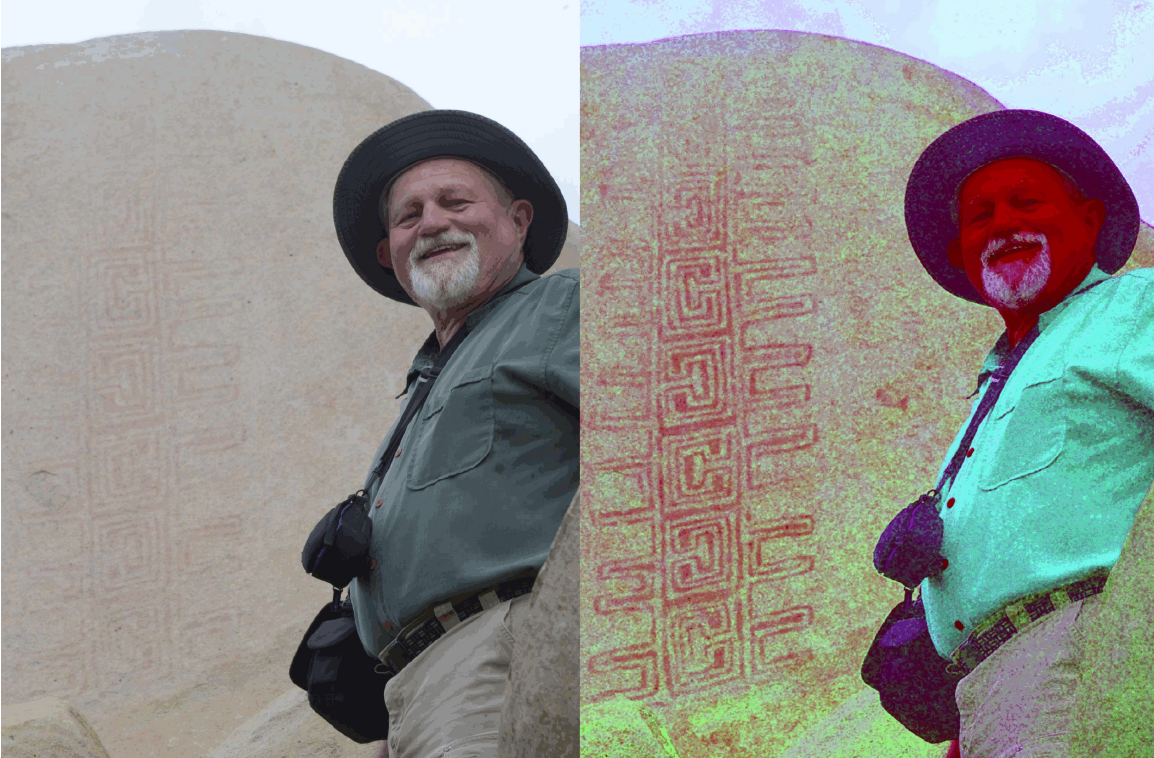
On the walls of a chamber near the top of the central tower in the ancient Cambodian temple Angkor Wat, paintings depict horseback riders and a traditional musical ensemble. Every day, thousands of visitors pass these images without noticing, because they’re faded to the point of invisibility. They were discovered, along with about 200 other paintings throughout the sprawling complex, between 2010 and 2012 by a Singaporean archaeologist using a method conceived at NASA’s Jet Propulsion Laboratory in Southern California. The technique, known as decorrelation stretch, heightens contrasts in digital imagery, making subtle differences clearer and features easier to spot. Originally used by NASA to extract more information from satellite imagery, it has proven useful in many fields but has come to be especially widely used for studying ancient rock art. This is partly because these images are commonly faded beyond recognition.…