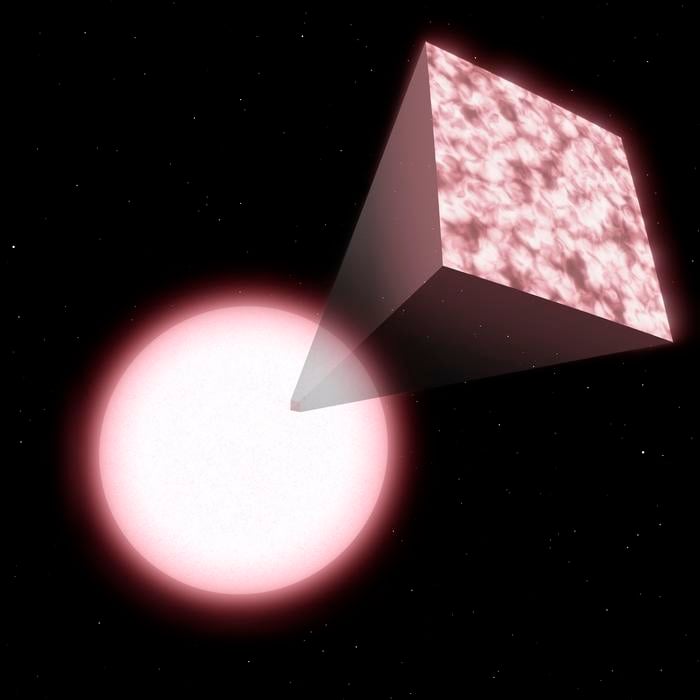
The universe hosts a myriad of star types, including supergiants, giants, main sequence, red dwarfs, brown dwarfs, white dwarfs, and neutron stars. What makes these stars stand out are just their sizes, but their colors, as each one hosts a distinct color based on their surface temperature, specifically orange, red, blue, and white based on cooler to hotter temperatures. While the correlation between star colors and surface temperatures has long been known throughout astronomy, what if star colors could change based on specific criteria, including their atmosphere?
Now, a team of researchers led by the University of Warwick might have introduced a new way to literally look at stars, as they revealed new evidence for white dwarfs to exhibit colors other than what their name implies. These findings were recently published in RAS Techniques and Instruments and could provide new insights into the formation and evolution of stars throughout the cosmos.…