It’s the late 1700s, and a pumpkin sits on a colonial kitchen table. The flesh has been cooked until soft. But the hard part is still ahead. To turn the pumpkin into pie, the cook must mash it, scrape it, and force it through a sieve, separating smooth pulp from stubborn strings and fibers. There is no can of pumpkin puree. No food processor. Just the pumpkin, rudimentary kitchen tools, and a lot of elbow grease. The work could take hours, all for an eight-person dessert. An 1876 New England cookbook, for example, instructed cooks to simmer pumpkin for six to eight hours, stirring frequently, before rubbing it through a colander.
It seems like an absurd amount of work for dessert. Pumpkin flesh doesn’t naturally break down into a silky puree. Cooking softens its tissues, but turning the squash into smooth filling requires additional mechanical work.
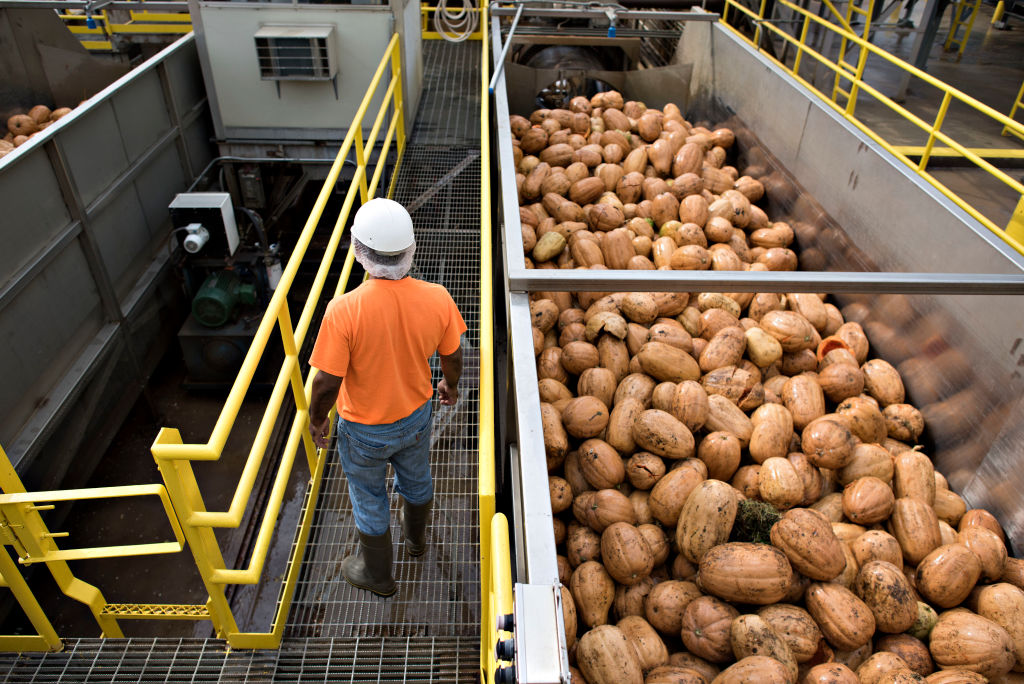
For generations, cooks solved the problem with heat and muscle. Eventually, factories took over the work of cooking and processing pumpkins into puree.…