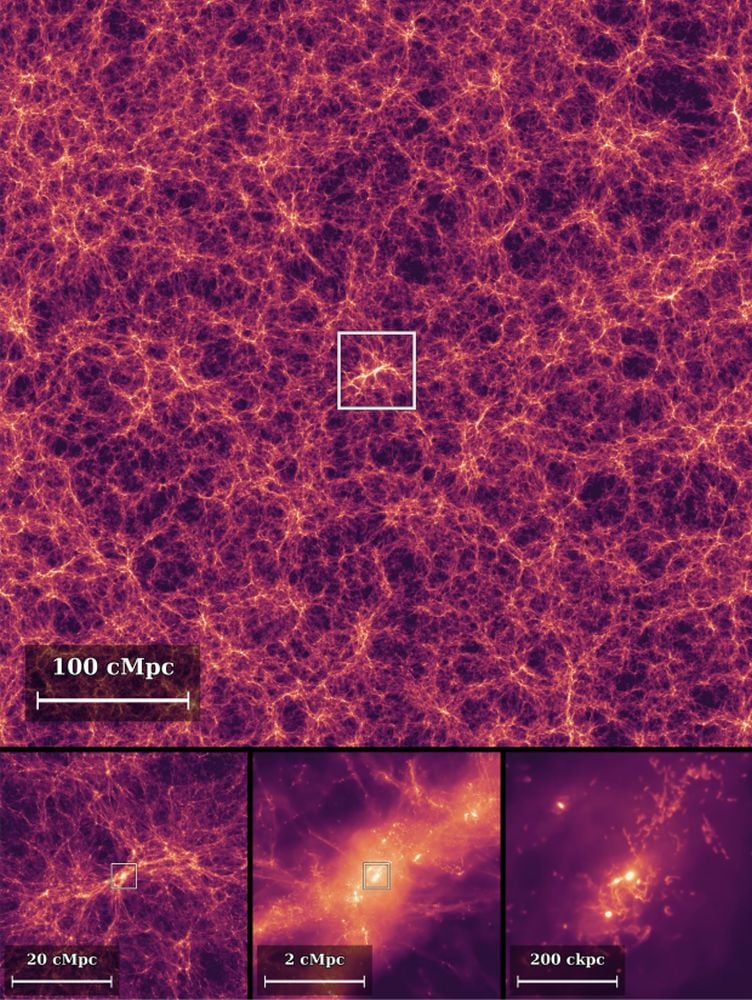
Modern astronomy features massive telescopes with segmented mirrors, huge digital cameras, sophisticated data pipelines, and suites of powerful instruments with different specific purposes. But that's the observational side. Making sense of the exquisitely-detailed data these telescopes deliver requires its own approach.
This is where simulations come in. We live in an era of increasingly detailed cosmological simulations, all run on the world's fastest supercomputers. Cosmologists use them to understand everything from star formation to the expansion of the Universe.
The James Webb Space Telescope (JWST) and the Nancy Grace Roman Space Telescope (NGRST) are the two most capable space telescopes in existence. They're especially good at illuminating the Universe's very early days with their infrared capabilities. While the NGRST is just getting going, the JWST has been busy for a few years and has already delivered some surprises.…