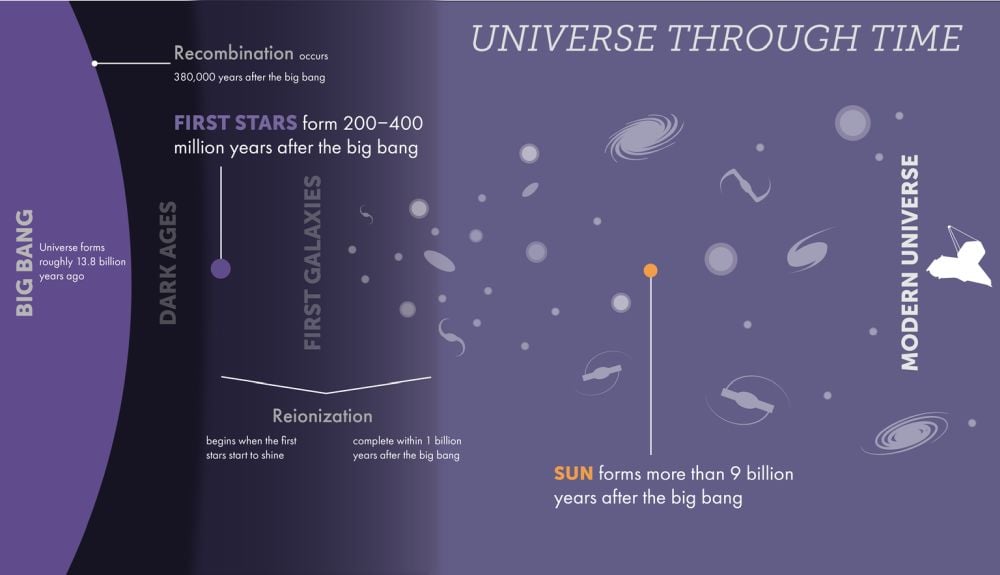
The Universe has gone through many defining changes over its 13+ billion year history. One of its phases was the Dark Ages, which started after Recombination and lasted until somewhere between about 150,000 and one billion years after the Big Bang. It ended with the Epoch of Reionization (EoR), when neutral hydrogen atoms in the early cosmos were reionized. At that time, light was able to travel freely through the Universe, and the Dark Ages came to an end.
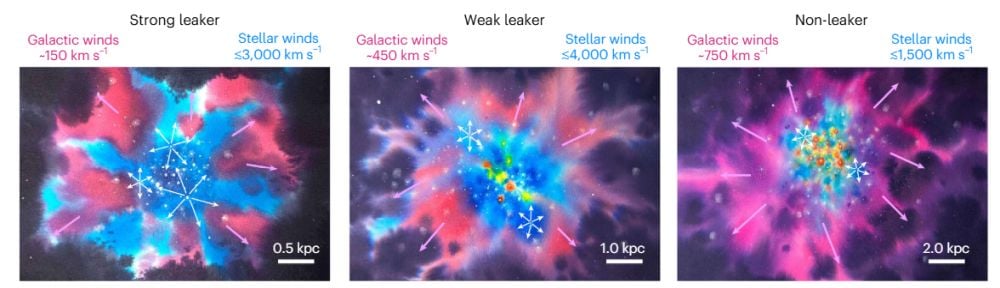
Standard thinking says that the Dark Ages ended because stars, galaxies, and quasars/active galactic nuclei formed. They were responsible for reionizing the hydrogen with their UV radiation. But there's a lack of clarity when it comes to the details. Early supernovae explosions likely contributed to the EoR, but the details of their contribution aren't clear.
How it all worked in the EoR is a subject of deep study in cosmology. Cosmologists know it happened, but the relative roles that different ionizing sources played is not clear.…