NEWS AND VIEWS
03 March 2026
In a dividing cell, chromosome pairs are pulled apart thanks to attachment sites called centromeres. Yeast genomes reveal key steps in how centromeres have evolved.
By
Adele L. Marston Adele L. Marston is in the Centre for Cell Biology, School of Biological Sciences, University of Edinburgh, Edinburgh EH9 3BF, UK.
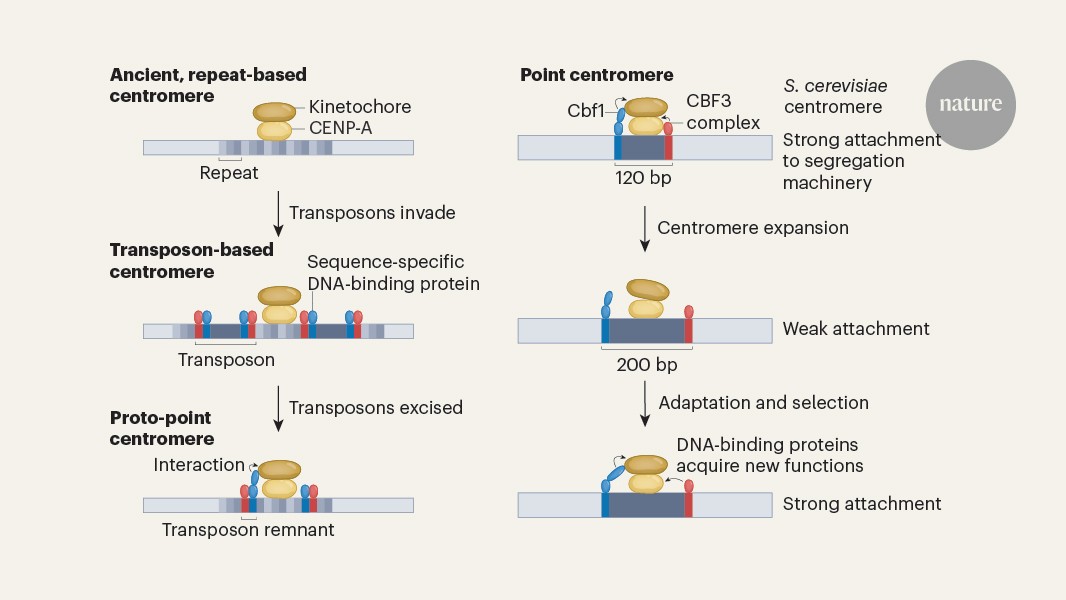
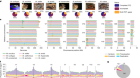
When a cell divides, its chromosomes are copied and then pulled apart so that each daughter cell receives a complete set of genetic material. Typically, the cell’s partitioning machinery connects to a single site on the chromosome called the centromere. These sites are among the most rapidly evolving parts of the genome, and have diverged greatly across species. Writing in Nature , Haase et al . 1 and Helsen et al . 2 reveal how new types of centromere can arise while maintaining the connections required for the genome to be inherited accurately.
Nature 651 , 892-894 (2026)
doi: https://doi.org/10.1038/d41586-026-00629-2
References
Haase, M. A. B. et al.…