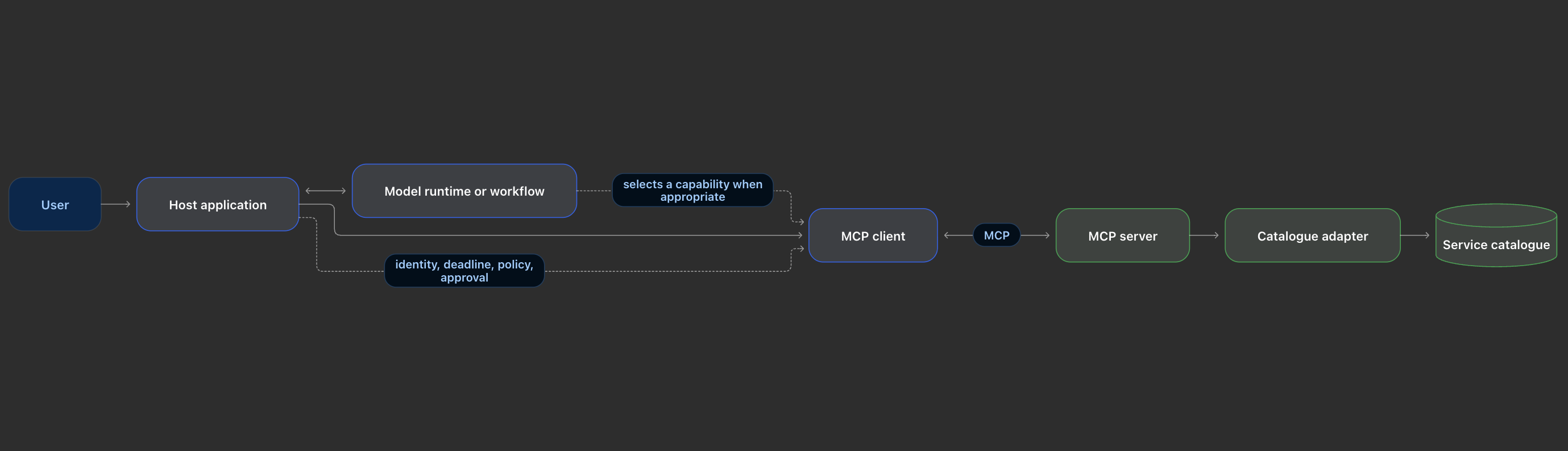
There is a particular point in an MCP project when the boundary starts to blur. It usually happens after the first successful tool call.
Imagine a service catalogue with the ordinary things an engineering organisation keeps around: owners, direct dependencies and runbook links. A host application can already ask the catalogue who owns checkout . Someone then asks for a more useful experience: if checkout depends on payments , perhaps the server could fetch that too; perhaps it could decide whether an incident is relevant; perhaps it could call a model and write the answer in a reassuring tone. Before long, the server is not merely exposing the catalogue. It is planning, holding conversation state, choosing follow-up calls and acquiring credentials that the host used to own.
None of those steps is absurd, in fact, each one can make a demo feel more capable. The trouble is that they add up to a second application hiding behind a protocol endpoint.…