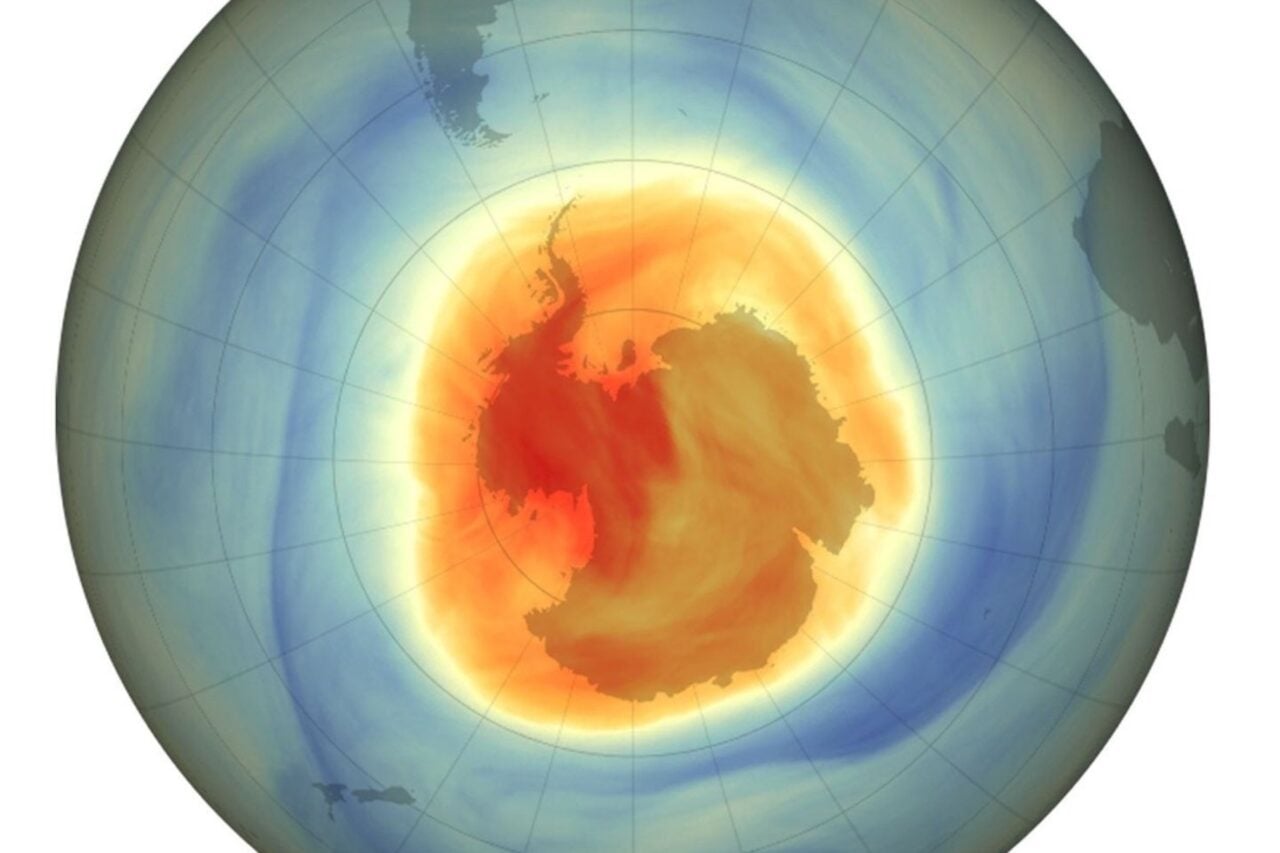
The ozone hole has made its annual appearance over the South Pole, and this year, it’s the biggest it’s been in a decade. Scientists believe “atypical weather conditions” are to blame.
An unusually powerful polar vortex allowed the hole to grow particularly large in September, according to a report from NASA and the National Oceanic and Atmospheric Administration (NOAA). When it reached its greatest extent on September 18, it stretched across 10.5 million square miles (27.1 million square kilometers). That’s nearly three times the area of the United States, and about 90% as large as the biggest ozone hole ever observed, which occurred on September 9, 2000.
Last year, federal scientists reported a relatively small hole—the fifth smallest since 1992.…