This article was originally published by Grist and is reproduced here as part of the Climate Desk collaboration.
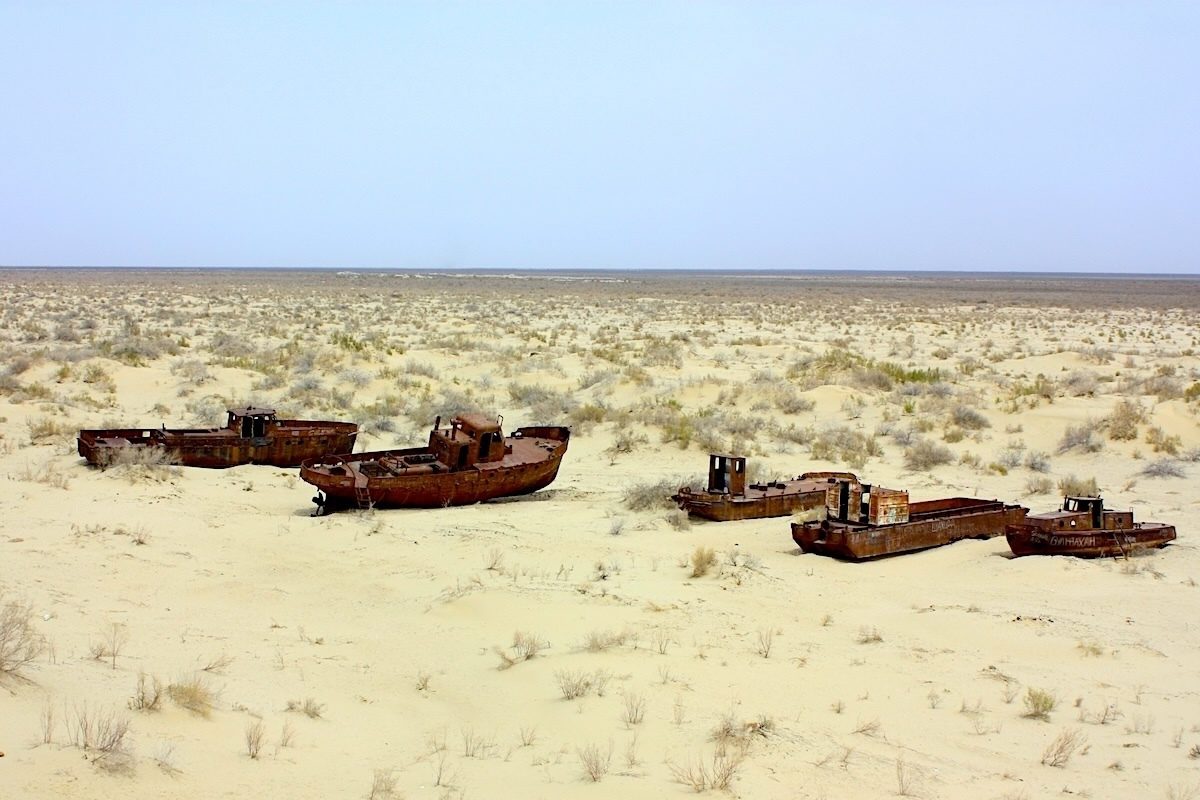
Abandoned boasts in dried-up Aral Sea. Arian Zwegers via Flickr
The Aral Sea sits between Kazakhstan and Uzbekistan and was once the fourth-largest inland body of water on Earth. For the past 60 years, though, humans have bled it nearly dry irrigating cotton crops, leaving behind a salty plain the size of Ireland. Its loss has long been seen as an ecological and humanitarian problem, but new research shows that it has also been a significant driver of climate change.
The Aral Sea is technically a lake. But when nearly any body of water is full and works as it should, organic matter collects on the bottom, where it remains trapped, often for centuries or millennia. “They accumulate carbon in the sediment,” explained Rafael Marcé, a research scientist at the Centre for Advanced Studies in Blanes, Spain and the lead author of the study, which was published Thursday in the journal Science.…