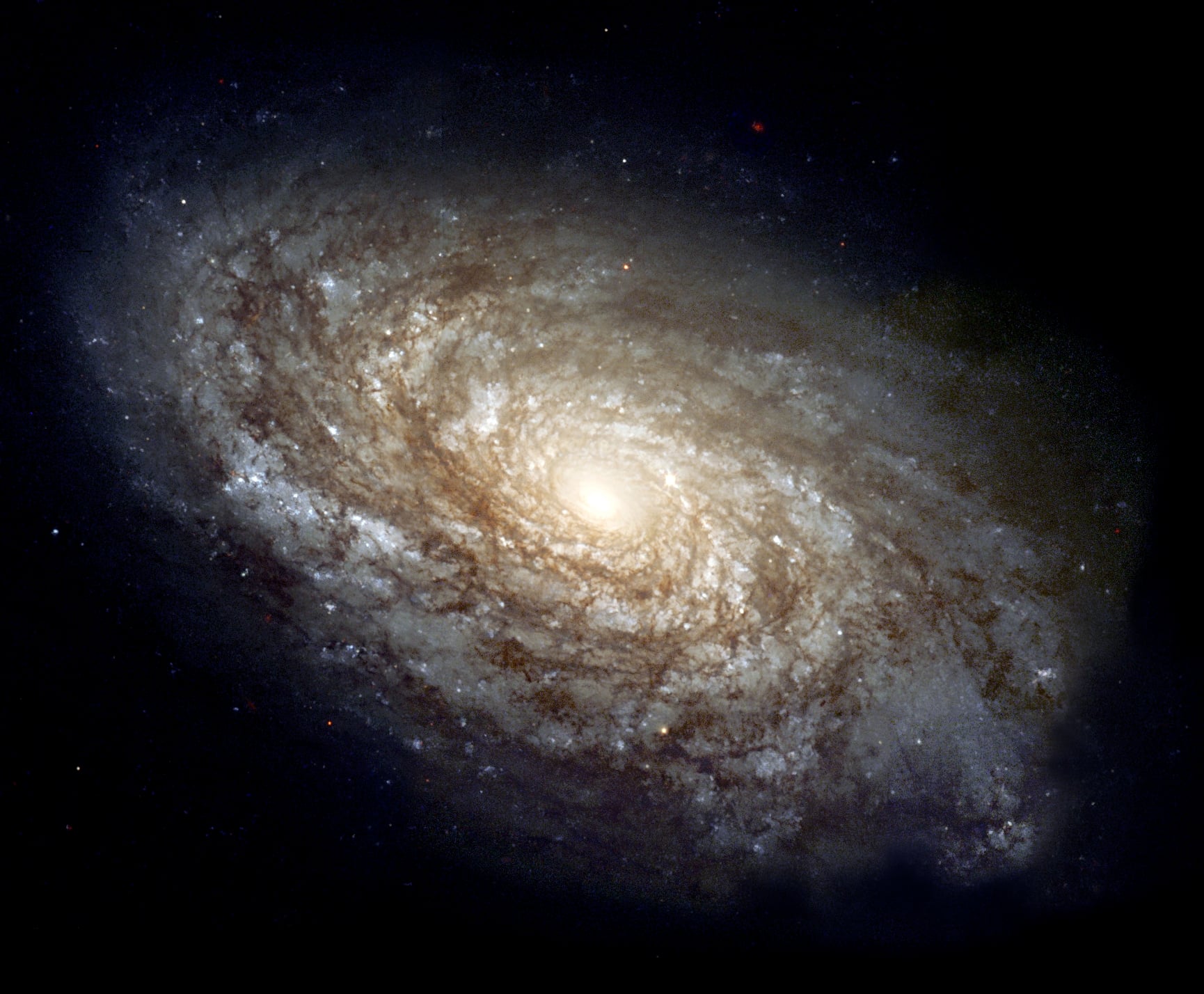
Sitting here on the outskirts of our Milky Way Galaxy, it’s hard to imagine the galactic machinations that led to our goldilocks spot around a very welcoming yellow dwarf star. But for decades, astronomers have suspected that the internal dynamics of massive galaxies like ours play an outsized role in regulating star formation.
As observations by NASA’s James Webb Space Telescope (JWST) now reveal, massive galaxies have largescale gaseous outflows that greatly quench their star production.
And as the authors of a new paper in the journal Astrophysics and Space Science describe, JWST has observed a link between outflows from a massive galaxy’s central core and the quenching of star formation at so-called ‘Cosmic Noon.’ That is, roughly 8-12 billion years ago, when the number of stars forming per unit volume in the cosmos reached its peak.
Outflows are large-scale flows of gas, from inside to outside the galaxy usually caused by either supernovae or energetic outbursts from supermassive black holes.
These…