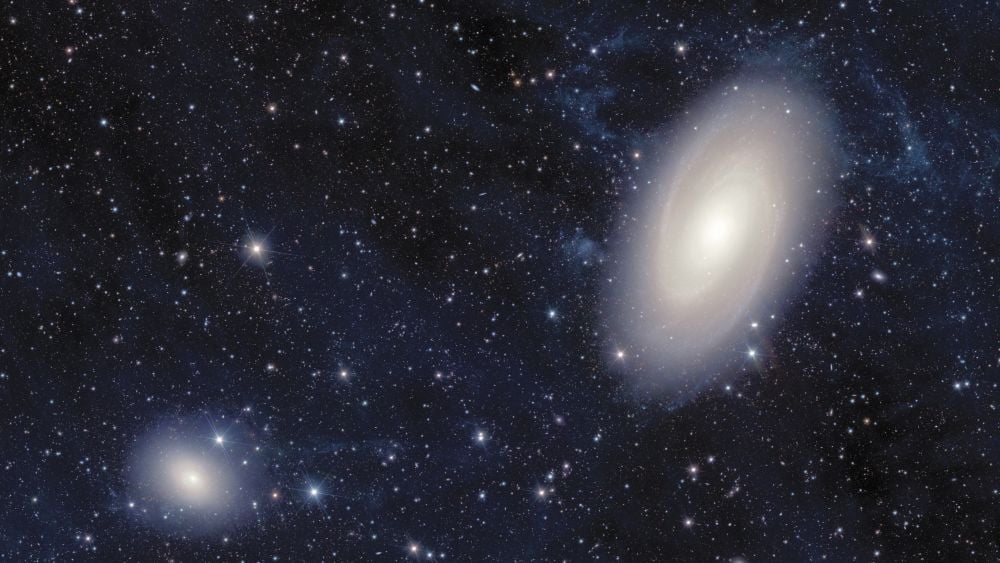
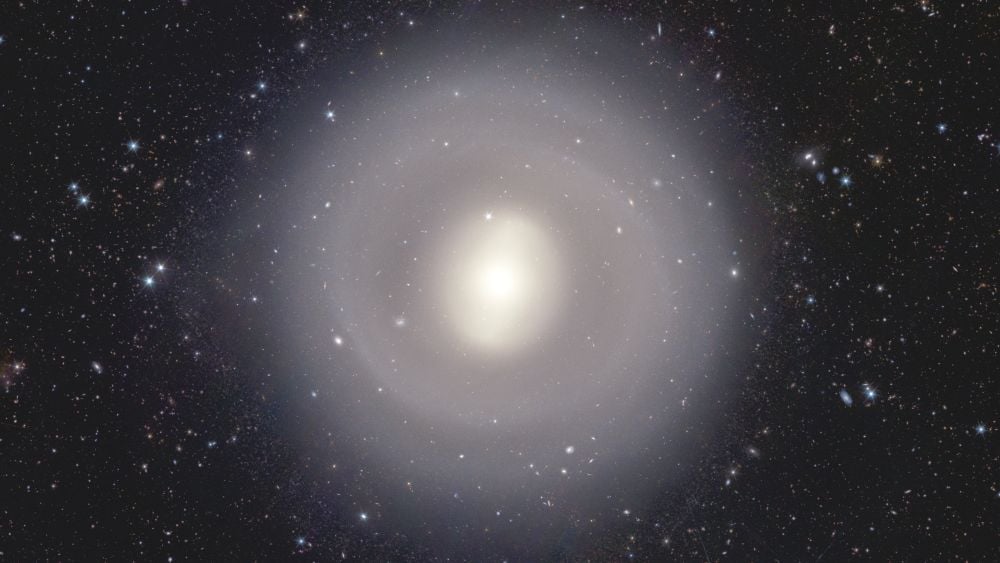
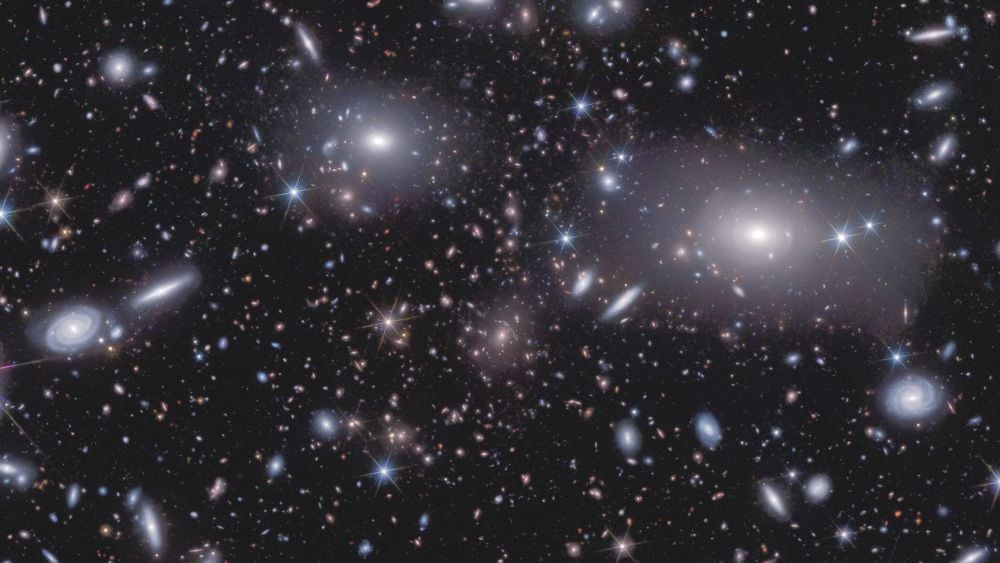
The ESA's Euclid has already teased us with some early results. In the past it's given us a small, 60 square degree of the sky created with a few days of observations. Those images showed individual targets from the Horsehead Nebula to the Perseus cluster of galaxies.
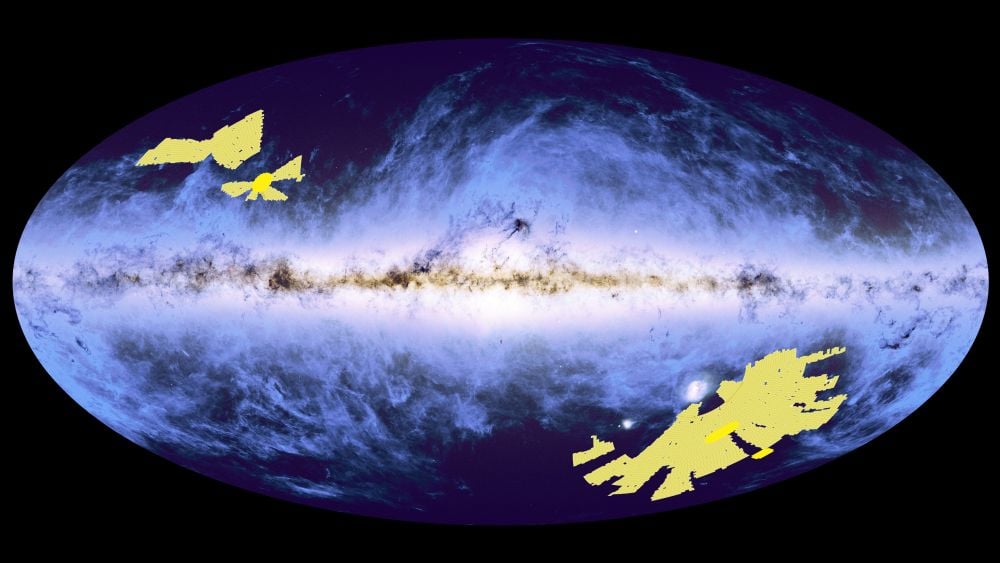
But now we have data from more than one year of the telescope's observations, named DR1-Foundation. DR-1 Foundation covers a sky area as large as about 9,500 full moons, and captures light from more than one billion objects. It took about 13 months to gather all this data.
Understanding dark energy and dark matter means studying as much of the Universe as possible. The effects of dark energy and dark matter are felt at large scales, and by constructing an image of galaxy superclusters and the filaments they exist on, as well as the voids between those filaments, Euclid will lead to new understandings of both dark energy and dark matter.
There are other efforts to map this structure, some dating back decades.…