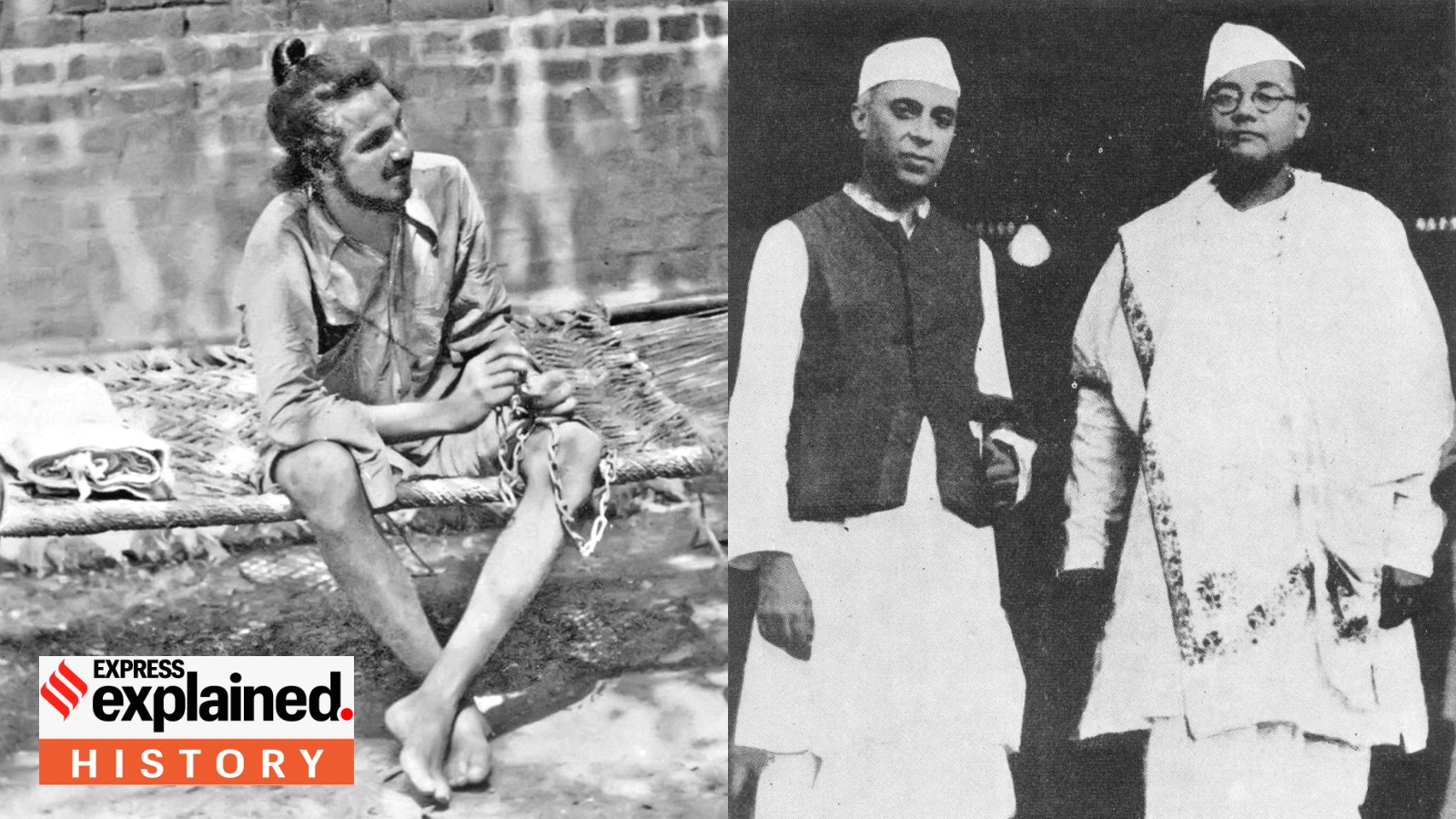
For close to a century since two young freedom fighters emerged as the flagbearers of the Indian National Congress, there has been much political discourse and heated debate as to whose contributions to the independence movement were greater: Jawaharlal Nehru or Subhas Chandra Bose.
Moreover, many often tend to see Bose as a “revolutionary” and a “man of action” owing to his breaking away from the Congress in the late 1930s and taking charge of the Indian National Army (INA) in Singapore — as opposed to Nehru, who remained within the Congress fold, was seen as a “man of words”, and went on to become the first Prime Minister of independent India.
As India commemorates Nehru’s birth anniversary today (November 14), it is illustrative to read what Bhagat Singh — also considered a “revolutionary” and a “man of action” — had to say about the political ideologies of both Bose and Nehru, which he wrote about in an essay originally published as “ Naye Netaaon ke Alag Alag Vichar ” (New Leaders and Their Different…