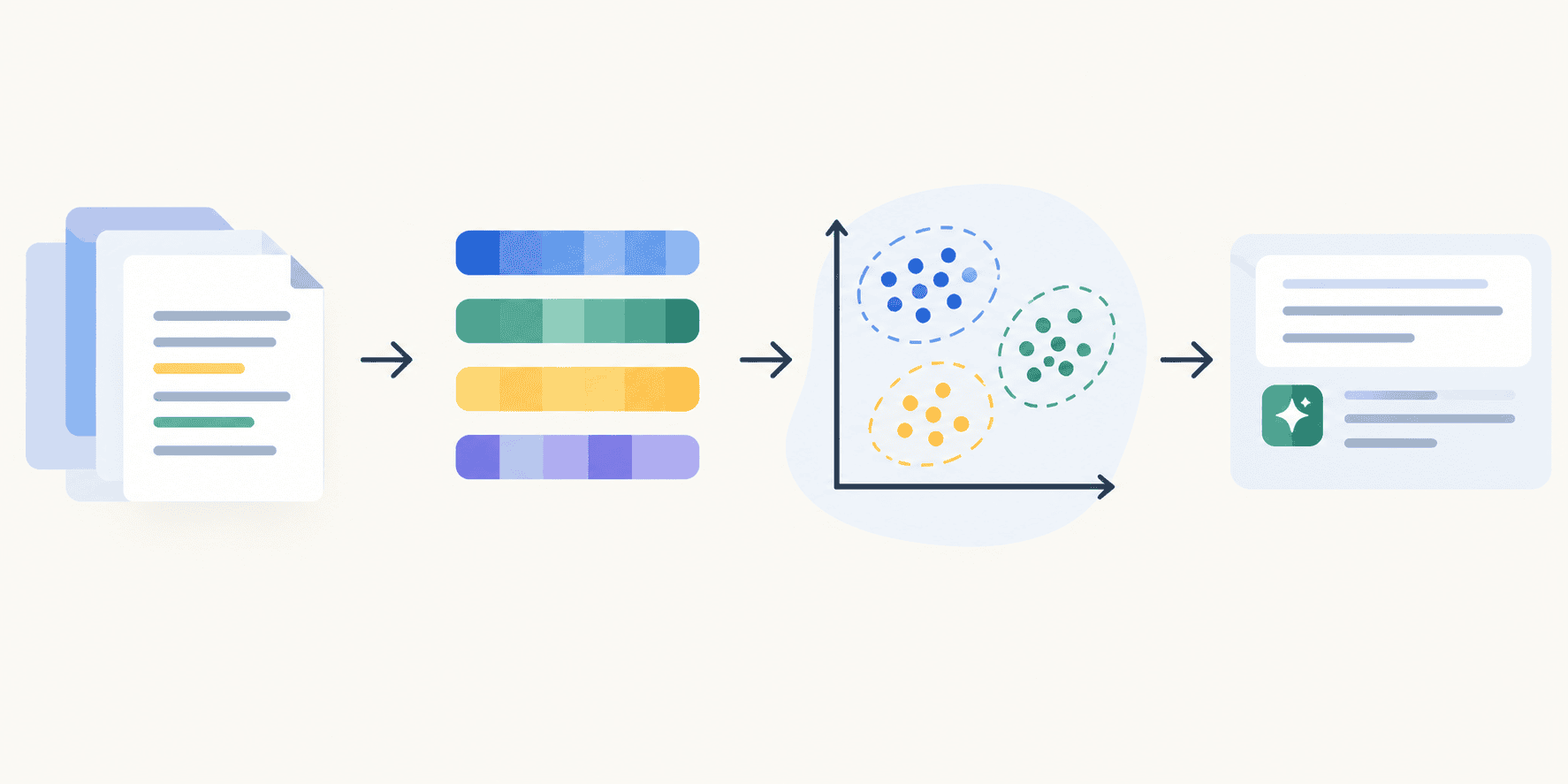
In this article, you will learn how to build a lightweight, end-to-end RAG pipeline using scikit-learn for vector retrieval and open-source models for embeddings and text generation, without the use of paid APIs or heavyweight frameworks.
Topics we will cover include:
How to download a document dataset, chunk it into semantic pieces, and generate embeddings using a local sentence-transformer model.
How to build a custom retriever class using scikit-learn’s NearestNeighbors with cosine distance as a stand-in for a vector database.
How to wire the retriever together with a lightweight open-source LLM to produce a fully functional, in-memory RAG pipeline.
Introduction
Modern retrieval augmented generation ( RAG systems ) are often thought of as inseparable from an expansive ecosystem of frameworks, including typically expensive, managed vector databases to store document collections for retrieval.
At the core, however, RAG systems rely on a fairly simple notion: calculating distances between semantic…