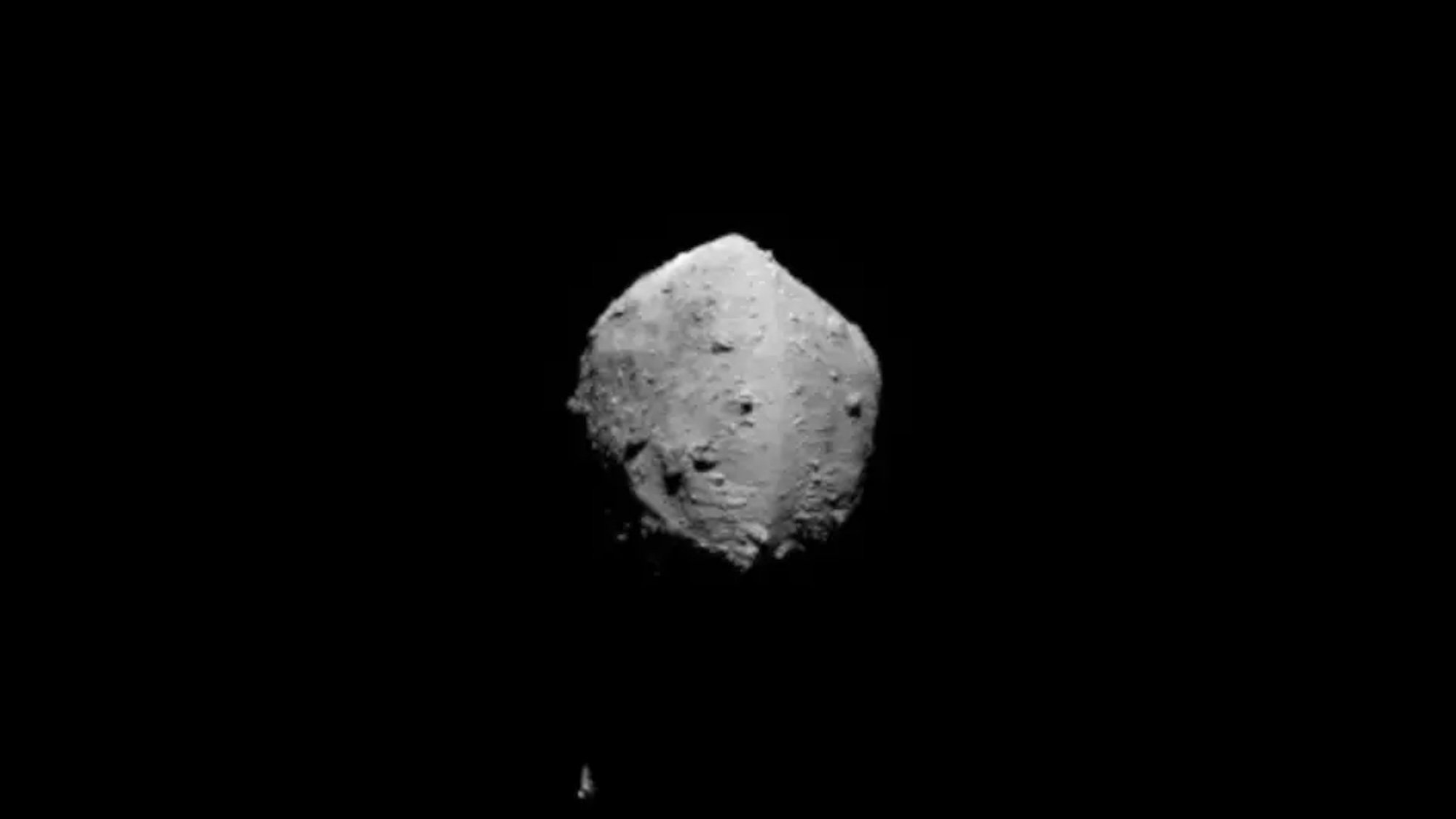
Didymos is the larger of the binary asteroids, and likely absorbed some of the debris from Dimorphos in 2022. Credit: ESA
In September 2022, NASA’s Double Asteroid Redirection Test (DART) spacecraft smacked into a cosmic rock named Dimorphos at a speed of around 14,000 miles per hour. But mission engineers weren’t crestfallen by the news—they were thrilled. That’s because DART was specifically designed for this head-on asteroid collision . Since then, researchers around the world have poured over data from the multimillion dollar, car-sized craft’s smashing success to find ways of improving planetary defenses in the event that Earth ever finds itself in the crosshairs of a rock like Dimorphos.
In the meantime, the European Space Agency (ESA) sent its own observer, Hera , to examine the collision scene. On November 5, the ESA released the first image taken by the spacecraft. It was about 37 miles from Dimorphos’ much larger binary asteroid, Didymos.…