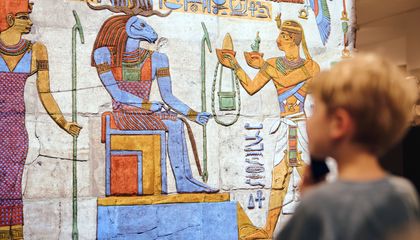
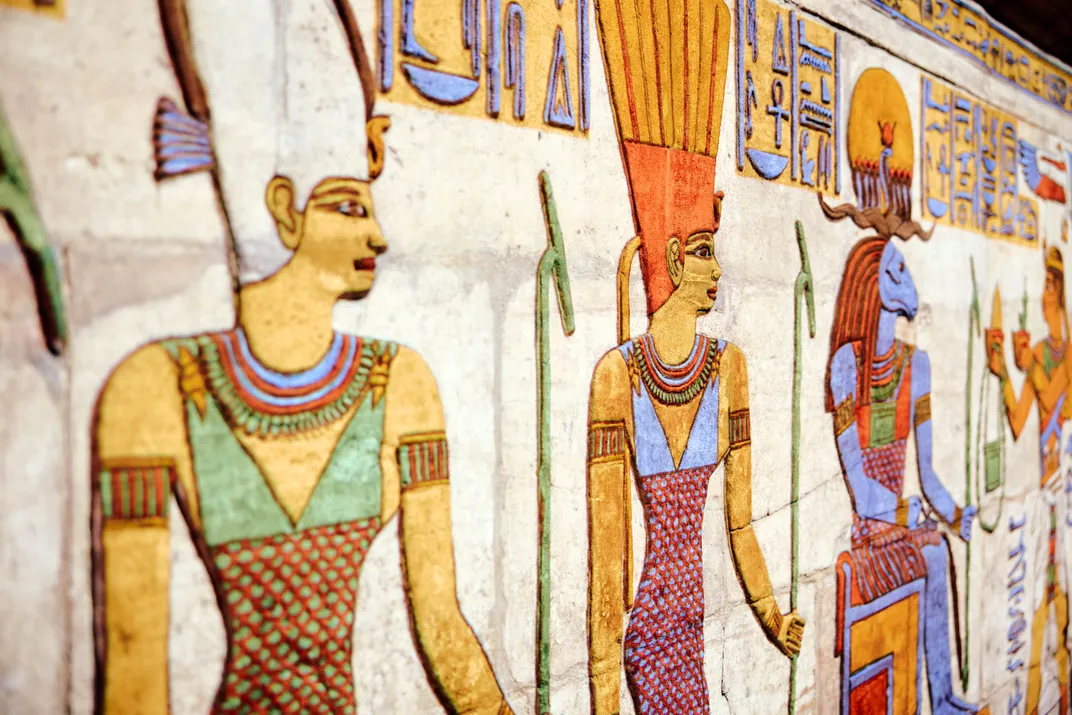
Digital projections at Oxford’s Ashmolean Museum will restore the sight of Egyptian blue, the world’s oldest synthetic pigment, and other colors that once adorned the 2,700-year-old Shrine of Taharqa
Researchers discovered traces of Egyptian Blue, the world's oldest-known synthetic pigment, which was typically used to color deities and royals. Fisher Studios, courtesy Ashmolean Museum, University of Oxford
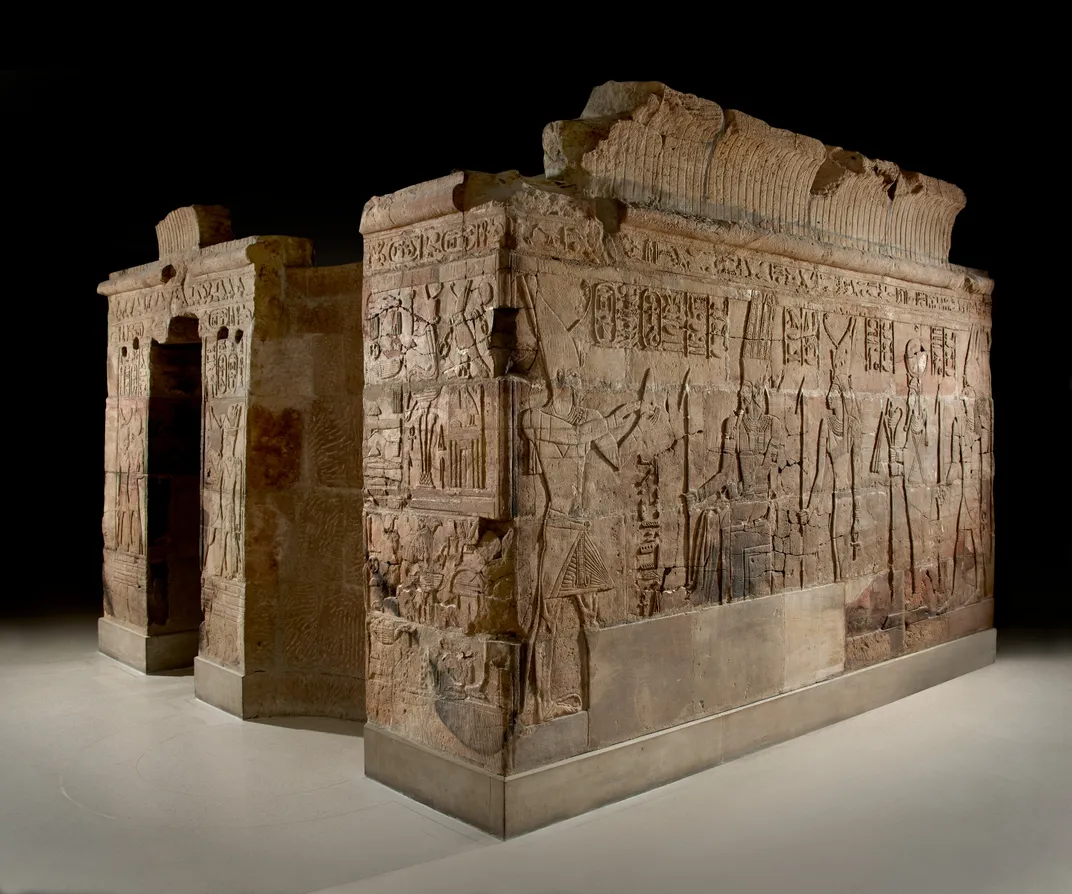
Roughly 2,700 years ago, in the deserts of present-day northern Sudan, a massive shrine was brought to rise in the city of Kawa . Built from 236 sandstone blocks inside a temple to Amun-Ra , the king of the ancient Egyptian gods, the shrine’s ornate sandstone walls told an unmistakable story of devotion and power.
Known as the Shrine of Taharqa after the pharaoh who commissioned it, the structure’s carvings show several depictions of Taharqa—the ruler of both Egypt and Kush between 690 B.C.E.…