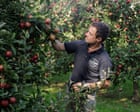
O n Myrtle Farm in Somerset, there are thousands of apple trees laid out in rows of 100. Over the past year, each has endured the same wet winter and long summer drought . Now, the different ways each tree responded to these challenges are being analysed in trials that could shape the future of apple growing – and the taste of cider – for decades to come.
Myrtle Farm is the home of Thatchers Cider , which this year had its earliest ever harvest in the company’s 122-year history. Yet the farm’s experimental orchard of 3,800 trees, where each 100-tree row produces a different apple variety, offers hope that – even as the climate emergency deepens – future harvests will become more consistent and predictable.
The trials aim to identify robust apple varieties that are resistant to diseases and pests, crop reliably and can withstand the most extreme weather that might affect Somerset .
Two apples ripe for harvest, which this year ran from the middle of August to November at Myrtle Farm
“Somerset is the best…