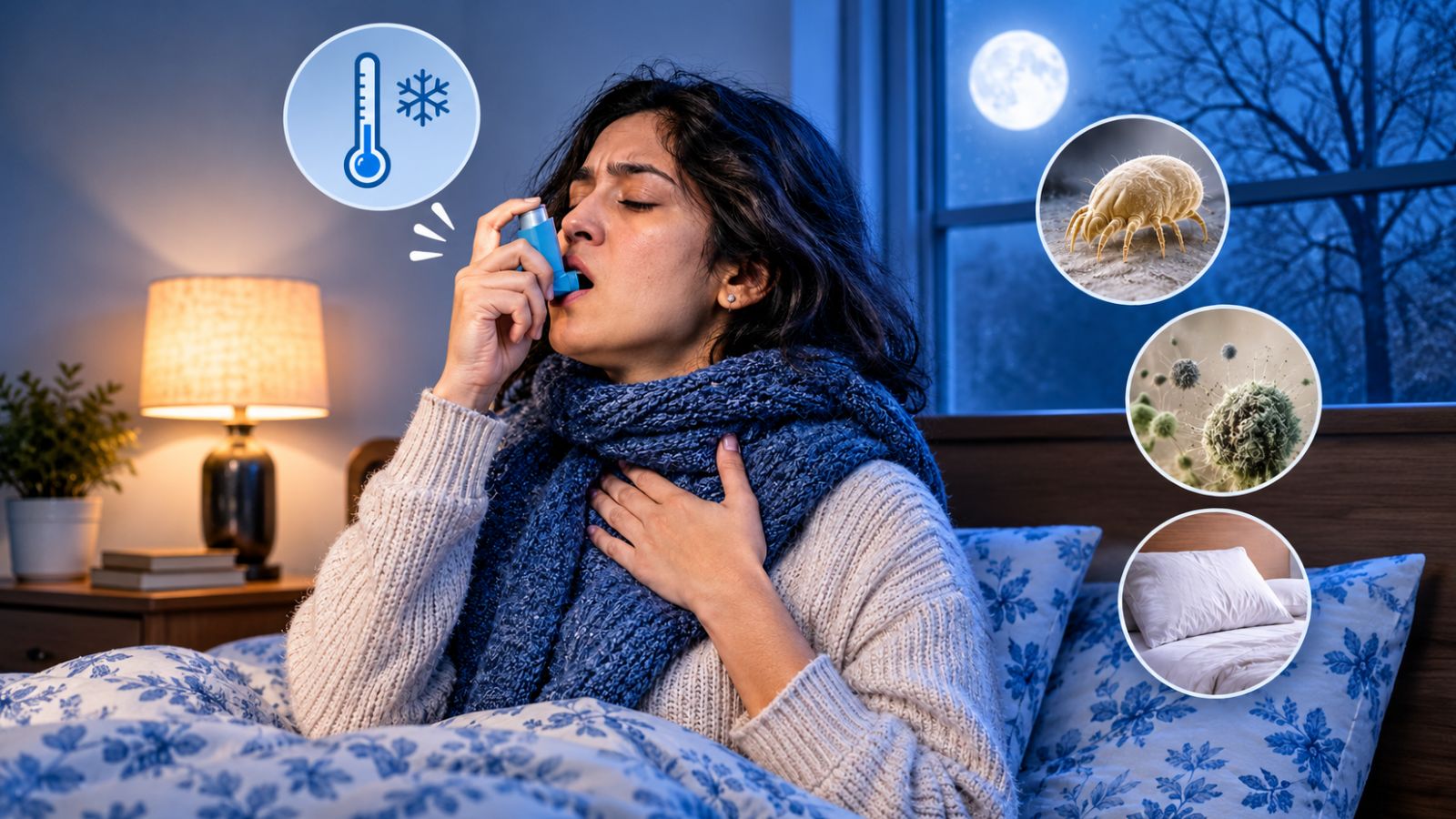
Cold air, indoor allergens and changes in the body's biological rhythm can contribute to worsening asthma symptoms at night during winter. (AI generated image)
Wheezing often worsens at night during winter, especially in people with asthma . This may be due to a combination of environmental triggers, temperature changes, and the body’s natural circadian rhythm.
Dr Manisha Mendiratta, Director & Head – Pulmonology, Sarvodaya Hospital, Sector-8, Faridabad, says, “Exposure to cold air can irritate the airways, causing them to narrow and trigger bronchospasm, making breathing difficult.”
DISCLAIMER: This article is based on information from the public domain and/or the experts we spoke to.…