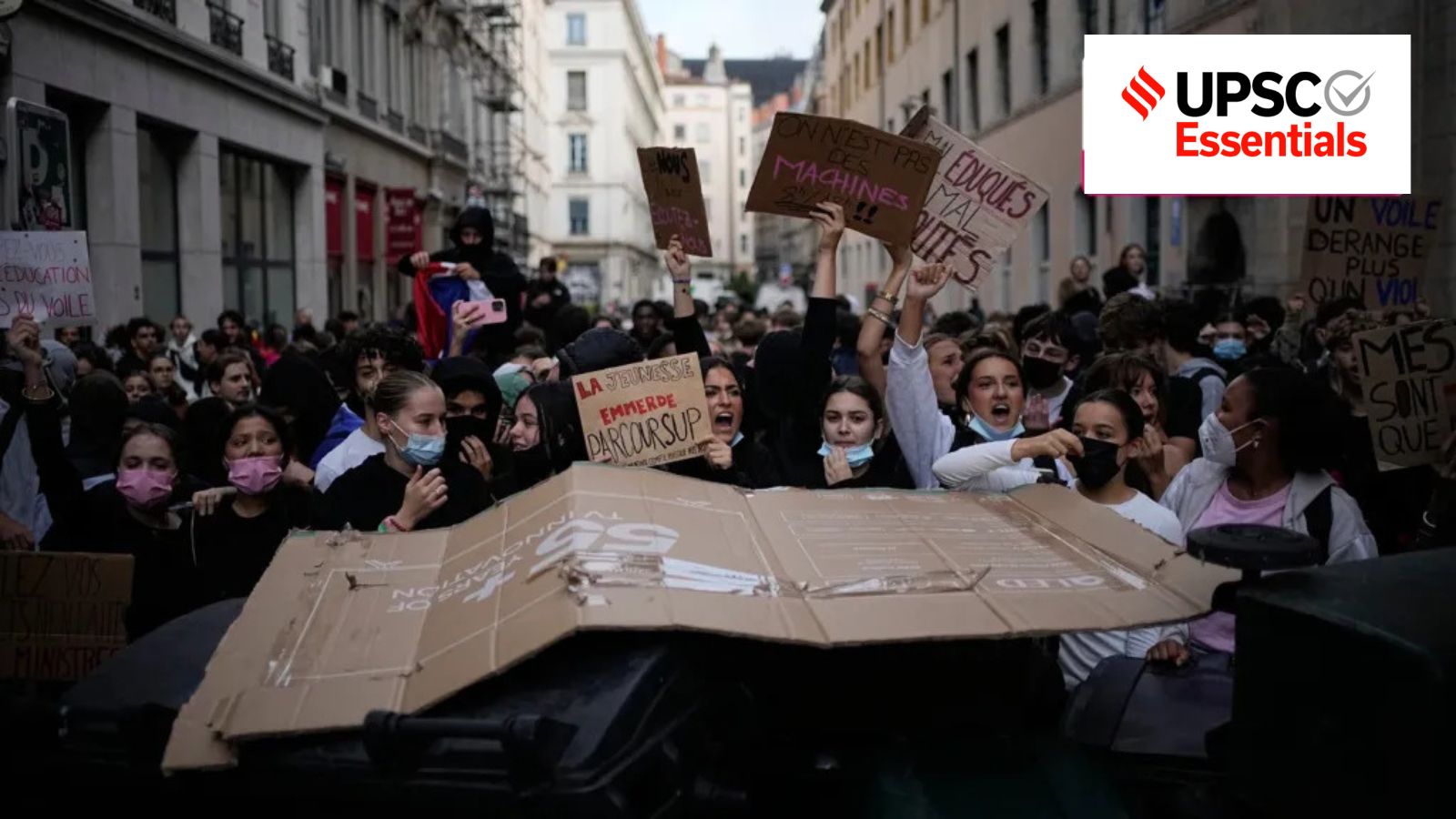
While mass protests in France spilled into riots, Spain, Italy, Portugal, Belgium and even Albania faced smaller-scale protests over issues ranging from poor education standards and rising living costs to lack of jobs.
In India, the nationwide protests demanding the restoration of voting rights of those deleted from electoral rolls during the Special Intensive Revision (SIR) and the resignation of Chief Election Commissioner Gyanesh Kumar prompted ruling party leaders to accuse the Opposition of creating “a state of anarchy” .
But what is anarchy? Do mass protests, political dissent, and a breakdown of public order necessarily amount to anarchy, or is it more complex than that?
Defining anarchy
The term anarchy refers to the absence of authority or rule of law. It is most commonly used in the context of a system of international relations characterised by the absence of a supranational authority governing the behaviour of sovereign entities.…