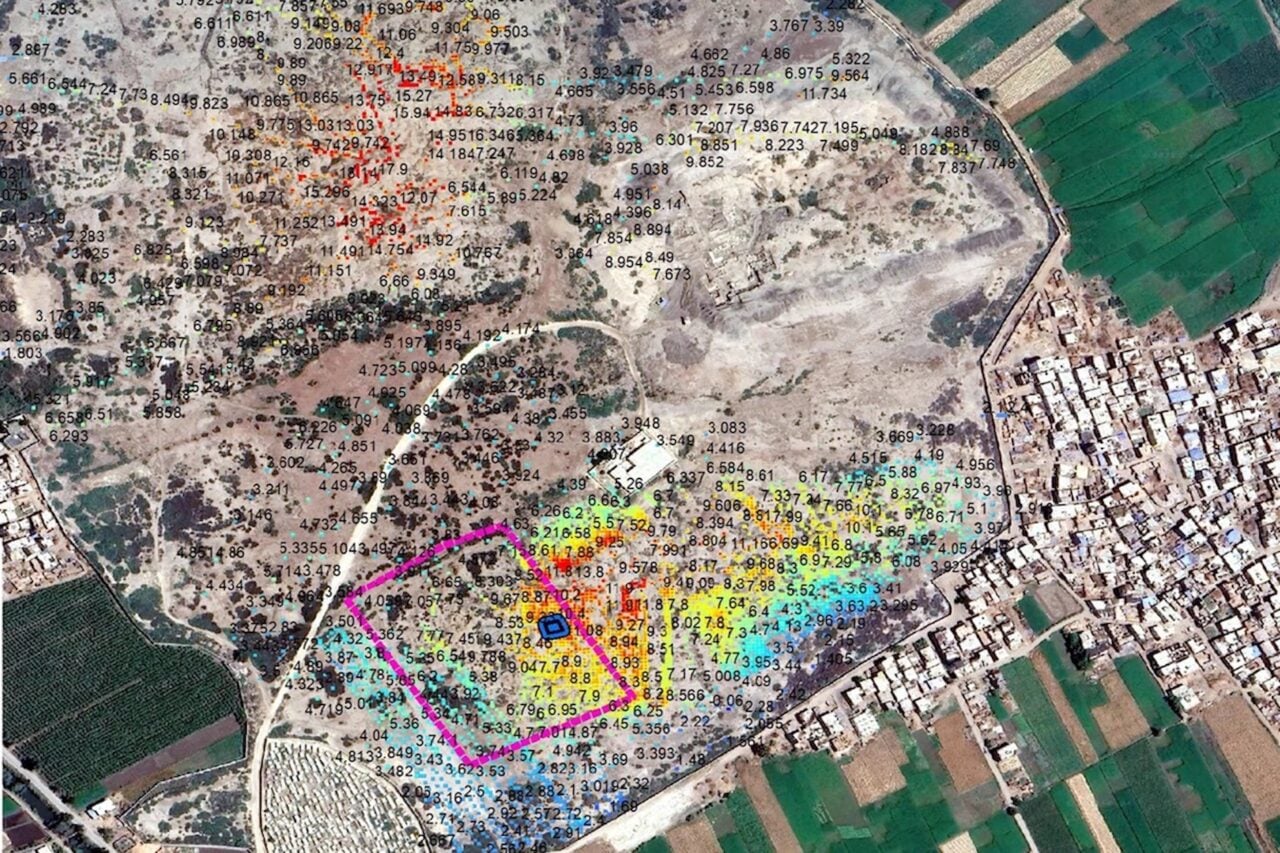
Beneath the ancient Egyptian city of Buto in the Nile Delta, archeologists have uncovered the remains of a massive structure that may have once served as a religious complex more than 2,600 years ago. The discovery offers another glimpse into a settlement that was once an important religious center in Lower Egypt with a mysterious period of abandonment in its history.
A team of Egyptian researchers made the discovery using a combination of satellite radar imagery and electrical resistivity tomography, a non-invasive technique that uses electrical currents to map underground structures. The findings, published in the Acta Geophysica journal, offer a rare look into a previously inaccessible layer hiding beneath Egypt’s ancient settlements.
An ancient city
Buto, known today as Tell al-Fara’in (or the mound of the pharaohs), is one of the most historically significant archeological sites in the Nile Delta.…