Scientists have developed a fecal-sampling method that can help identify illegally captured wild birds in Latin America that are being sold as captive-raised.
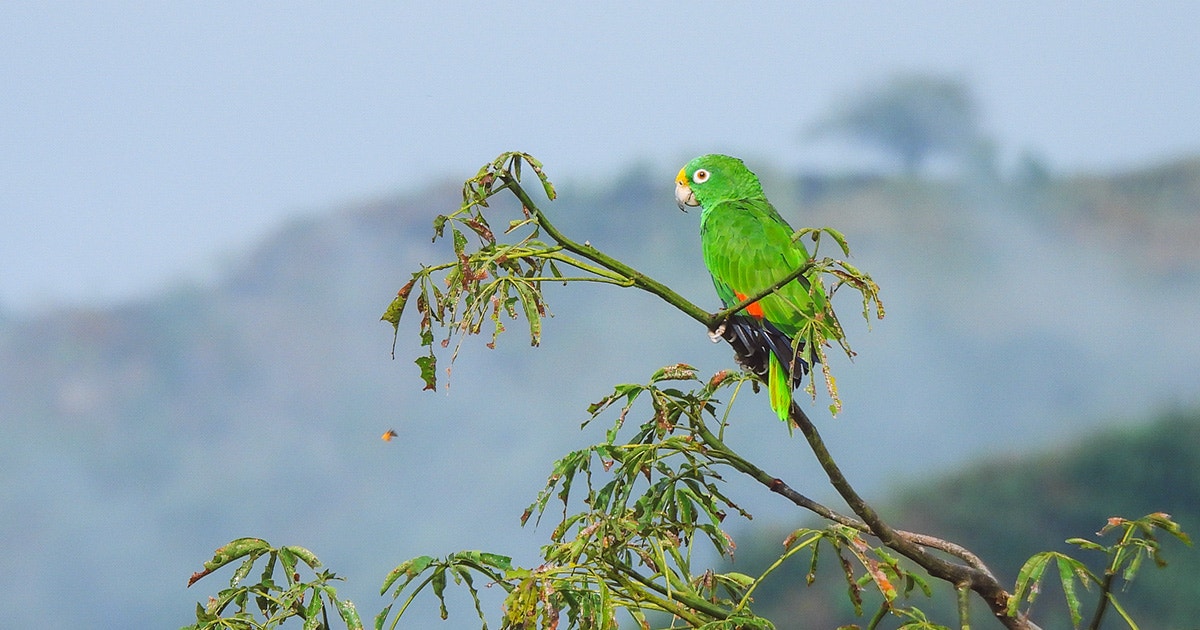
Yellow-crowned Amazons, along with other Amazon parrot species, are frequent targets for wildlife traffickers. Photo: María Teresa Matijasevic/Audubon Photography Awards
Wildlife and customs officials working to stop the illegal parrot trade are in a tough spot. While it is against the law to capture wild parrots, buying and selling captive-bred individuals remains legal. Along with the high demand for parrots as pets, the difficulty in distinguishing captive-bred from wild individuals is one reason the intelligent birds remain among the most-trafficked animals in the world, according to the Convention on International Trade in Endangered Species.
Tools exist for identifying illegally trafficked parrots, but they require specialized training, are time-consuming, and can be stressful for the animals, says Steven Janssen, a mobile veterinarian for…