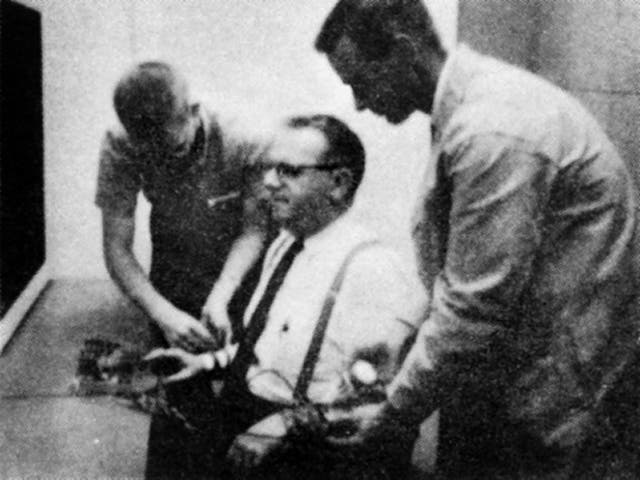
Two of the most famous experiments in psychology, the Stanford prison experiment and Stanley Milgram’s obedience studies , have been called a sham, a lie and a fraud.
Retraction Watch, a site that tracks withdrawn research papers, has hosted an argument for retracting the Stanford paper. Psychologists have even been told that almost everything they thought they knew about Milgram is wrong.
Yet interest has not faded. This month, Netflix released six episodes of The New Stanford Prison Experiment , putting the 1971 study back in the spotlight. Why do these much-criticised experiments keep drawing us back?
Part of the answer is how strong the original findings sounded. They came from what is often called the golden age of American social psychology, roughly the 1950s to the early 1970s. Researchers in this period ran dramatic experiments on how groups and authority shape what ordinary people do.
In the 1950s, the psychologist Solomon Asch asked students to match the length of a line to one of three others.…