A new study led by the UK's National Oceanography Centre (NOC) has revealed that animals living on the deep-ocean floor may play a vital role in maintaining polymetallic nodules, which contribute to the biodiversity in abyssal ecosystems.
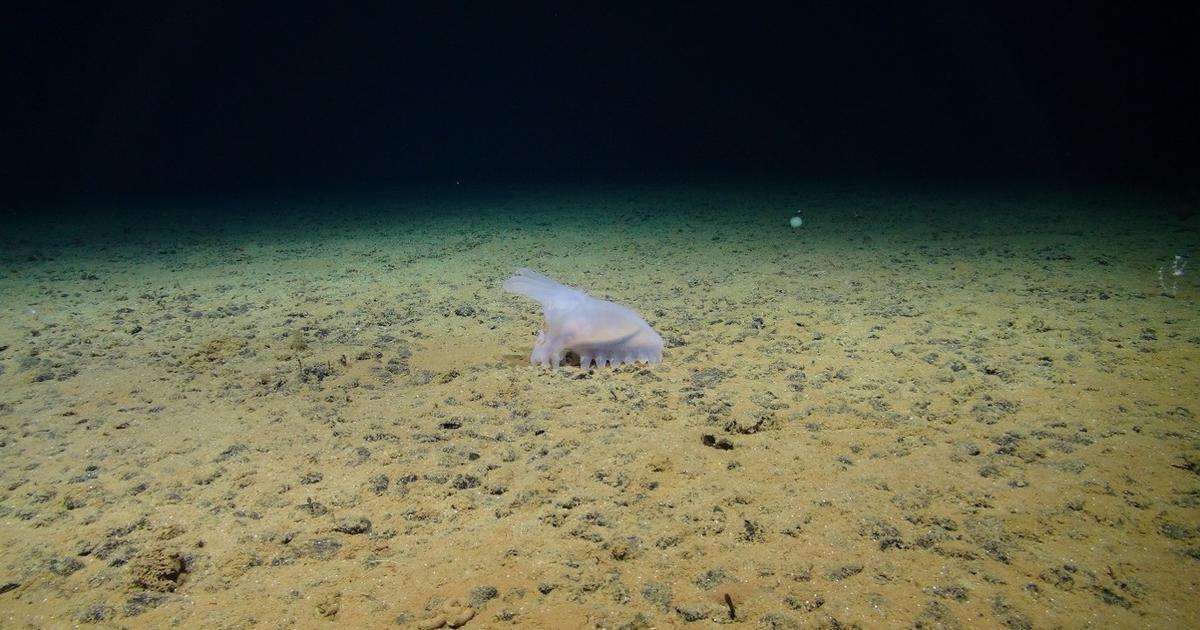
An abyssal sea cucumber moves across a field of polymetallic nodules in the abyssal plain of the Clarion Clipperton Zone. (Image credit: National Oceanography Centre and Trustees of the Natural History Museum, with acknowledgement to the NERC SMARTEX project)
Polymetallic nodules, potato-sized mineral deposits found scattered across vast abyssal plains, form over millions of years, providing a rare habitat for a wide variety of deep-sea species. However, scientists have long questioned how nodules remain exposed on the seafloor rather than becoming buried by sediment over time.
Using seabed time-lapse photography, researchers observed several species actively removing sediment from nodule surfaces, including sea cucumbers and gastropods.…