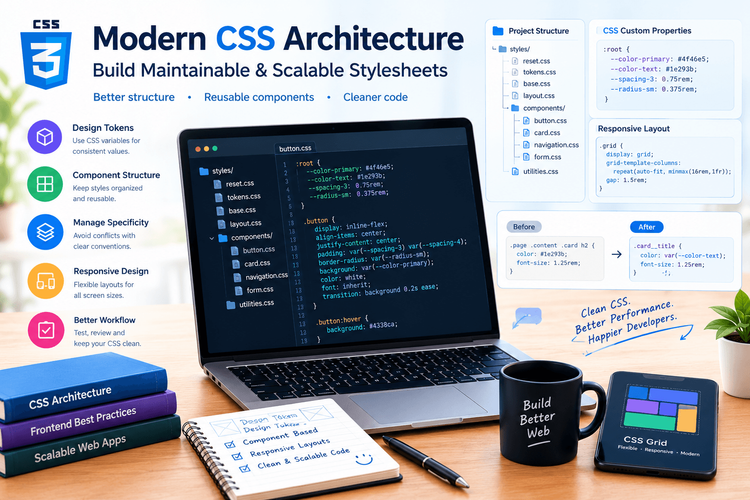
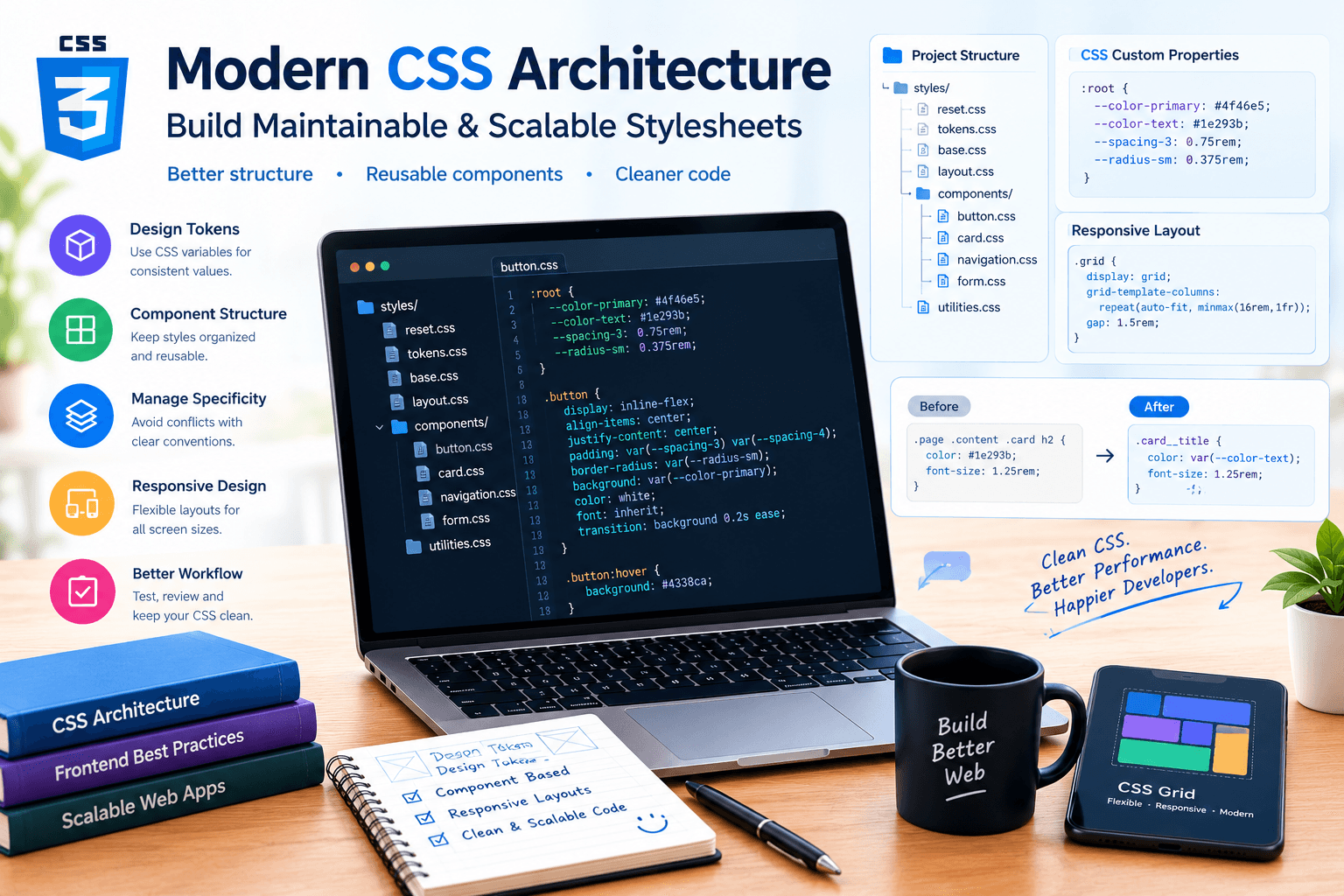
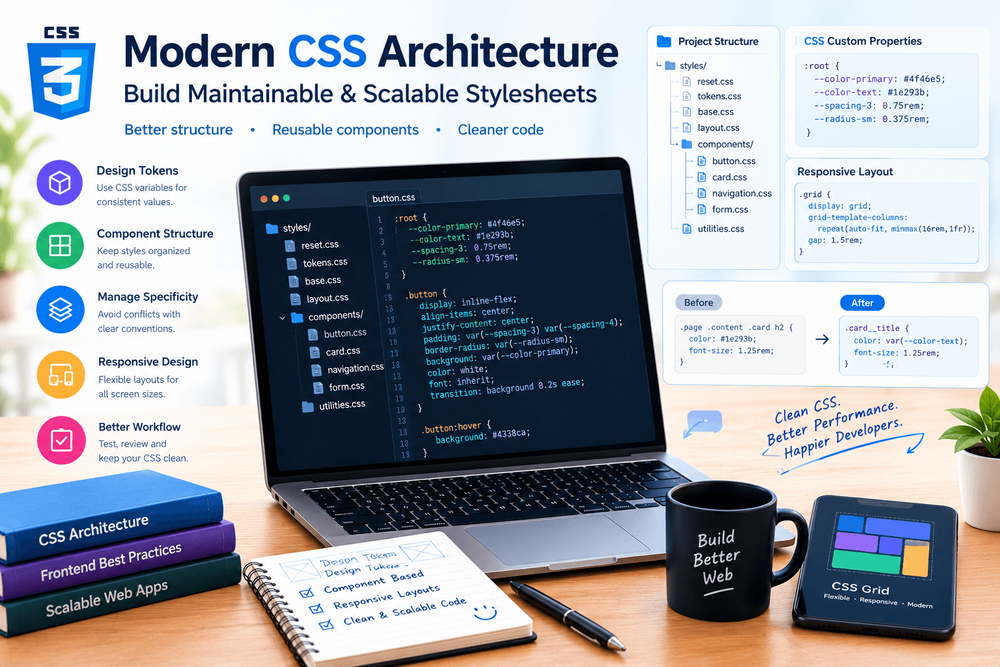
CSS is easy to write when a website contains only a handful of components. As an application grows, however, stylesheets can become difficult to manage. A change intended for one button may affect several unrelated components; repeated declarations accumulate, and developers begin adding increasingly specific selectors to override earlier rules.
These problems are rarely caused by CSS itself. They often result from unclear styling conventions, poorly defined component boundaries, and a lack of consistent decisions about how styles should be organized.
A maintainable CSS architecture provides a predictable structure for writing, extending, and debugging styles. It does not require a particular framework or a complicated build process. Instead, it relies on clear naming, controlled scope, reusable design tokens, and an understanding of the CSS cascade.
This guide explores practical techniques for creating CSS that remains understandable as a website grows.
1.…